South Carolina’s education agency is asking lawmakers for $511.3 million in additional funding for the 2026-27 budget year, with teacher pay and school construction accounting for more than half of the request. The package is a set of agency priorities—not enacted spending—and will be weighed as the General Assembly builds the next state budget.
State Superintendent Ellen Weaver presented the requests to the House Ways and Means Committee, according to the department’s summary. The largest items are $150 million for a $2,000 statewide teacher salary increase and $120 million to establish an Education Infrastructure Bank for school construction and renovation.
The proposed raise would lift the state’s minimum starting salary from $48,500 to $50,500. The agency also seeks $5 million for a strategic-compensation pilot and $1.4 million for a career-ladder pilot intended to create advancement opportunities for classroom educators. The department’s detailed submission says the ladder initiative would involve 150 teacher leaders in at least 15 districts.
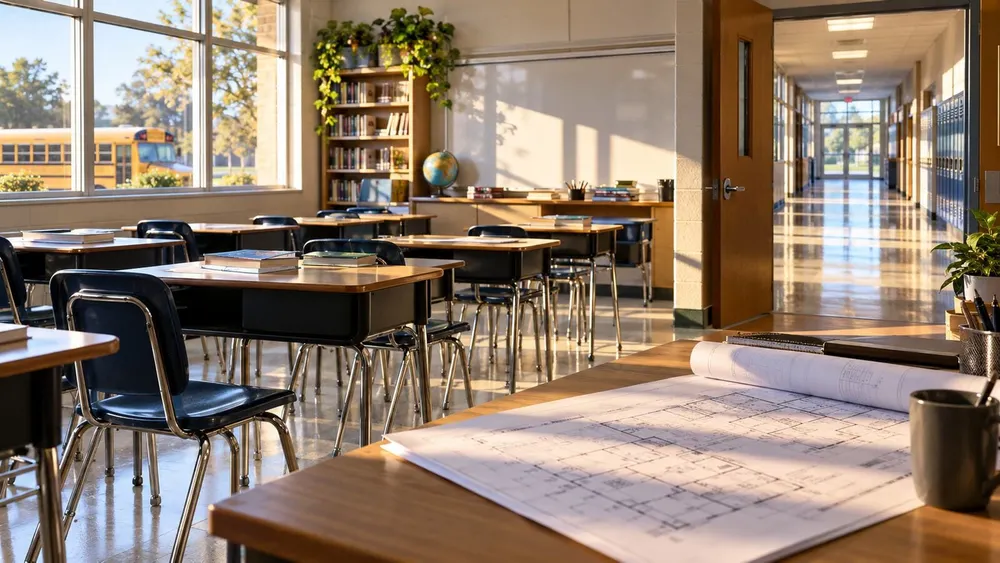
The infrastructure proposal is aimed particularly at rural districts and public charter schools that have limited capacity to finance major projects. The filing says charter enrollment has grown to nearly 61,000 students, more than 75% above the 2019-20 level, while charter operators lack local bonding authority. It also notes that roughly $586 million from state and other sources has gone to facilities in about 25 districts since fiscal 2020, but describes that support as only a fraction of documented needs.
Other large requests include $70 million for instructional materials, $40 million for 300 school buses, $30 million for summer reading camps and $61 million for the Education Scholarship Trust Fund. The department says the scholarship request would support at least 20,000 students while addressing a waitlist of more than 6,000. A further $17 million would develop a “Disconnect to Reconnect” curriculum for grades three through eight focused on smartphones, screen time and social media.
The package arrives as the department points to improvement in its latest statewide accountability results. Its report-card review said the number of schools rated Good or Excellent rose from 549 to 623, the graduation rate reached a 10-year high of 86.7%, and 75.1% of graduates were rated college- or career-ready. The agency also said readiness gaps remain, underscoring why it is seeking both classroom and workforce investments.
Teacher recruitment and retention are central to the request. A separate state workforce report recommends career ladders, apprenticeships and additional certification routes as ways to strengthen the educator pipeline. The budget proposal funds only selected pieces of that broader strategy.
Lawmakers can approve, reduce, reject or restructure each item as the appropriations process advances. Until a budget is enacted, the $511.3 million figure should be read as the education department’s requested expansion, not as money already committed to districts, teachers or students.