
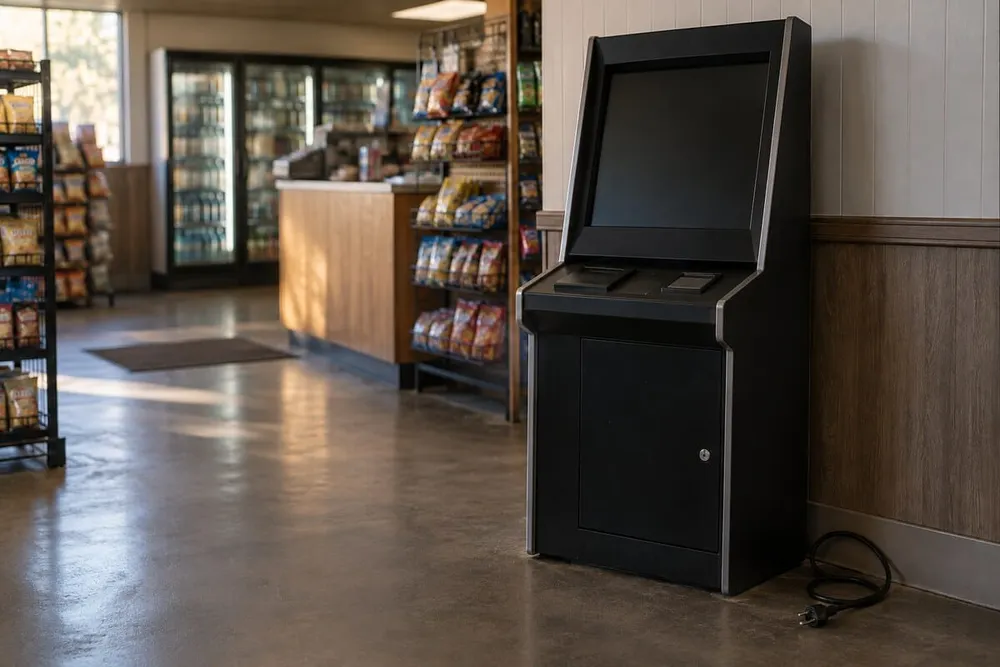
Pennsylvania businesses have less than four weeks to remove unlicensed “skill game” terminals or face seizures and possible criminal charges beginning October 14. The Pennsylvania State Police warned that merely unplugging or powering off a machine will not satisfy the law; operators should arrange removal with vendors and contact police if a vendor refuses.
The enforcement date follows the Pennsylvania Supreme Court’s June 15 ruling that the devices are slot machines under the state Gaming Act. Outside licensed casinos and qualifying truck stops, police say the machines are unlawful. Enforcement may include confiscation and forfeiture of terminals, associated equipment and money, along with criminal prosecution.
The warning creates an immediate compliance decision for convenience stores, bars, social clubs and other businesses that host the machines. Owners who continue operating them after the deadline risk losing both the devices and proceeds, while businesses waiting for legislative action have no guarantee that a new law will arrive first.
Lawmakers return to Harrisburg on September 28, leaving just six scheduled session days before the deadline, according to Spotlight PA’s review of the legislative calendar. The outlet estimates roughly 70,000 machines operate statewide. House Speaker Joanna McClinton and Senate Majority Leader Joe Pittman have both said the legislature should address the issue, but the chambers have not agreed on taxes, machine limits or how revenue would be distributed.
One proposal, House Bill 2213, would establish a licensing system, impose a $500 monthly fee for each terminal and cap the market at 50,000 machines. The bipartisan measure was referred to the House Gaming Oversight Committee on February 11 but has not received a committee vote. That makes it a framework for negotiations rather than a law businesses can rely on today.
A narrower stopgap also remains preliminary. Rep. Brad Roae circulated a September 14 co-sponsorship memorandum proposing temporary legalization through April 13, 2027, to give lawmakers six more months to design permanent rules. As of September 17, the proposal had not been introduced as a bill, so it cannot yet move through either chamber.
The unresolved debate is not just about whether the games should remain. Competing plans have differed over tax rates, how many terminals a location could host, which agency would regulate them and whether revenue should flow to property-tax relief, local governments or other programs. Those choices determine whether a regulated market resembles the current dispersed business model or a much smaller licensed industry.
For now, the operational instruction is clearer than the politics. Businesses should inventory any machines on site, preserve communications with vendors and arrange physical removal before October 14. If lawmakers pass and the governor signs a new framework or temporary extension, the compliance picture could change. Until then, the State Police notice is the controlling statewide guidance, and the shutdown deadline remains in force.