
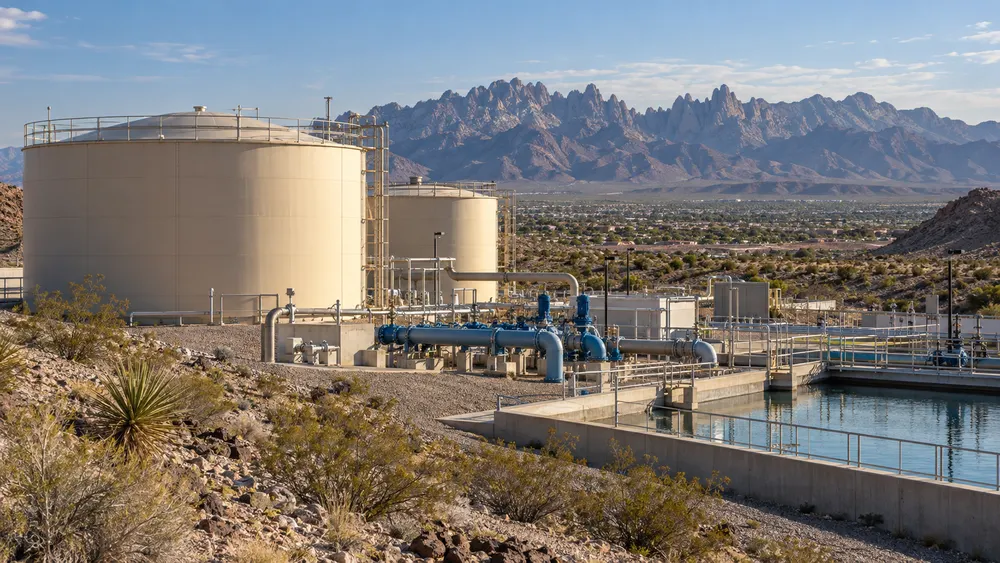
New Mexico environmental regulators will spend three days in the Sunland Park and Santa Teresa area next week, offering individual consultations and a public meeting about drinking-water quality, regulatory oversight and customer concerns surrounding the Camino Real Regional Utility Authority.
The state notice says New Mexico Environment Department staff will hold walk-in, 20-minute consultations from Sept. 29 through Oct. 1 at the Doña Ana Community College Sunland Park Center. A separate community meeting is scheduled for 6 p.m. Sept. 30 at the Multi-Gen Building in Santa Teresa.
Current compliance, continuing concern
NMED says the utility’s drinking water currently meets state and federal health-based standards and that CRRUA has remained in compliance since Jan. 28, 2025. The department nevertheless said the sessions follow earlier excessive arsenic levels and are intended to gather information about residents’ experience with water quality and customer service.
CRRUA’s own January results reported arsenic readings ranging from 3.0 to 5.7 parts per billion at four treatment locations, below the federal limit of 10 parts per billion. The utility also reported that its August tests passed operational arsenic controls. Those snapshots support the state’s description of current compliance, but they do not erase the history that produced continuing public scrutiny.
The authority also lifted a precautionary boil advisory for the Racetrack Drive and Haciendas San Gabriel area on Sept. 24 after an earlier interruption, according to its public updates. A boil advisory is not the same as an arsenic violation, but its timing illustrates why residents may bring broader reliability and communication questions to the state sessions.
A longer oversight history
CRRUA serves Sunland Park and Santa Teresa under a joint city-county structure. State oversight intensified after water-quality and operational problems, including questions about an arsenic treatment plant financed with $5.3 million from the Water Trust Board.
A 2024 auditor review found no documentation supporting allegations that the construction funds had been misused. It emphasized, however, that its financial review did not cover later plant operations—the period at the center of NMED’s concerns.
At the September meeting, NMED plans to present information about water quality, source-water protection and current enforcement activity, then take questions. The department will also consider whether an advisory committee could provide a continuing channel between residents, local governments and regulators.
What residents should watch
The central distinction is between present test results and long-term trust. Regulators say the system is compliant now; the consultation process is meant to test whether residents are receiving reliable service, timely information and adequate responses when problems occur.
Concrete next steps—such as published follow-up findings, a decision on an advisory committee, or new compliance commitments—will show whether the three-day effort becomes an ongoing accountability mechanism rather than a one-time listening exercise.