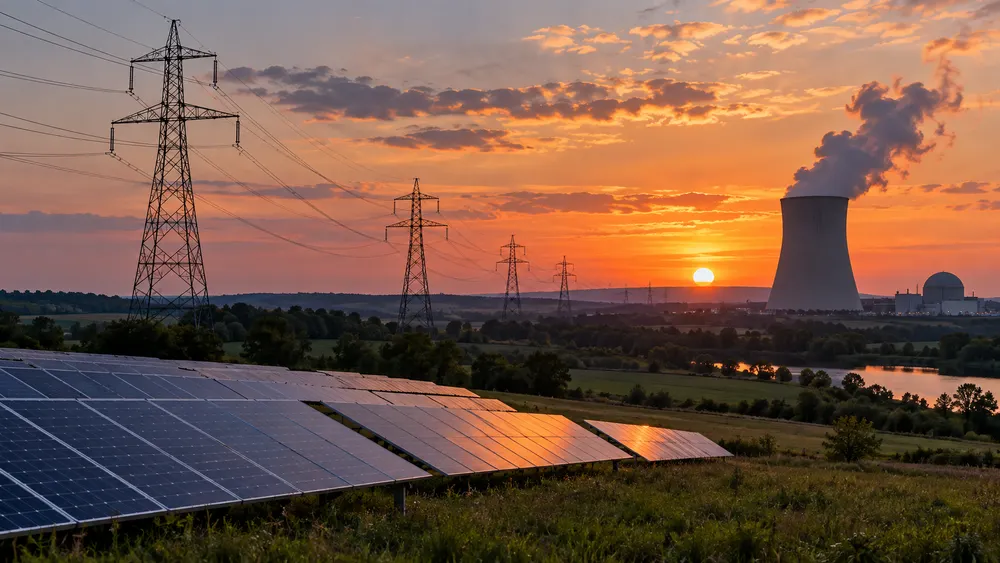
Missouri officials have released a new statewide energy plan that puts nuclear power, more in-state electricity generation and a more diverse grid at the center of the state’s long-term policy agenda. The Missouri Department of Natural Resources said the plan, made public Sept. 30, is intended to help state and local policymakers compare the effects of different energy choices rather than dictate what any utility must build.
The plan organizes its recommendations around four priorities: energy independence, nuclear development, economic growth and grid reliability. DNR says Missouri has shifted from being a net electricity exporter to a net importer over the past decade, while most fuel used at Missouri power plants comes from outside the state. Its recommended response includes encouraging in-state generation, maintaining voluntary energy-efficiency programs, evaluating distributed resources with several cost tests and pairing large new electricity users with customer-side measures that could reduce pressure on other customers’ rates.
Nuclear policy is the plan’s most detailed legislative component. After briefing the Missouri Advanced Nuclear Energy Task Force on Oct. 1, DNR listed proposals that include allowing the Environmental Improvement and Energy Resources Authority to finance nuclear projects, studying a Missouri Nuclear Power Authority, converting the state’s renewable-energy standard into an “advanced energy” standard and creating grants for nuclear workforce and university programs.
The department also proposes limited pre-operation cost recovery for advanced nuclear projects, but only with ratepayer protections and approval from the Missouri Public Service Commission. That is significant because paying for large power plants while they are still under construction shifts some financing risk toward customers. Missouri lawmakers authorized construction-work-in-progress accounting for certain generation projects in 2025, and the new plan calls for a more specifically conditioned approach to advanced nuclear development.
The roadmap arrives as utilities confront sharply higher demand forecasts. In July, Reuters reported from Ameren Missouri regulatory filings that even a proposed 2,100-megawatt natural-gas plant would not eliminate the utility’s projected capacity shortages in the early 2030s. The state plan does not approve that plant or any nuclear facility. Instead, it models how different policy choices—including in-state generation, nuclear enablement, intermittent resources and voluntary efficiency—could affect costs, reliability, employment and tax revenue.
Implementation now moves into a political and regulatory phase. Gov. Mike Kehoe created the nuclear task force through Executive Order 26-04, charging it with identifying barriers to advanced nuclear deployment and recommending state actions. DNR says the task force will now help carry out nuclear-related recommendations, while other proposals would require legislation, regulatory proceedings or future agency decisions.
For Missouri households and businesses, the practical issue is whether officials can expand reliable supply without assigning disproportionate costs or risks to existing customers. The plan supplies an analytical framework and a preferred direction, but its recommendations are not self-executing. Each financing authority, cost-recovery rule and generation proposal will still require its own public decision process.