
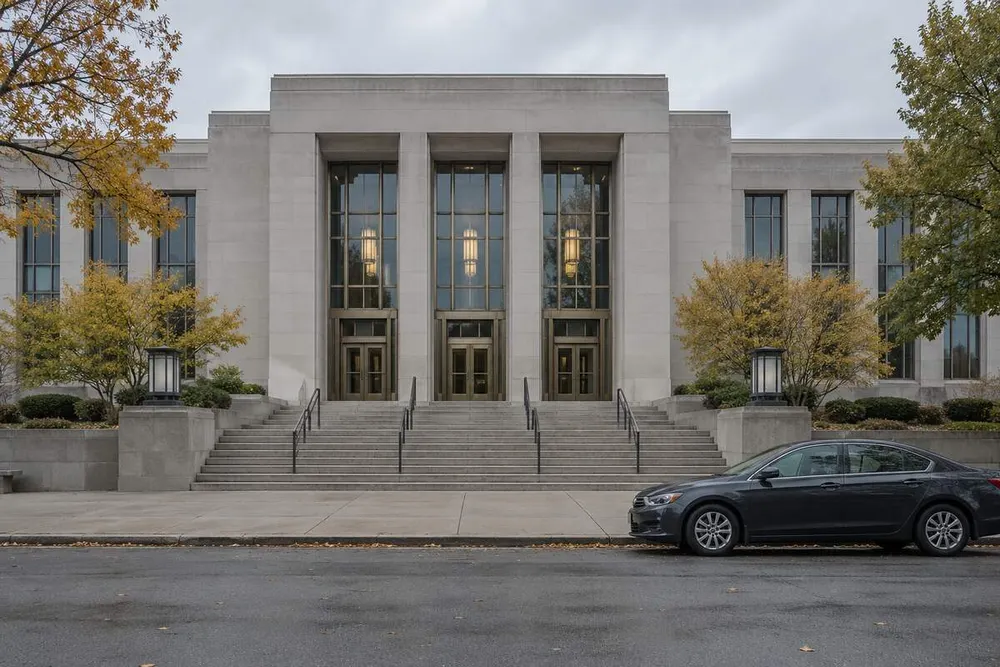
A federal immigration officer facing criminal cases in two court systems was back in Minnesota custody Thursday, ending a months-long effort to bring him before a Hennepin County judge. Christian Castro, 52, was arrested Wednesday afternoon in downtown Minneapolis by Minnesota Bureau of Criminal Apprehension agents and booked into the Hennepin County Jail shortly after 4 p.m.
Castro was scheduled for an initial appearance on the state case Thursday afternoon, followed by a Friday morning hearing in U.S. District Court in St. Paul on a separate federal indictment. The two proceedings arise from the same January 14 confrontation in north Minneapolis but involve different accusations and prosecutors.
The Minnesota criminal complaint charges Castro with four felony counts of second-degree assault with a dangerous weapon and one misdemeanor count of falsely reporting a crime. Prosecutors allege that, while working as an Immigration and Customs Enforcement deportation officer, Castro pursued a man to a duplex, fired through its front door and wounded another resident in the leg. The complaint says four adults and two children were inside.
Each assault count carries a maximum sentence of seven years and cites Minnesota's three-year mandatory minimum for use of a firearm, although any sentence would be determined only after a conviction and according to applicable law. The false-reporting count carries a maximum of 90 days. Castro has not been convicted, and the allegations remain to be tested in court.
At the federal level, a grand jury indicted Castro September 2 on six counts of making materially false statements to the FBI during an interview on the night of the shooting. The Justice Department says each count carries a maximum penalty of five years. Its indictment alleges that Castro's description of being struck with a broom and shovel and fighting on the ground for about three minutes was materially false. Federal prosecutors say video showed that the physical encounter lasted about 11 seconds before two men entered the duplex and Castro fired once through the door.
The federal indictment changed the custody path after Minnesota's earlier extradition effort stalled. Castro had spent 90 days in a Texas jail on the Minnesota warrant, but a federal judge declined in August to order Texas Governor Greg Abbott to extradite him. After the federal charges were filed, Castro was taken into federal custody in Texas and later transferred to Minnesota.
For Minnesota, Thursday's appearance is procedurally significant rather than a resolution of the case: it allows the state prosecution to move forward with a defendant physically present before the court. Bail, release conditions and later hearing dates are matters for the judges handling each case. The Justice Department has emphasized that an indictment is an allegation and that Castro is presumed innocent unless proven guilty beyond a reasonable doubt.