
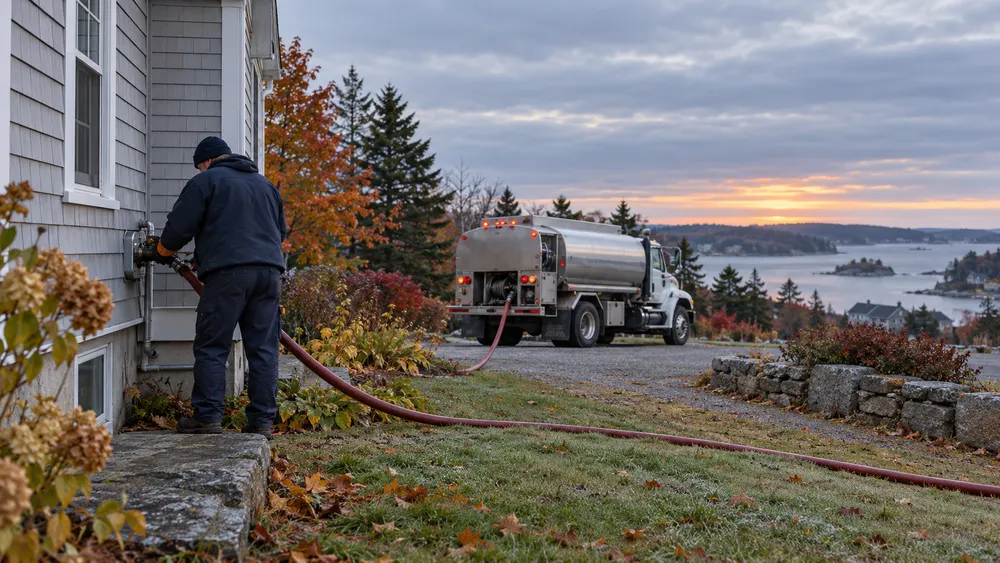
Maine has released an updated winter-heating guide as the statewide average price of heating oil remains near a record, increasing the urgency for households to arrange fuel deliveries, apply for assistance and review longer-term efficiency options before colder weather arrives.
The Maine Department of Energy Resources said its September 28 survey put the average cash price of heating oil at $5.96 per gallon, approximately 80% higher than at the same point last year. At that price, filling a standard 275-gallon tank costs about $725 more than it did a year earlier, according to the department’s October 1 announcement.
The latest figure is slightly below the $6.02 statewide average recorded September 21. That earlier survey established a Maine record, exceeding the previous high of $5.92 set in 2022 after Russia invaded Ukraine. The state’s record-price notice also placed average kerosene at $6.88 per gallon, adding pressure for households that rely on delivered fuels.
Maine is unusually exposed to that volatility. State energy officials report that roughly half of Maine households use fuel oil as their primary heating source, down from about 70% in 2010 but still the highest per-capita residential heating-oil consumption in the country. Imported fuel prices can therefore move household winter budgets quickly even when electricity or natural-gas prices are stable.
The state’s 2026–2027 winter resource page advises residents to schedule heating-system maintenance, consider fixed-price fuel contracts carefully and ask suppliers about automatic delivery. It also consolidates contacts for weatherization, electricity-bill assistance, emergency warming centers and heat-pump incentives.
For income-qualified households, MaineHousing’s Home Energy Assistance Program can help with fuel costs, emergency deliveries, utility payments and certain heating repairs. Applications for the 2026–2027 HEAP season opened August 3 and remain available until funds are exhausted or May 29, 2027. Eligibility depends primarily on household income and size; benefits vary with income, household expenses and energy needs.
MaineHousing directs applications through local community action agencies and an online portal. Residents facing an immediate shortage must first complete a HEAP application before seeking crisis assistance through the Energy Crisis Intervention Program. ECIP is scheduled to operate from November 1 through April 30 and may provide a one-time payment to a fuel vendor for eligible households in a heating emergency.
The guide also describes Maine’s Low-Income Assistance Program for electricity bills, weatherization grants and utility arrearage plans. Central Maine Power and Versant customers who qualify for LIHEAP and have at least $500 in arrears that are 90 days old may be eligible for programs that forgive part of the balance when current bills are paid on time.
The practical message is to act before a tank is nearly empty. Applications require household, income and energy documentation, and the state warns that HEAP is intended to supplement heating costs rather than pay every winter bill. With prices still close to the September record, early applications and direct contact with vendors may give households more options than waiting for an emergency.