
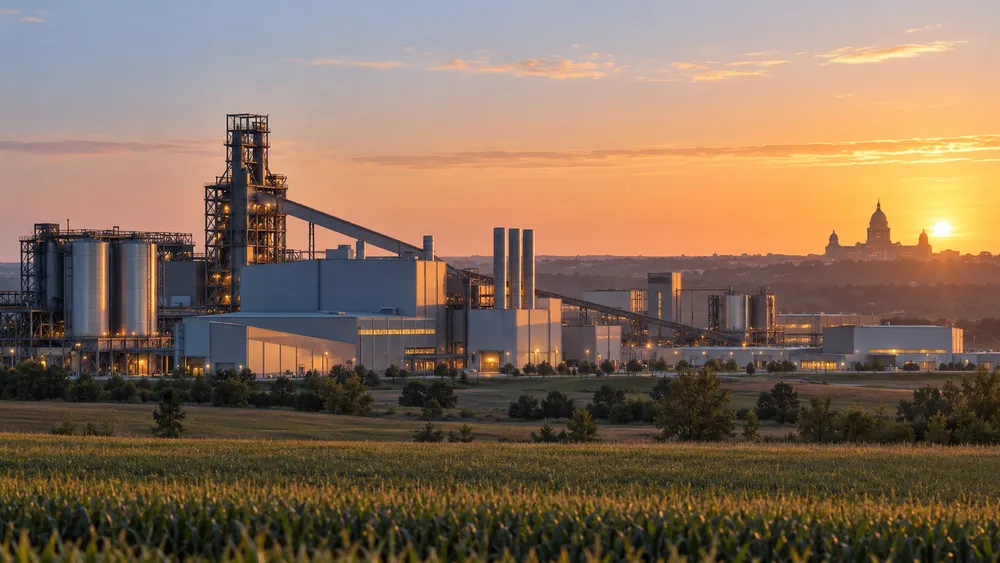
Iowa lawmakers will return to Des Moines on Friday, Oct. 2, for a special session focused solely on changes to the state’s Major Economic Growth Attraction program. Gov. Kim Reynolds called the 8:30 a.m. session Tuesday after Iowa and Mesabi Metallics signed a memorandum of understanding tied to a proposed $15 billion integrated steel complex.
The immediate decision is not final approval of a finished plant. Legislators are being asked to amend the existing MEGA incentive framework so it can accommodate what the governor describes as Iowa’s largest private investment. The formal proclamation limits the special session to that subject, meaning other legislative business is outside the stated call.
Mesabi says the Iowa complex would connect with its iron-ore mine and pellet operation in Minnesota, creating a domestic mine-to-mill supply chain. The company’s project announcement assigns $15 billion of an $18 billion combined investment to Iowa, projects more than 6,000 construction jobs and at least 1,750 permanent positions, and targets first steel production in 2030.
Those figures are company and government projections rather than completed results. Reuters independently reported the planned investment, production timetable and employment targets, while noting that the first phase is expected to produce 7.5 million tons of steel annually before a possible increase to 10 million tons. The company estimates $95 billion in economic output during construction and the first decade of operation, but the methodology and assumptions behind that estimate were not included in the state’s special-session notice.
The central public-policy question Friday is what Iowa must change or commit to under MEGA. The governor’s release says an agreement has been signed but does not publish the memorandum itself or specify tax credits, grants, infrastructure spending, performance requirements, clawbacks or legislative fiscal effects. Until bill language and fiscal analysis are available, taxpayers cannot calculate the state’s proposed cost per job or the conditions for recovering incentives if investment or hiring falls short.
The White House separately lists the same 1,750 permanent-job and 6,000 construction-job targets. Its statement says the first phase would use Minnesota ore and scale toward 10 million tons of annual steel capacity, but it does not resolve the Iowa incentive terms.
Residents and businesses should watch for the introduced bill, nonpartisan fiscal notes, floor amendments and final votes on Friday. The most consequential details will be the value and duration of public support, the timetable for site and infrastructure work, wage and hiring commitments, environmental permitting, and enforceable safeguards attached to any state benefits. Those documents will determine whether the special session changes only program limits or substantially reshapes Iowa’s exposure to the project. Publishing the memorandum before debate would also let lawmakers and the public compare proposed statutory changes with the obligations Iowa has already tentatively accepted.