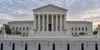

Louisiana, Alabama and Arkansas asked the U.S. Supreme Court on Wednesday to invalidate abortion shield laws in New York, California and Massachusetts, escalating a conflict over whether providers may prescribe and mail abortion medication to patients in states where abortion is broadly prohibited.
The filing does not mean the justices have agreed to hear the dispute. Because it is a case between states, the three attorneys general submitted a motion asking permission to file an original bill of complaint directly in the Supreme Court. The court may grant or deny that request before considering the merits.
Louisiana Attorney General Liz Murrill’s announcement says the shield laws impede subpoenas, extradition requests, enforcement of judgments and other cooperation sought by states enforcing abortion restrictions. The states contend that those protections violate the Full Faith and Credit Clause, equal-sovereignty principles, the Dormant Commerce Clause and federal common law.
The proposed Supreme Court complaint asks the justices to stop the defendant states from applying their shield laws against Alabama, Arkansas and Louisiana. Those are the plaintiffs’ legal allegations; the defendant states have not yet filed responses in the Supreme Court proceeding.
Two coordinated cases
The attorneys general also filed a separate 100-page complaint in federal court in Louisiana against 30 people and organizations associated with mail-order abortion services. That lawsuit alleges false advertising, illegal shipments and a public nuisance, and seeks injunctions, damages, civil penalties and legal costs.
The defendants have not yet answered those allegations. The federal complaint was filed Wednesday in the Western District of Louisiana as case 2:26-cv-03836, according to its file stamp.
The litigation targets a practical divide that has widened since the Supreme Court overturned Roe v. Wade in 2022. Louisiana and 12 other states prohibit abortion at nearly every stage of pregnancy, while several states protecting abortion rights have enacted laws intended to shield providers from out-of-state investigations and penalties.
The Associated Press reported that Louisiana and Texas have pursued cases against doctors in New York and California, whose officials declined cooperation under their shield laws. AP also quoted New York Attorney General Letitia James arguing that the new action attempts to extend abortion bans into states where the care is legal.
What happens next
The Supreme Court has original jurisdiction over disputes between states, but it exercises discretion over whether to accept them. If permission is denied, the direct challenge ends without a ruling on whether the shield laws are valid. If accepted, the case could define how far one state may protect conduct that is legal within its borders but intended to produce effects in another state.
The Louisiana federal case follows a separate path. The district court will first address service, jurisdiction and any dismissal motions before reaching the states’ factual allegations. Neither filing immediately changes Louisiana’s abortion law or the shield statutes being challenged.
For Louisiana residents, the immediate consequence is legal rather than operational: the state has opened two new fronts intended to restrict cross-border access to abortion medication. Their impact will depend on whether the Supreme Court accepts the interstate dispute and whether the federal district court finds that Louisiana and its partners have viable claims against the named providers.