
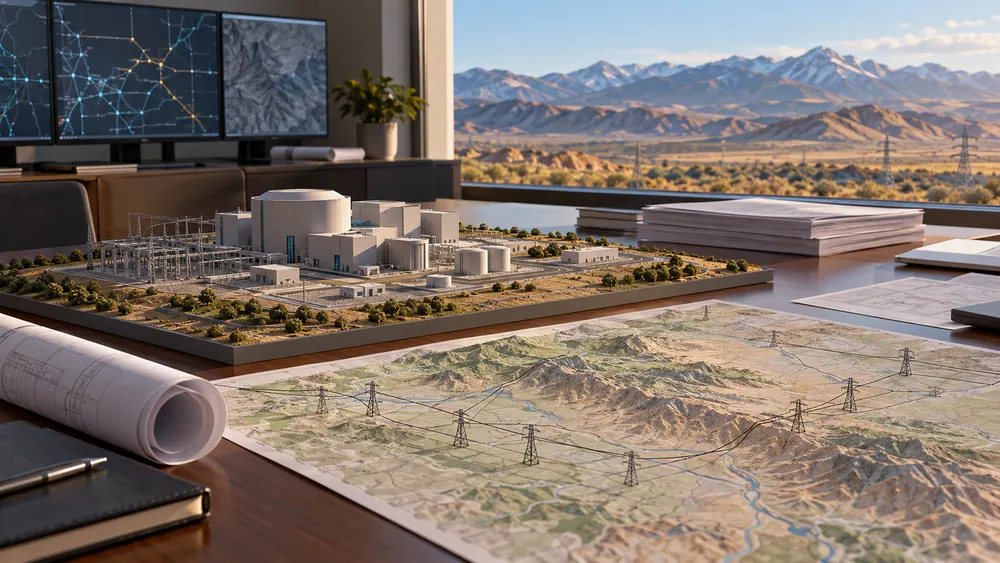
Idaho’s three investor-owned electric utilities told state regulators that nuclear power could add reliable, low-carbon generation to the regional grid, but uncertain construction costs and lengthy permitting make it difficult to justify for customers today.
The Idaho Public Utilities Commission convened Idaho Power, Rocky Mountain Power and Avista on Tuesday for a public discussion of nuclear generation. The official meeting notice described the session as an initial examination of whether nuclear power could become a viable long-term option. Commissioners had no specific project before them and took no action.
Utility representatives emphasized both the technology’s promise and its financial exposure, according to forum coverage by the Idaho Capital Sun. Nuclear plants can provide around-the-clock power without direct carbon emissions, which can complement weather-dependent resources. The same projects can require large upfront commitments, face years of federal review and expose ratepayers to overruns if schedules or budgets slip.
That tension is especially important under the commission’s “least cost, least risk” standard. A technology can improve reliability and fuel diversity yet still fail the test if its price, completion date or commercial performance cannot be estimated with reasonable confidence. Tuesday’s forum did not produce a cost estimate for an Idaho project.
Idaho Power has not ignored nuclear technology in its formal planning. Its 2025 plan considered a 100-megawatt small modular reactor in East Idaho as one possible future resource and assigned a 230-kilovolt interconnection assumption for modeling. But considering a resource in a 20-year planning exercise is not the same as selecting, financing or seeking approval to build it. The plan evaluated many options and chose a different preferred portfolio.
The utility is already developing its next long-range plan. Idaho Power said its 2027 process will use a public advisory council representing industry, agriculture, public-interest organizations, lawmakers and regulatory staff to compare resources for the coming 20 years. That process gives nuclear advocates another opportunity to show whether newer reactor designs can meet cost and schedule assumptions.
For Idaho customers, the practical issue is who bears the risk. Regulators would have to examine construction financing, federal licensing, fuel and decommissioning costs, insurance, transmission needs and whether a utility could recover spending if a project were delayed or canceled. Those questions are different from the research and demonstration work long associated with Idaho National Laboratory.
A future application would also force regulators to compare nuclear power with storage, transmission, natural gas, renewables and demand-management programs on the same reliability and cost assumptions. Without that side-by-side record, broad claims about affordability or necessity remain preliminary.
Tuesday’s discussion therefore moved nuclear power into Idaho’s regulated-utility conversation without moving a project toward approval. The next meaningful signal will come when a utility places a nuclear resource in a preferred plan, submits a contract or asks the commission to authorize customer-funded development. Until then, nuclear remains an option under study rather than a commitment on Idaho ratepayers’ bills.



