
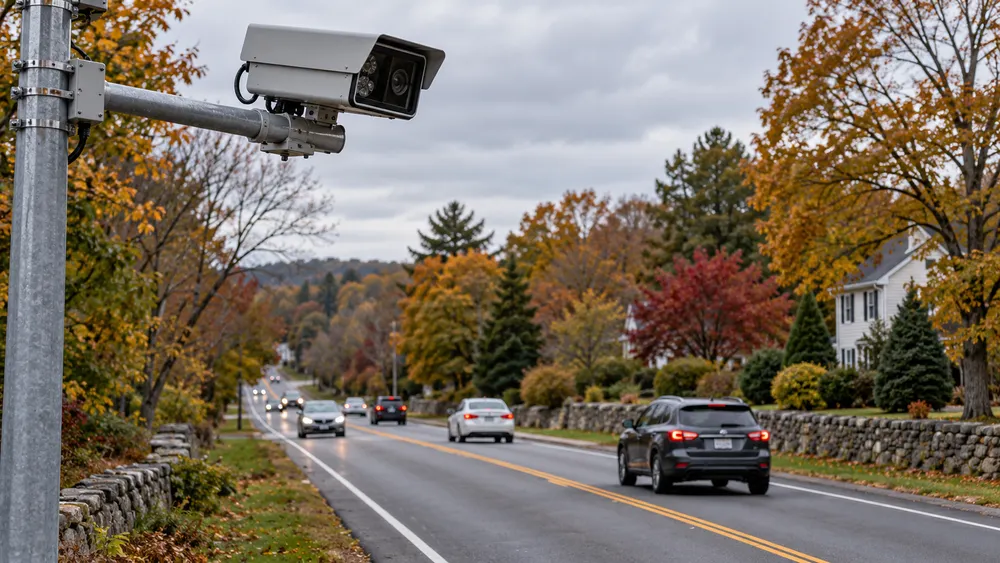
Connecticut police departments will have to delete most automated license-plate reader data after 21 days and operate under new limits on searches and interstate sharing when statewide safeguards take effect Oct. 1.
The changes are part of Public Act 26-14, a broader government-accountability law signed in May. The General Assembly’s record shows the measure cleared both chambers before becoming law, while a state agency summary identifies the act’s automated-reader provisions among the 2026 laws taking effect this fall.
What changes Oct. 1
Automated readers photograph license plates and record where and when vehicles pass a camera. Police use searchable databases built from those images to investigate crimes, find stolen vehicles and locate missing people. The same systems can also create detailed location histories for drivers who are not suspected of wrongdoing.
Under the new rules, data generally must be erased after 21 days unless it is connected to an active investigation, needed to comply with a warrant or retained for limited highway-fee purposes. Agencies must follow a statewide model policy and produce annual reports describing their use of the technology.
The law also narrows access outside Connecticut. Departments may share data through standing arrangements with agencies in Massachusetts, New York and Rhode Island only if those agencies accept Connecticut’s usage restrictions. Agencies elsewhere must obtain a judicial warrant to search Connecticut records, according to a detailed review of the law.
Protected uses and locations
The statute bars searches for immigration enforcement, reproductive care, gender-affirming health care or activity protected by the First Amendment, such as attending a protest. Public agencies also cannot collect plate data near certain reproductive or sexual-health facilities or organizations primarily serving immigrant communities.
The restrictions follow scrutiny of out-of-state searches of Connecticut data. Reporting cited in the legislative debate identified thousands of searches associated with immigration terms and a Texas query involving a woman who had obtained an abortion. Officials there said that search concerned a missing-person case rather than a criminal abortion investigation.
A policy still under review
Gov. Ned Lamont separately asked municipalities to pause new camera installations while the Police Officer Standards and Training Council develops broader guidance. In his request, Lamont said the law advanced privacy protections but left questions about where cameras are placed, what technologies are deployed and how information is shared.
The act regulates public agencies, not every privately operated camera. Retailers and other businesses may maintain their own systems and, in some cases, share information with police. That gap is likely to remain part of the legislative debate.
For residents, the immediate change is narrower: beginning Oct. 1, a routine plate scan held by a Connecticut public agency has a defined expiration date, protected categories of searches are off limits, and out-of-state access faces a new legal boundary.