
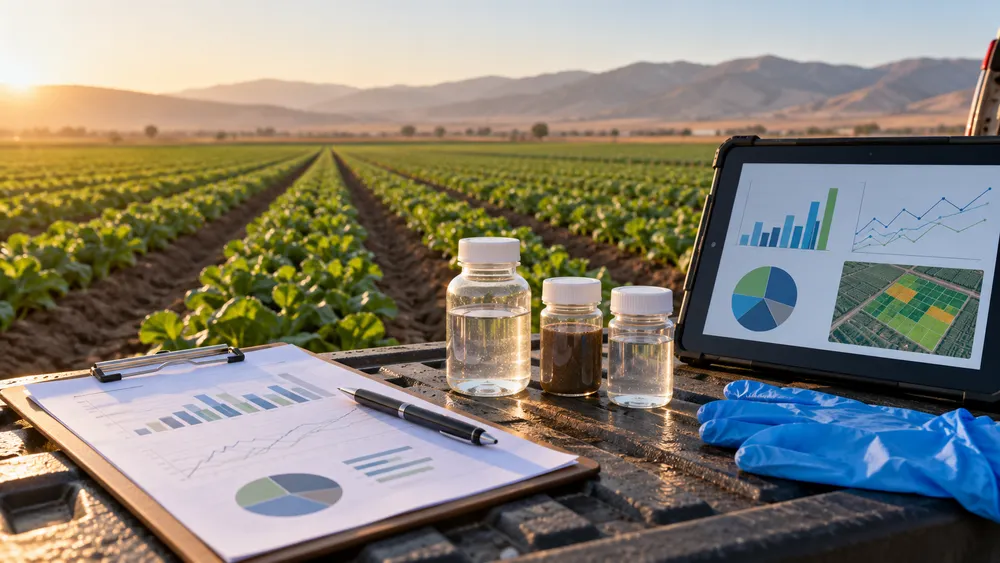
California will require its pesticide regulator to identify agricultural products containing PFAS in the state’s public pesticide-use database and publish statewide use trends, creating a new transparency system for chemicals often called “forever chemicals.” Gov. Gavin Newsom signed Assembly Bill 1603 as part of a Sept. 27 legislative update.
The law directs the Department of Pesticide Regulation to add PFAS information by Jan. 1, 2028, or when it posts pesticide-use data for 2026, whichever comes first. The enrolled bill text also requires PFAS to become a searchable category of interest and directs the department to include PFAS-use trends in its annual pesticide reports and other relevant publications.
What the law changes
California already operates one of the country’s most detailed pesticide-use reporting systems. The department’s California Pesticide Information Portal lets users search reported applications by year, county, crop or site, product and chemical. AB 1603 adds a new layer: the regulator must determine whether registered products contain intentionally added PFAS as an active, adjuvant or inert ingredient and display that status with the use data.
That distinction matters because the law is principally a disclosure and monitoring measure. It does not immediately prohibit farmers from using every pesticide that contains PFAS, and it does not direct the department to cancel existing registrations. An earlier version would have restricted registration of new PFAS-containing pesticides, but the final measure was narrowed before passage, Reuters reported.
The department must also publish a list of registered pesticide products containing PFAS ingredients and update it annually. That list, combined with use reports, should allow researchers, farm communities and local officials to distinguish which products are registered from where and how heavily they are applied.
What remains unresolved
The law’s usefulness will depend on how the department classifies ingredients and connects registration records to application reports. California’s portal currently supports searches by chemical active ingredient, while pesticide products can also contain adjuvants or so-called inert ingredients. AB 1603 expressly includes intentionally added PFAS in all three roles, making data integration a central implementation task.
PFAS comprise a broad family of persistent synthetic chemicals rather than a single compound. Federal health agencies have linked exposure to some PFAS with harmful outcomes, but the risk from any pesticide product depends on the compound, dose, route and duration of exposure. The new reporting requirement will show use patterns; it will not by itself establish exposure or prove harm from a particular application.
For growers and pesticide manufacturers, the immediate consequence is preparation for data disclosure rather than a new across-the-board ban. For Californians, the first meaningful checkpoint is the posting of 2026 data or the Jan. 1, 2028 deadline. The department’s implementation choices—especially its product-matching method and treatment of non-active ingredients—will determine whether the database becomes a practical oversight tool or only a broad inventory.