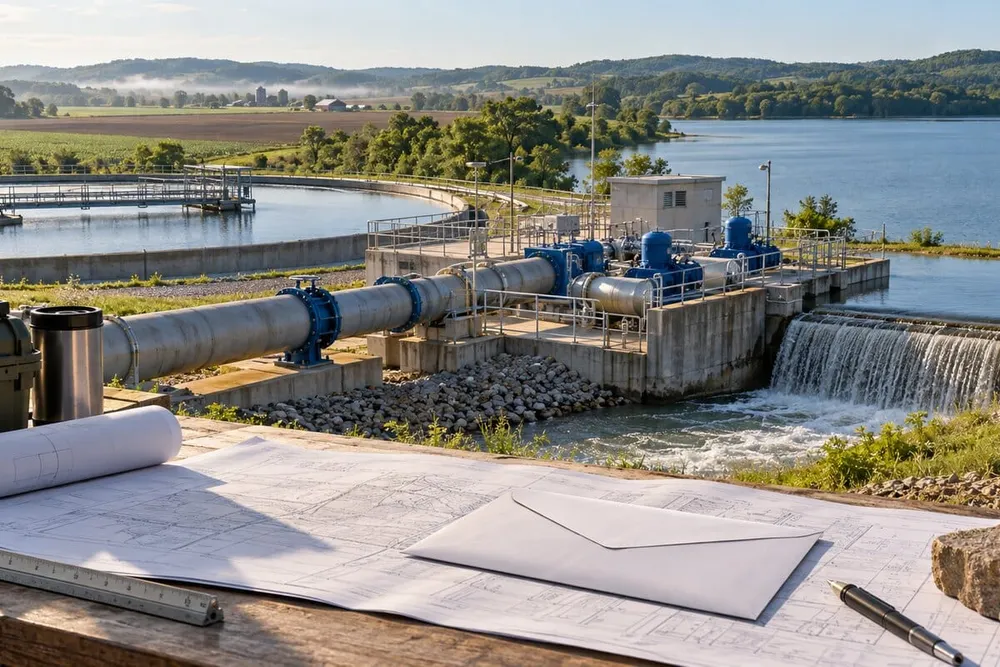
Arkansas voters will decide Nov. 3 whether to authorize up to $500 million in state-backed bonds for water, wastewater, irrigation, flood-control and pollution-abatement projects.
Issue 4 would give the Arkansas Natural Resources Commission authority to sell general-obligation bonds beginning July 1, 2027. The voter guide prepared by the University of Arkansas Division of Agriculture says no more than $165 million could be used for irrigation facilities. Without separate legislative approval, bond sales would be capped at $60 million in any two-year budget period.
The proposal does not appropriate the full $500 million at once. Under Act 578, the commission would first submit a written project plan and requested borrowing amount to the governor. The governor would consult the state’s chief fiscal officer about whether debt payments would create an undue burden on other programs, seek legislative advice and then decide whether to authorize a bond series.
The bonds would carry the state’s full faith and credit and could mature over as many as 35 years. Debt service would have priority in the state’s general-revenue system, although loan repayments and other commission revenue could also support repayment. That structure lets infrastructure costs be spread over decades, but it also commits future state revenue to principal, interest and administrative costs.
Eligible work would include drinking-water treatment and transport, sewer systems, drainage, flood protection, irrigation, wetlands and pollution-control projects. The legislation permits financing through loans or grants to public authorities, local governments, nonprofit entities and other qualifying recipients. Before individual projects receive money, they would still have to pass the commission’s planning and approval process.
The University guide reports that federal assessments identify more than $13 billion in Arkansas drinking-water, sewer and stormwater needs. It also says previous state bonds have helped provide required matching money for federal revolving-loan programs and financed projects intended to reduce pressure on the Mississippi River Valley alluvial and Sparta aquifers.
Arkansas voters last approved a comparable authorization in 2008, when a $300 million measure passed 631,767 to 332,507. The final amount from that authorization was offered for sale this July, according to the guide. The current election inventory maintained by AR Votes lists Issue 4 alongside three proposed constitutional amendments on the statewide ballot.
Supporters argue that state bonds can secure lower borrowing costs for local systems and preserve access to federal matching funds. Critics cited by the university question the breadth of eligible recipients and whether Arkansas should borrow while it holds substantial reserves. No opposition committee had filed with the state Ethics Commission as of Sept. 16.
A “for” vote authorizes the financing framework; it does not guarantee that every proposed project will be funded. An “against” vote would prevent the commission from issuing the new bonds, leaving lawmakers to use general revenue or other sources for future state assistance.