California’s proposed Sites Reservoir is moving toward a final water-rights decision after project managers accepted revised permit terms and advanced the 1.5 million acre-foot project into its next investment phase.
The State Water Resources Control Board is scheduled to consider the final permit Nov. 4, according to the governor’s office. The vote is a major regulatory milestone, but it is not a construction authorization by itself. The project must also complete funding, contracting and other permitting requirements before work can fully proceed.
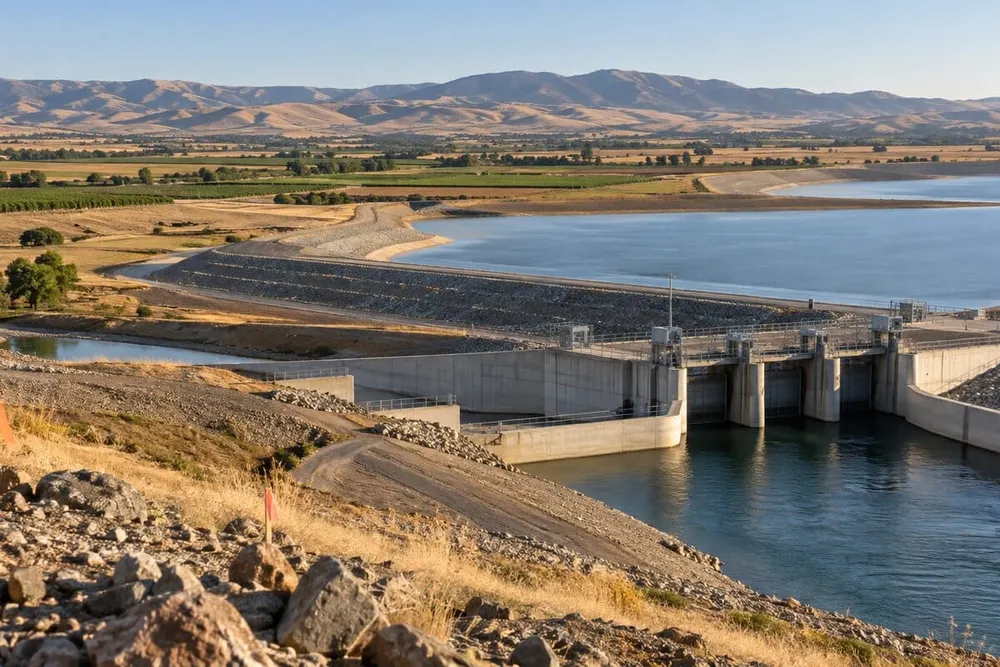
Sites would be an off-stream reservoir west of Maxwell in Colusa County, about 65 miles northwest of Sacramento. Rather than damming a major river, it would divert Sacramento River water during eligible high-flow periods and store it for use in drier years. The project authority says 30 participating agencies represent urban, agricultural and environmental water users across California.
The revised draft permit changed how the proposed reservoir would interact with California’s Bay-Delta rules and adjusted diversion criteria. In its permit response, the authority said the new conditions provide a potentially viable path by treating Sites like other new water-right applications and allowing diversions during high flows while retaining protections for fish, wildlife and the Sacramento River-San Joaquin Delta.
The authority’s board has now chosen to enter what it calls the benefits and obligations period. That step allows it to extend commitment contracts to participating agencies, clarifying how costs and water benefits would be shared. The decision signals that sponsors believe the revised permit is workable, but participants still must decide whether to make long-term financial commitments.
State officials say Sites could hold enough water to supply more than 4.5 million homes for a year, provide up to 200,000 acre-feet during declared drought emergencies, support wildlife refuges and help manage flood flows. Those figures describe planned capacity and modeled benefits, not water that is currently available.
California has made the project conditionally eligible for $1.363 billion through the Water Storage Investment Program. The Water Commission says the money is tied to public benefits such as ecosystem improvement, flood control, emergency response and recreation. Final awards require completed permits, environmental documents, public-benefit contracts and commitments for the non-state share of costs.
The project remains consequential because California’s existing system depends heavily on storing wet-season runoff for dry months and years. State planning estimates cited by the governor’s office say hotter and drier conditions could reduce overall water supply by 10% by 2040 and cut State Water Project reliability by as much as 23%.
The Nov. 4 permit decision therefore represents a gateway rather than a finish line. Approval would reduce one of the project’s largest regulatory uncertainties; rejection or major new conditions could force another redesign. Even with approval, construction timing will depend on participant contracts, financing and completion of the remaining state requirements.