
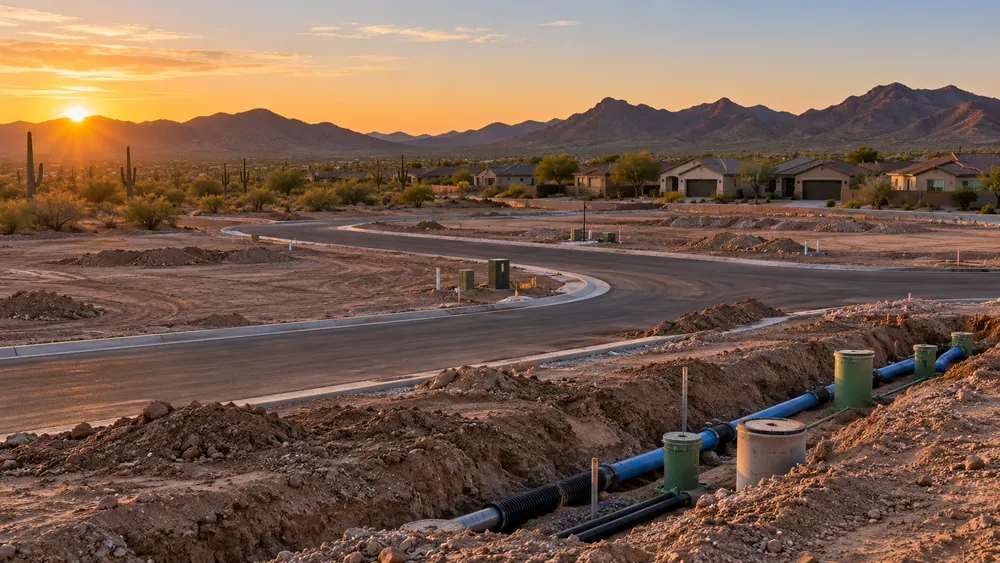
Arizona has launched a new financing program that lets qualifying development areas use tax-exempt bonds for roads, water lines, sewers and other public infrastructure, an effort intended to reduce upfront costs that can delay home construction. The new program, called State Affordability Infrastructure Districts, is administered through the Arizona Finance Authority.
Property owners may petition the authority to form a district and finance eligible infrastructure over time rather than funding all site work before homes can be built. The administration says the structure can spread costs for as long as 30 years at municipal tax-exempt interest rates. It is designed for infrastructure that supports development, not as a direct grant to an individual homebuyer.
The districts were authorized by bipartisan House Bill 2999, which Gov. Katie Hobbs signed in June. State officials say the mechanism could revive dormant projects and improve cash flow for new communities by moving major infrastructure costs away from the opening phase of construction. The Arizona Finance Authority has published formation and implementation guidelines, including disclosure measures for homebuyers and local governments.
That financing advantage does not guarantee lower sale prices or faster delivery. Developers must still secure land-use approvals, demonstrate project feasibility, sell bonds on workable terms and build the infrastructure and housing. Interest and repayment obligations remain part of the project economics even when costs are spread over a longer period. The program’s results will therefore depend on which projects qualify and whether savings flow through to buyers.
The petition process also makes project-level review important. A district can lower the initial capital burden, but the financing documents determine who repays the bonds, what property disclosures apply and how long assessments remain in place. Prospective buyers will need those details before comparing a home inside a district with one financed conventionally.
The initiative arrives as Arizona tries to match housing and infrastructure with rapid investment growth. The Arizona Commerce Authority reported a record development year, with supported projects committing to more than $109 billion in investment and 26,225 projected jobs during the fiscal year that ended June 30. Those commitments do not equal completed jobs or homes, but they illustrate the scale of growth pressures facing participating communities.
A separate state-supported competitiveness review identified infrastructure capacity, housing-related costs and streamlined development processes among Arizona’s long-term challenges. The new districts address one part of that problem: how to finance the streets and utilities needed before a large housing site can open.
The program also differs from zoning reform. It supplies a financing mechanism after land is available and a project is viable; it does not itself change density limits, water requirements or local approval standards. That boundary means districts may accelerate some projects while leaving other development barriers untouched.
For residents considering a home in one of the districts, the key details will be the repayment structure, assessments and disclosures attached to the property. For local governments, the central question is whether the mechanism accelerates needed infrastructure without shifting risk to existing taxpayers. Those questions can be answered only as petitions are approved and the first bond-financed projects move from plans to construction.