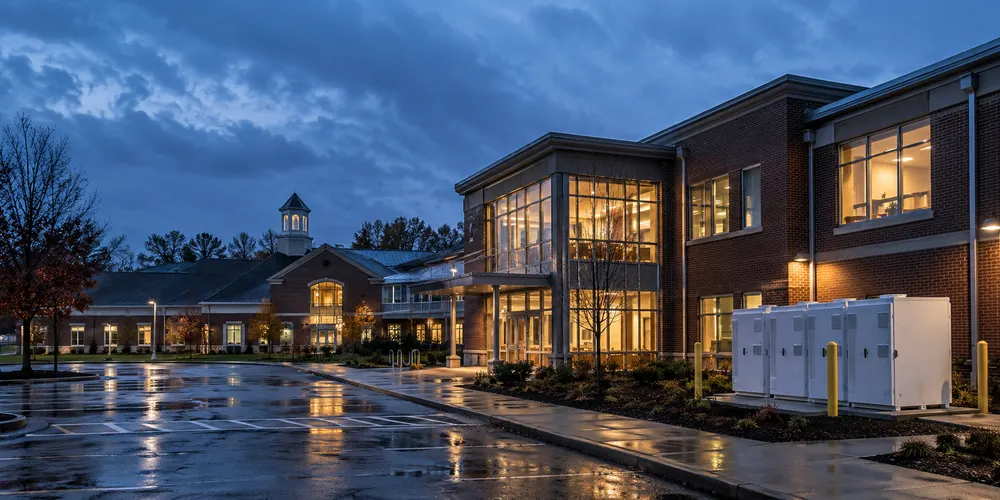
Massachusetts has awarded more than $40 million to 36 energy-storage projects intended to keep public facilities operating during outages, train first responders and test long-duration battery technologies. The statewide package covers schools, affordable housing, community centers, public-works buildings and wastewater plants, making resilience—not just added generating capacity—the immediate public benefit.
The largest part of the award supports 28 community-resilience projects totaling roughly 10 megawatts and 44 megawatt-hours of storage. Individual grants range from $71,800 for the Black Economic Council of Massachusetts sustainability hub in Boston to $2.5 million each for public-works or water infrastructure in Braintree, Lowell and Springfield. Boston Housing Authority properties, several public schools and community centers are also included in the award list.
The projects were selected through the Department of Energy Resources’ AMP program, a competitive initiative designed to accelerate storage deployments that improve resilience, reduce pollution and deliver economic and health benefits. Program materials say the state proposed $50 million for storage investment and prioritized communities facing greater environmental, health and economic burdens. State officials said most of the new community-project funding is headed to environmental-justice communities.
Six additional grants, totaling about $2.5 million, focus on battery safety and education. Recipients include the Boston Fire Department, the Metropolitan Area Planning Council and regional or statewide training organizations. Their work will cover fire codes, permitting, inspections, emergency response and technical assistance for municipalities. That element matters because the state’s safety guidance says nearly 97% of storage being built in Massachusetts uses lithium-ion technology and must comply with fire-code requirements that include emergency plans, detection and suppression systems, spill response and responder training.
The final two awards support long-duration technologies that differ from the lithium-ion systems most commonly associated with grid batteries. Berkshire East Mountain Resort in Charlemont will receive about $4.5 million for a 4-megawatt sodium-iron chloride system designed to store 80 megawatt-hours for 20 hours. Mystic Place Apartments in Medford will receive $883,500 for a zinc-based system rated at 240 kilowatts and 2.4 megawatt-hours, or about 10 hours.
The package also fits into Massachusetts’ broader storage buildout. State data show electric distribution companies reported 1,621 megawatt-hours of installed storage at the end of 2025, with another 13,289 megawatt-hours in development pipelines. Separately, a 2024 state climate law directs utilities to procure approximately 5,000 megawatts of storage by July 2030 through staged competitive solicitations.
The awards do not mean all 36 projects will begin operating immediately. Each recipient still must complete design, permitting, interconnection and construction work. For residents, the near-term significance is the assignment of public funding to named facilities and safety programs; the longer-term test will be whether those projects keep essential services available during outages while controlling operating costs. Implementation timelines will vary by site.