The White House says President Donald Trump will announce plans for South Korea to direct about $54 billion toward the Alaska LNG project, a potentially transformative financing source for a long-delayed pipeline and export terminal. The announcement would be consequential for Alaska, but it should not be read as proof that construction financing is complete or that the project has reached a final investment decision.
Reuters reported Wednesday, citing a White House official, that Alaska LNG is among the first projects selected under South Korea’s broader $350 billion U.S. strategic-investment package. The package grew from a 2025 trade agreement. The reported Alaska amount approaches the high end of the project’s estimated $44.5 billion to $54.5 billion cost range.
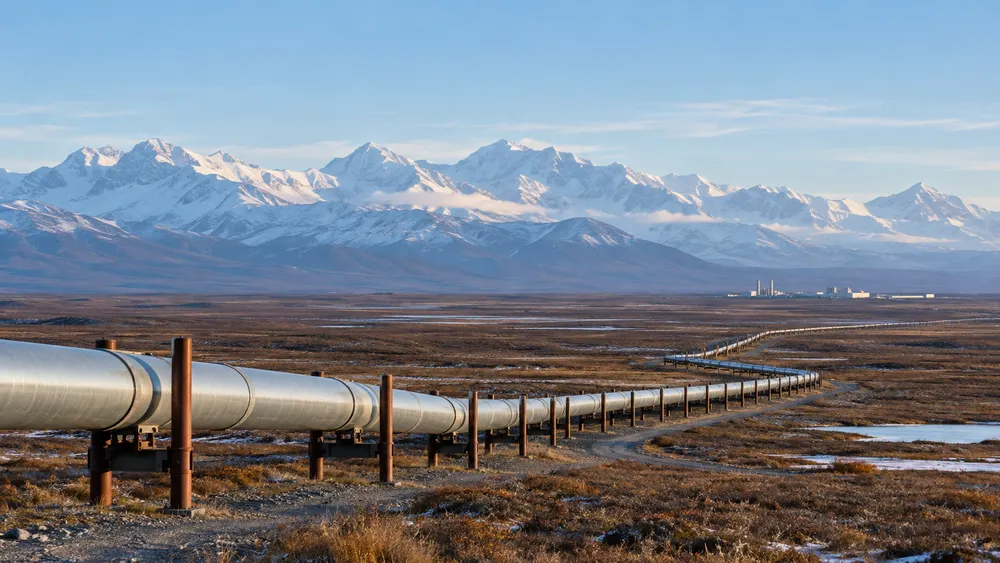
The proposal links the North Slope to Southcentral Alaska and Asian markets. The developer’s current project overview divides construction into two stages: a 739-mile, 42-inch pipeline intended first to meet in-state gas needs, followed by an LNG plant and related facilities at Nikiski that would extend the system to 807 miles and enable exports. Glenfarne Group owns 75% of the project; the state holds 25% through the Alaska Gasline Development Corporation.
Federal authorization already covers the core concept. The Federal Energy Regulatory Commission approved the gas treatment plant, connecting lines, main pipeline and liquefaction facilities in 2020. FERC’s record describes capacity of as much as 3.9 billion cubic feet of gas a day through the mainline and an export plant designed for up to 20 million metric tons of LNG annually. Permits, however, are not the same as financing, construction orders or commercial commitments.
The immediate question is what the South Korean investment announcement will legally and financially commit. The Associated Press reported that the plan comes from South Korea’s investment pledge and could give the project a major source of capital. Reuters separately reported that most purchase commitments remain preliminary and that the developer still needs additional volume commitments and binding contracts to line up full financing.
Alaska also has an in-state interest beyond exports. The state Department of Transportation is coordinating road and infrastructure work along the gasline corridor so other public projects do not conflict with the proposed treatment plant, pipeline and Nikiski terminal. The project’s first phase is marketed as a way to move North Slope gas to Southcentral consumers, where officials have warned about future Cook Inlet supply constraints.
Commercial risk remains substantial. The route crosses more than 800 miles of difficult terrain, requires a large greenfield export facility and would compete with established Gulf Coast exporters and newer Canadian terminals. Reuters reported that the project now targets a pipeline decision in 2026, an export-facility decision in 2027 and first LNG exports in 2031—milestones that can slip on projects of this scale.
For Alaska, the next documents will matter more than the headline number: signed investment agreements, binding gas-sales contracts, a completed capital structure and a formal construction decision. Until those appear, the $54 billion plan is a major political and financial endorsement, but not yet a guarantee that the pipeline will be built on the proposed schedule.