
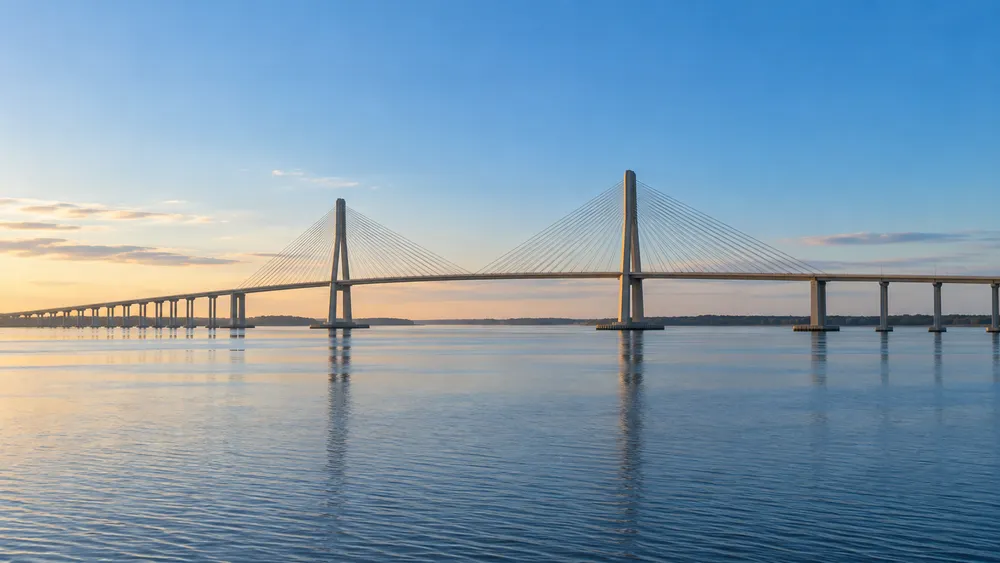
Alabama has issued the notice to proceed for the $3.2 billion first phase of the Mobile River Bridge and Bayway project, converting a decades-old Gulf Coast plan into an active construction program. Gov. Kay Ivey said the state authorized the Kiewit Massman Traylor design-build team to begin work after bond sales and federal financing closed, with a ceremonial groundbreaking scheduled for Oct. 2.
The governor’s Sept. 29 announcement says the Alabama Department of Transportation, acting for the Alabama Toll Road, Bridge and Tunnel Authority, issued the formal notice on Sept. 25. That notice is the final procedural authorization before full construction; early geotechnical work, test piles, site preparation and procurement were already underway.
Phase One will build a six-lane cable-stayed bridge across the Mobile River, reconstruct about one mile of the existing Bayway and restripe the full 7.5-mile Bayway from two lanes to three in each direction. It also includes interchange and traffic-flow work in Mobile and Baldwin counties. ALDOT says the new bridge will give hazardous-material trucks an Interstate 10 route across the river; those vehicles are barred from the Wallace Tunnel and now detour onto local streets.
The financing is unusually large for a state road project. The U.S. Department of Transportation approved a Transportation Infrastructure Finance and Innovation Act loan of up to $2.52 billion. Federal participation also includes a $550 million Bridge Investment Program grant and a $125 million INFRA grant, while Alabama and the authority are using state funds and bond proceeds. The federal project record lists the credit agreement as executed Sept. 16.
For drivers, the important near-term point is that no tolls will be collected during construction. Tolling begins only after the bridge and Phase One improvements open, now projected for late 2031. The project’s current fact sheet lists a $3 ALGO Pass rate for passenger vehicles and a $60 monthly unlimited-crossing option. The Wallace and Bankhead tunnels, the Causeway and the Africatown Bridge are scheduled to remain toll-free alternatives.
The completed first phase is expected to reduce travel times by as much as 30 minutes, according to the Build America Bureau’s project summary. That forecast is not a guarantee; actual relief will depend on demand, traffic operations and how drivers respond to tolling. Construction itself can also create temporary lane or access changes, so commuters and freight operators should watch ALDOT notices rather than assume existing patterns will remain unchanged.
The state divided the work after inflation, labor and materials costs, geotechnical conditions and engineering demands made simultaneous construction of a new bridge and a completely new Bayway financially unworkable. A second phase would build a replacement Bayway as additional money becomes available, with future toll revenue helping finance it. The authorization therefore locks in the bridge and added capacity now, but it does not complete every element of the long-range corridor plan.