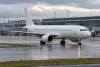
Riyadh’s King Khalid International Airport resumed limited domestic service on Wednesday, but a deadly strike at another Saudi airport and broad international airline suspensions showed that normal travel had not returned.
The partial reopening gave some passengers a route through the kingdom after days of disruption linked to renewed Houthi attacks. Yet it came as the United States reduced its diplomatic presence, foreign carriers kept aircraft away and Saudi authorities continued to control access to Riyadh’s main airport. For travelers, the distinction between an airport being open and a dependable itinerary has rarely been clearer.
A reopening without normal operations
King Khalid airport reopened for domestic flights after multiple strikes, according to AP reporting. Reuters separately reported that departures and arrivals remained subject to Saudi permission even after the reopening, a restriction that limits how quickly carriers can restore ordinary schedules.
The airport’s official site continued to direct passengers to live flight information, an important distinction because a terminal-level reopening does not mean every published flight will operate. Saudi carriers including Saudia and Flynas were among the airlines able to maintain or restore some service, while many foreign operators kept suspensions in place.
The security picture also widened beyond Riyadh. An attack at King Fahd International Airport in Dammam killed one Saudi resident and forced flight diversions, AP reported, citing Saudi aviation authorities. That episode underscored the practical problem facing network planners: alternative gateways can also become unavailable with little warning.
International airlines remain cautious
Major airlines responded with suspension windows extending well beyond the immediate crisis. A Reuters tally said Air France-KLM had suspended Riyadh service through Nov. 7, Lufthansa through Nov. 18 and Philippine Airlines through Nov. 29. Air India, IndiGo, Akasa Air and Etihad announced shorter pauses, while Qatar Airways temporarily suspended Riyadh and Dammam flights.
Those dates are operational plans, not promises. Airlines can extend, shorten or reroute suspensions as security assessments and airspace restrictions change. The breadth of the cancellations matters because Riyadh and Dammam feed onward trips across the Gulf, South Asia, Europe and North America. A canceled Saudi segment can break an entire itinerary even when the traveler’s origin and final destination remain open.
Delta also delayed the planned start of its Atlanta-Riyadh route until March 2027, according to Reuters. That decision differs from canceling an existing daily flight, but it illustrates how a prolonged security shock can affect future capacity as well as current passengers.
U.S. security measures add urgency
The U.S. State Department ordered nonessential embassy employees and eligible family members to leave Saudi Arabia, according to a second AP report. The move did not amount to an evacuation of all Americans, but it was a significant official judgment about the risk of further escalation and the reliability of transportation.
A new U.S. Embassy security alert warned of potential airport attacks, airspace closures, cancellations and other disruptions. The State Department’s broader travel advisory told Americans to reconsider travel to the kingdom and said commercial flights were operating but significantly disrupted. It also noted that U.S. government employees needed special authorization to use any Saudi airport.
The advisory described threats to airports and other infrastructure from drones and missiles, as well as the danger of falling debris. It kept areas near the Yemen border at the department’s highest warning level. Taken together, the staffing order and public guidance signal that Washington expects disruption to remain possible even where limited flight operations have restarted.
Connections are the weak point
For passengers already in Saudi Arabia, the immediate challenge is less about whether any aircraft are moving than whether a full journey can be completed. Limited domestic service may help travelers reposition inside the kingdom, but international connections depend on airline permissions, available crews, open airspace and functioning destination airports.
Separate tickets create particular exposure because one airline may not be responsible for rebooking a missed flight on another carrier. Even a protected through-ticket can require a long detour if the operating airline has suspended Saudi service. Travelers moving through Dammam as an alternative to Riyadh now face the additional uncertainty created by the fatal airport strike there.
What travelers should watch
Passengers with imminent travel should verify each segment directly with the operating airline and check the airport’s live departure board before leaving for the terminal. Airline waivers, rebooking deadlines and refund rules can change independently from the security situation, so a screenshot of a schedule is less useful than a current reservation status.
Travelers should also confirm transit and entry requirements for any newly proposed routing, particularly if an airline shifts a connection to another country. The State Department recommends contingency planning and insurance that covers disruption, while emphasizing that travelers should not assume the U.S. government can arrange their departure.
The limited reopening is meaningful because it restores some mobility and gives Saudi aviation authorities room to expand operations. But the continued foreign-airline suspensions, the attack in Dammam and the U.S. staffing reduction all point in the same direction: Saudi air travel is functioning selectively, not normally, and itineraries remain vulnerable to rapid change.