The Pentagon plans to raise annual production capacity for PAC-3 MSE missile interceptors from roughly 600 to 2,000 and increase THAAD interceptor capacity from 96 to 400, a more than threefold expansion for each weapon. The department said Monday that new seven-year agreements with General Dynamics Ordnance and Tactical Systems and Lockheed Martin would support the scale-up.
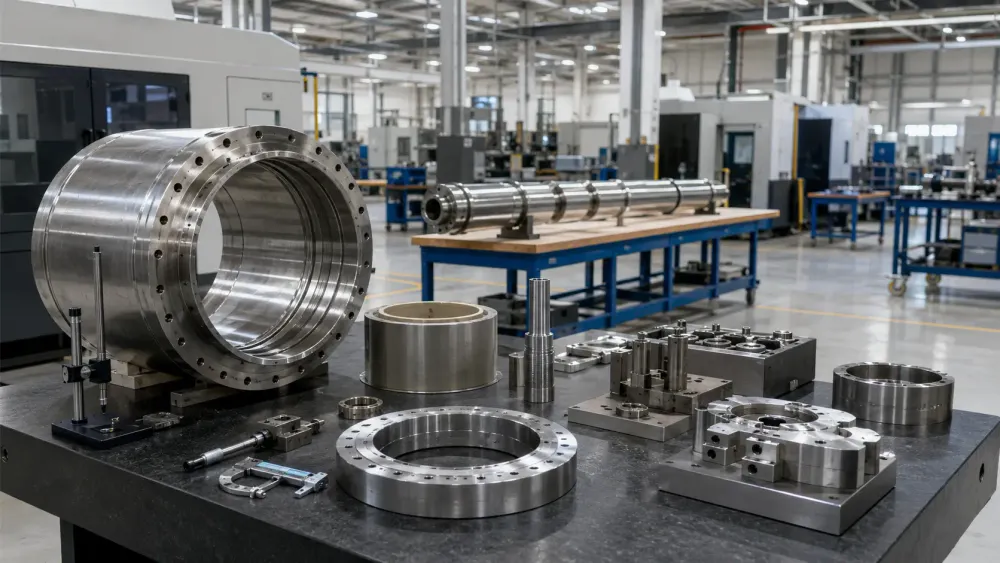
The agreements target components that can constrain the entire production line, including motor cases, seeker housings, missile midsections and shroud-deployment systems. The Pentagon’s announcement says the arrangements guarantee minimum annual procurement quantities, giving contractors and lower-tier suppliers a basis for hiring workers, ordering materials and upgrading factories.
That long-term commitment is strategically significant after several conflicts exposed how quickly advanced interceptors can be consumed. It is not, however, an immediate inventory increase. Production facilities, specialized suppliers and trained workers must be added before output rises, while purchases under the agreements remain subject to annual congressional appropriations.
Components Become the Center of the Production Strategy
Missile output is determined by the slowest element in a complex supply chain. A prime contractor may have room to assemble more interceptors, but capacity cannot expand if a single supplier cannot deliver enough rocket-motor cases, guidance hardware or protective shrouds. The new General Dynamics agreement focuses federal purchasing power on several of those specialized parts rather than treating final assembly as the only constraint.
The Pentagon described the arrangements as framework agreements that initiate seven-year multiyear procurements. Reuters independently reported the signing and the two programs involved. Lockheed Martin is the prime contractor for both interceptors, while General Dynamics Ordnance and Tactical Systems supplies critical structural and deployment components.
Multiyear procurement changes the economics for suppliers. Annual contracts can make a company reluctant to build a factory or hire a specialized workforce because demand may disappear in the next budget. Guaranteed minimum quantities over several years reduce that risk and can support bulk material purchases, automation and additional shifts. The government, in return, accepts a longer commitment to a particular design and supplier network.
The component agreement also broadens the production problem beyond Lockheed Martin's assembly plants. General Dynamics said the targeted work spans motor cases, seeker housings and midsections for PAC-3 as well as a shroud-deployment assembly used on THAAD. Each item must arrive in the right sequence and pass government acceptance. A capacity increase at one tier can therefore be stranded if tooling, energetic materials, electronics or inspection throughput at another tier does not keep pace.
Patriot and THAAD Defend Different Layers
The Patriot Advanced Capability-3 Missile Segment Enhancement, or PAC-3 MSE, is a hit-to-kill interceptor that destroys a threat through direct impact rather than a conventional blast-fragmentation warhead. The Army says it is designed to counter tactical ballistic missiles, cruise missiles and aircraft, with greater range and altitude than earlier Patriot variants. It operates in the lower portion of a layered air-and-missile defense system.
Terminal High Altitude Area Defense, or THAAD, is intended to intercept short-, medium- and intermediate-range ballistic missiles during their terminal phase at higher altitudes. Raising THAAD capacity from 96 to 400 interceptors annually is therefore not interchangeable with increasing Patriot output. The systems cover different engagement opportunities, allowing commanders to assign an interceptor according to a threat’s trajectory and the asset being protected.
The layers can also be integrated. An Army analysis describes testing that connected PAC-3 MSE launchers with THAAD’s radar and command system, potentially expanding the defended area and giving operators more firing options. More missiles improve endurance only if sensors, launchers, communications and crews are also available to employ them.
That distinction matters when comparing the production targets. The larger PAC-3 goal reflects a system used across a wider set of missions and by a larger international customer base. THAAD's smaller numerical target supports a more specialized upper-tier defense. Counting the two interceptors together would obscure those different roles, and it would say nothing about how many complete batteries can be fielded or sustained.
Recent Operations Exposed the Inventory Problem
Demand has risen because the same families of interceptors support U.S. forces, allies and foreign military sales. Russia’s repeated ballistic-missile attacks on Ukraine, Iranian launches in the Middle East and allied efforts to strengthen air defense all draw on overlapping production capacity. Unlike inexpensive drones, advanced interceptors require tightly controlled materials, precision manufacturing and extensive testing, so output cannot be increased in a few months.
An Associated Press investigation last week cited a U.S. defense official and a NATO official who described Patriot stocks in Europe as critically low after missiles were moved to the Middle East. The inventory figures are classified and the officials spoke anonymously, so the scale of the shortfall cannot be independently verified. Their account nevertheless illustrates why announced production capacity has become an operational issue rather than simply an industrial policy goal.
Public procurement records also show the limits of rapid replenishment. A CSIS analysis concluded that deliveries from the expanded THAAD program are expected to begin only after a multiyear lag. Estimates of wartime expenditure vary, but every interceptor fired creates a replacement requirement that competes with new deployments and foreign orders.
The mismatch is partly structural. Militaries may fire more than one interceptor at an incoming missile to raise the probability of a successful defense, and attackers can combine ballistic missiles, cruise missiles and drones to stress different sensors and weapons. Expanding PAC-3 and THAAD production addresses the most dangerous ballistic threats, but it does not remove the need for cheaper ways to defeat lower-cost drones and decoys.
Contract Ceilings Are Not Immediate Spending
The scale of the underlying procurement is large. In July, the government awarded Lockheed Martin an undefinitized contract action that brought the potential seven-year PAC-3 MSE value to $58.62 billion. The company’s disclosure says capacity is intended to triple by the end of 2030 and employment at its Camden, Arkansas, operation could rise from 1,200 to about 1,850.
The THAAD agreement has a potential value of as much as $35 billion over seven years, according to Lockheed Martin’s June award. Those figures are ceilings for multiyear contract actions, not checks paid in full when announced. Final quantities, yearly obligations and delivery schedules depend on appropriations, negotiated terms and performance.
Lockheed reported delivering 620 PAC-3 MSE interceptors in 2025 after increasing output by more than 60% over two years. Moving toward 2,000 annually will require a much larger supplier base and sustained quality control. Missile-defense components must perform under extreme heat, acceleration and vibration; faster production that creates defects or delays acceptance would add nominal capacity without delivering usable inventory.
Delivery Rates Will Determine the Military Effect
The agreements show that the Pentagon is replacing short purchasing cycles with a longer demand signal for high-priority munitions. That can unlock private investment and reduce gaps between prime contractors and specialized suppliers. It also concentrates substantial spending in existing programs, making cost transparency, competition and congressional oversight important as undefinitized actions become final contracts.
The most useful measures will be delivered interceptors, not announced ceilings or factory square footage. Congress and military planners will need to track annual procurement quantities, delivery dates, unit costs, test failures and the time needed to restore deployed inventories. Supplier hiring and facility expansion matter only insofar as they produce accepted missiles on schedule.
The Pentagon’s latest agreements therefore establish a credible industrial path toward a much larger missile-defense arsenal, but they do not close today’s readiness gap. PAC-3 and THAAD capacity could be several times higher by the end of the decade if appropriations continue and suppliers meet their targets. Until deliveries rise, commanders must manage finite interceptors across Europe, the Middle East and the Indo-Pacific while reserving the most expensive defenses for the threats they are uniquely designed to stop.