A Senate inquiry opened Thursday is seeking answers to 13 questions and six categories of Pentagon records after Ukraine’s military satellite service was restricted without warning, exposing uncertainty over who can alter a communications system used in active combat.
Sen. Richard Blumenthal of Connecticut, the senior Democrat on the Permanent Subcommittee on Investigations, sent parallel demands to Defense Secretary Pete Hegseth and SpaceX chief executive Elon Musk on October 22. The inquiry asks who ordered and implemented an October 13 speed limit on Starshield, what contractual authority governed the change, which American military missions depend on the network and what alternatives exist if SpaceX service becomes unavailable.
The new oversight effort does not establish who was responsible. Public accounts conflict, and the senator lacks subpoena power while Republicans control the Senate. But the inquiry broadens a battlefield disruption into a question about Pentagon command authority, contractor power and whether a single commercial provider has become a point of failure for U.S. national security.
A battlefield restriction becomes an oversight test
Ukraine began experiencing problems late October 13 when terminals mounted on drones and other fast-moving platforms lost connectivity above a reported threshold of 100 miles per hour. Ukrainian officials told multiple news organizations that the change hindered strike missions and interceptor drones used against incoming Russian weapons. An AP report said the cap forced drones to fly more slowly, while Ukraine entered talks with SpaceX and the Pentagon over restoring full service or obtaining a more expensive aviation package.
Blumenthal’s Pentagon letter says President Volodymyr Zelenskyy told him on October 19 that access remained degraded for systems moving faster than 100 miles per hour, impairing drone interception. Separate reporting by CBS News described Ukrainian soldiers losing connections to fast-moving unmanned aircraft. The evidence establishes a real operational restriction, but it does not by itself identify the person or institution that authorized it.
Responsibility remains publicly disputed
SpaceX and the administration have offered accounts that do not resolve the chain of command. Musk has said Starshield systems are owned and controlled by the U.S. government and that limits on their use are set by the military or ultimately the president. President Donald Trump denied ordering a restriction and initially said he did not believe Musk had done so.
Reuters previously reported that two U.S. officials and a Western official said the direction originated inside the White House and was conveyed to Defense Department leaders. A senior U.S. official, however, told Reuters that no such request came from the president. SpaceX and the Pentagon did not answer the outlet’s detailed questions at that stage. On Thursday, the Pentagon said it would respond directly to the congressional correspondence.
The senator’s separate SpaceX letter asks both parties to identify every official involved, explain how the restriction was communicated and disclose who has technical and legal authority to activate, geofence, throttle or shut off service. Those are requests, not findings. Their importance lies in the fact that the public record still cannot answer a basic operational question: who held the switch?
Satellite links have become combat infrastructure
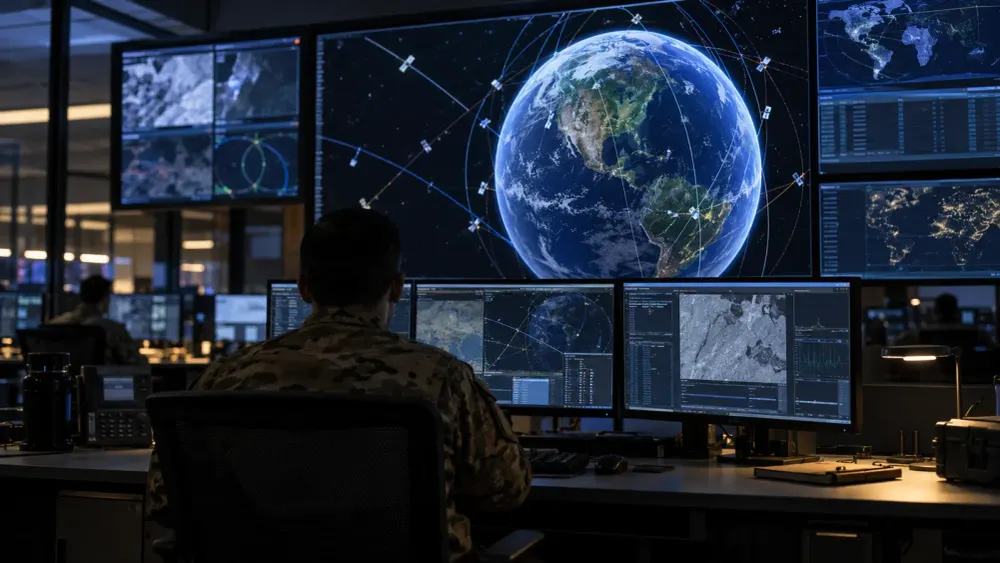
Starshield is the government-focused counterpart to Starlink and uses the same low-Earth-orbit satellite constellation as its backbone. In Ukraine, satellite links connect drone operators, carry video and targeting information, coordinate logistics and preserve communications when terrestrial networks are damaged or jammed. The Pentagon is Starshield’s largest customer, Reuters reported, and the letters say the Defense Department and intelligence agencies have awarded SpaceX billions of dollars for communications, dedicated satellites and other national-security work.
That dependence produces speed and scale that government-owned networks may not match, but it also shifts critical military functions into a commercial architecture. The Ukraine episode demonstrates the operational effect of a service change applied across a theater. It does not prove U.S. forces would face the same restriction, yet it gives Congress a concrete reason to examine contract terms, notice procedures and the technical separation between Starshield and the commercial Starlink network.
The inquiry focuses on single-vendor risk
Blumenthal is asking the Pentagon to list U.S. missions, units and systems that depend on Starlink or Starshield, identify cases with no alternative provider, and produce risk assessments addressing service denial, coercion, cyber compromise and vendor unwillingness. He also seeks every Starlink and Starshield contract since fiscal 2020, including sole-source justifications and provisions governing access or termination.
Those requests frame the central defense-acquisition issue. Redundancy can come from other commercial constellations, government-owned capacity or multi-vendor designs, but each option carries cost, security and interoperability tradeoffs. A network built around one provider may be efficient until a technical outage, policy dispute or contractual ambiguity interrupts it. Conversely, the inquiry has not shown that an alternative could have delivered equivalent coverage or performance in Ukraine on short notice.
Deadlines will test the inquiry’s reach
The letters request written answers by November 5. They also seek Pentagon records and communications with the White House, SpaceX and Ukraine dating from January 1, along with a SpaceX briefing by November 12. Classified material may be supplied separately, meaning the public may receive only a partial account even if the recipients cooperate.
For now, the strongest conclusion is narrower than the competing allegations. Ukraine’s Starshield capability was restricted, operational missions were affected, and responsibility remains disputed among accounts involving SpaceX, the Pentagon and the White House. The inquiry’s value will depend on whether contracts and communications clarify the authority behind that change and whether the Pentagon can show that its forces and allies have reliable alternatives when a commercial military network is altered.