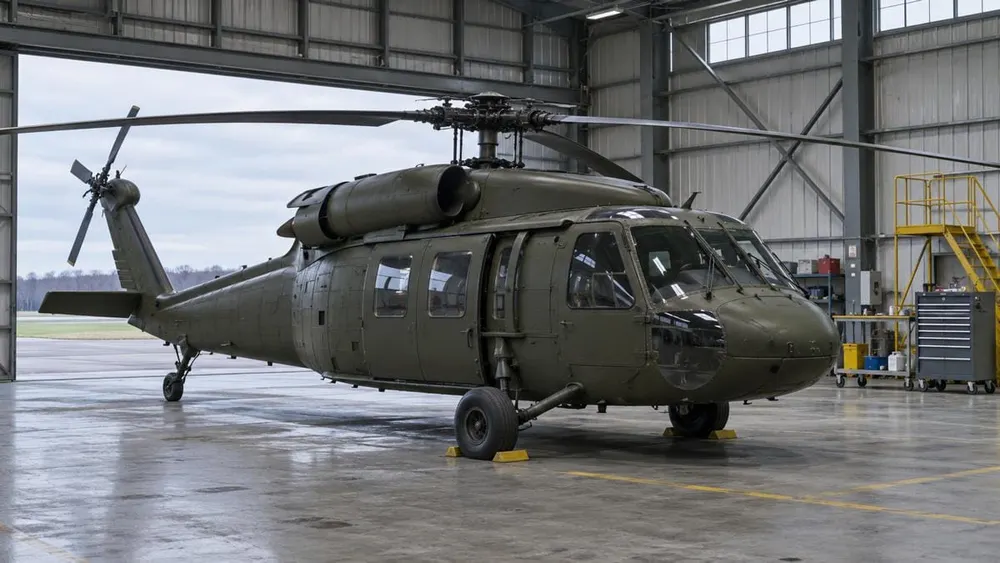
Lithuania has received two more U.S.-built Black Hawk helicopters, completing delivery of the four aircraft it ordered in 2020 to replace Soviet-era Mi-8s. The Lithuanian Ministry of National Defence announced the arrival Saturday. The agreement also covers training, spare parts, repairs and logistics, and Lithuania plans to use the aircraft for civilian emergency work as well as military transport and medical evacuation.
The two arrivals follow delivery of the first pair in 2025. Lithuania has allocated about $232 million to the purchase, while the U.S. government has provided $30 million in financial support, the ministry said. Defence Industry Europe reported that Lithuania allocated additional money during the project to buy newer equipment. The announced figures describe the purchase and supporting package, so they cannot be divided by four to determine the price of an individual helicopter.
Replacing the aircraft and the support system
The contract announcement in 2020 said the UH-60M aircraft would replace Lithuania’s Mi-8T helicopters. The replacement involves more than a new airframe. The military also has to train the people who will fly and maintain the aircraft, secure replacement parts, and provide space and equipment for maintenance. The original agreement included all of those supporting elements, alongside the purchase of the four helicopters.
Lithuania built a maintenance hangar for the Black Hawks as part of its work to prepare for the fleet. The ministry described the facility as a place to store and maintain the helicopters, and it planned the work around a two-stage delivery. Deliveries alone establish how many aircraft the military has received. The infrastructure and training will help determine how many can be kept available for operations and whether the older helicopters can be retired without leaving a gap in service.
The Lithuanian military said its first pair flew in Lithuania after arriving in October 2025. Defence Minister Robertas Kaunas said Saturday that Lithuanian pilots are being trained in the United States, according to the ministry’s statement. The training and maintenance support in the 2020 purchase package therefore remain relevant even though the last two helicopters have reached Lithuania. The announcement did not set a date by which the entire fleet would be available for every mission it is expected to perform.
The earlier procurement announcement had anticipated that the first aircraft might arrive in late 2024, subject to completion of the preparations. The Lithuanian military later recorded the first aircraft arriving in October 2025. The distinction matters for assessing contracts like this one. The aircraft order sets the number and scope of the purchase, while training, acceptance and entry into service are distinct milestones.
Peacetime work for the same fleet
Lithuania expects the helicopters to support search and rescue, firefighting and transport of donor organs for transplants, the ministry said. Flank also reported that the aircraft will support medical evacuation and military training. The 2020 contract announcement described a standing need for air crews to respond to distress at sea or to search for missing people on land. Those duties explain why the purchase has implications for emergency services as well as the armed forces.
Having four helicopters does not mean all four will be assigned to the same duty. A utility fleet has to cover training and maintenance periods while retaining the ability to respond to calls for help. Lithuania’s announcement lists both military and civilian tasks, but it does not specify how the military will allocate the aircraft among them. The transition will depend on how quickly the new helicopters and trained crews can take over duties the Mi-8s have been expected to perform.
What the purchase changes for allied cooperation
Kaunas said the project would make it easier for Lithuania to work with the United States and other NATO members using the same aircraft. That was also a goal of the original agreement, which described opportunities for Lithuania to train and operate alongside partner forces. A common aircraft can give crews a similar starting point for training and maintenance. Joint work still depends on how each military equips its helicopters and trains the people who use them.
The United States’ $30 million contribution was part of the plan at signing and remained the figure cited by the Lithuanian minister on Saturday. The amount Lithuania says it allocated to the program is higher in dollar terms than the estimate it gave in 2020. The ministry said the project later included funding for newer equipment. It did not publish a detailed breakdown of changes to individual costs.
The current delivery completes the aircraft portion of an agreement signed six years ago. When the deal was announced, officials spoke of a four-helicopter fleet and a possible later purchase of two more if needed. Saturday’s delivery report covers the four in the original order. For Lithuania, the next stage is bringing the full fleet into regular service, including the domestic rescue and emergency work that helped shape the purchase in the first place.