A federal judge has stopped the Agriculture Department from closing offices and relocating employees under a sweeping reorganization, finding that Congress likely barred the agency from using current appropriations for those moves without lawmakers’ approval.
U.S. District Judge Vince Chhabria granted a stay Tuesday in American Federation of Government Employees v. U.S. Department of Agriculture, pausing major parts of the plan while the lawsuit proceeds. The 40-page order applies to office closures and relocations across eight USDA components, including the Agricultural Research Service, Forest Service, Food and Nutrition Service, Economic Research Service and Foreign Agricultural Service.
The decision is preliminary, not a final judgment that the reorganization is unlawful. Chhabria concluded, however, that the unions, local governments and nonprofit organizations challenging the plan had shown they were likely to succeed on their claim that USDA’s use of appropriated money conflicts with limits set by Congress. The order relies on Section 705 of the Administrative Procedure Act, which permits a court to preserve the status quo while reviewing agency action.
The central dispute is less about whether an administration may reorganize an executive department in the abstract than about whether it may spend money on specific closures and transfers after Congress restricted that use. Chhabria wrote that the appropriations language did not contemplate USDA using its funds to shut offices or move employees as part of this plan. Independent reports from Reuters and The Washington Post reached the same core conclusion: the ruling blocks implementation for now, but its practical duration may depend on Congress’s next funding law.
A plan built around regional hubs
USDA announced the reorganization in July 2025 as an effort to reduce management layers, consolidate support functions and move services closer to farmers. The department’s original announcement said it intended to reduce the National Capital Region workforce from roughly 4,600 employees to no more than 2,000 while maintaining some functions for every mission area in Washington.
The plan designated five hubs: Raleigh, North Carolina; Kansas City, Missouri; Indianapolis, Indiana; Fort Collins, Colorado; and Salt Lake City, Utah. It also called for USDA to leave its South Building, Braddock Place and the Beltsville Agricultural Research Center in Maryland. The department argued that lower costs, excess office capacity and proximity to agricultural communities justified the changes, and it said critical public-safety work would continue.
Implementation moved beyond a broad policy proposal. About 2,600 Washington-area employees faced relocation under later phases, according to Reuters. The department also planned to consolidate programs and offices nationwide. Opponents said those actions would trigger departures among scientists and specialists who could not move, disrupting food inspection, agricultural statistics, nutrition assistance, wildfire management, research and trade programs.
The government disputes that characterization. USDA has said employees would retain positions and has framed the moves as a more efficient alignment of staff and facilities, not an effort to eliminate essential functions. After the ruling, a department spokesperson told Reuters that USDA was reviewing the decision and would respond in court.
Why Beltsville matters
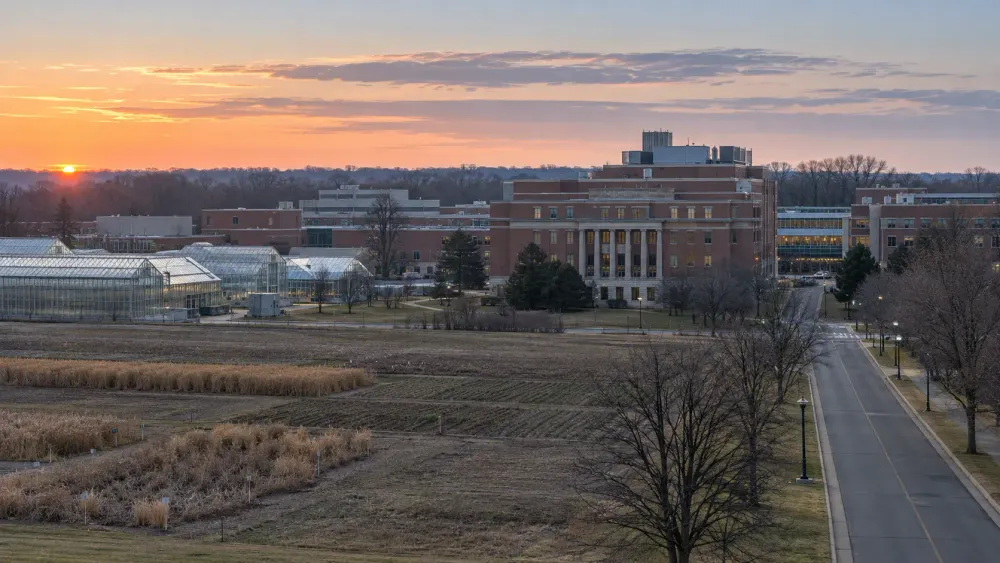
The ruling has immediate significance in Maryland, where the planned closure of the Beltsville Agricultural Research Center put about 1,000 jobs and a century-old federal research campus at issue. The center conducts work involving livestock, poultry, bees, crop systems and food science. Its researchers contributed to past advances against livestock disease and to food-labeling science, while current programs are tied to regional ecosystems and national agricultural needs.
Prince George’s County is among the communities that argued closure would impose local economic costs while weakening nationally important research. The court’s order does not permanently protect Beltsville or dictate where USDA should locate its scientists. It prevents the department from carrying out the challenged closure and relocation steps under the current funding restrictions while the case continues.
What the court did—and did not—decide
The plaintiffs’ filing coalition includes four federal-worker unions, municipalities, counties and nonprofit groups. They contend that USDA bypassed Congress and failed to account for predictable damage to employees and public services. Chhabria found the relocation directives could cause irreparable harm because workers faced consequential choices about moving, leaving federal service or disrupting their families before the legality of the plan was resolved.
At the same time, the order is carefully limited. It does not require employees who had already begun work at new duty stations before the court’s earlier administrative stay to return. It also does not prevent USDA from seeking authority from Congress, nor does it resolve every claim about the department’s planning process. The judge noted that the relevant appropriations provisions expire in less than two months, giving the administration an opportunity to ask lawmakers for broader authority in the next spending measure.
That timing makes the ruling both consequential and potentially temporary. For employees and affected communities, it stops immediate closures and forced moves. For USDA, it leaves open a legislative route to revive some or all of the plan. For Congress, it turns a contested management initiative into a direct appropriations question: whether, and under what conditions, lawmakers will permit a reorganization that could reshape agricultural research and services across the country.