Rescue teams have recovered the bodies of 15 Nepali expedition workers from an avalanche that struck a high-altitude camp on Himlung Himal, officials said Thursday, turning what began as a difficult search in severe weather into one of Nepal’s deadliest recent accidents involving mountain support staff. One worker remained missing four days after the avalanche.
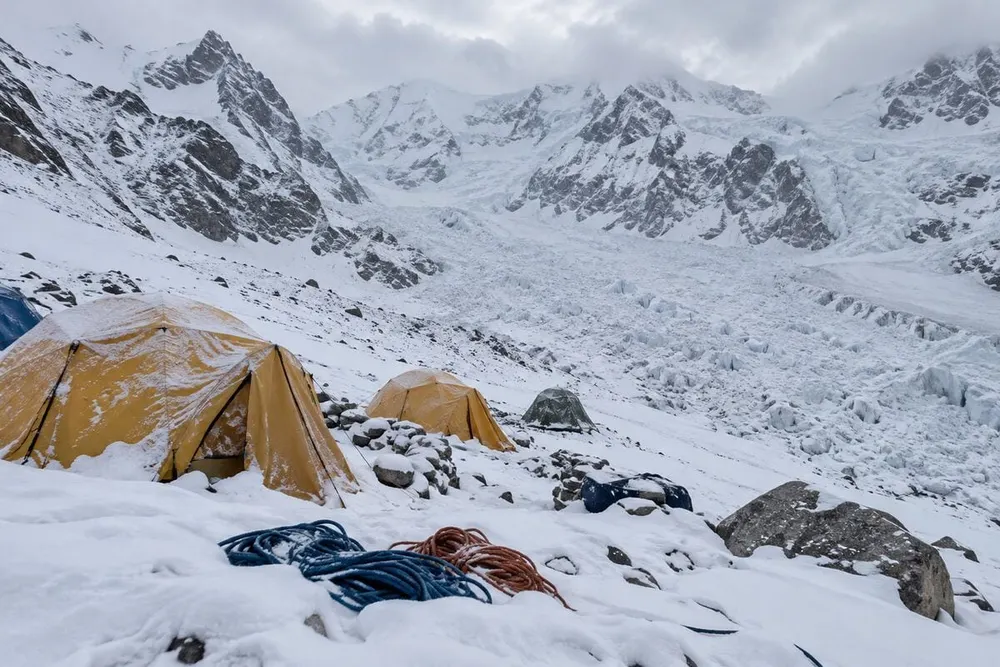
The avalanche hit on Sunday at the base camp of the 7,126-meter mountain in Nepal’s Manang district, near the Tibetan border. The workers were preparing tents, ropes and other infrastructure before foreign climbers arrived, according to Reuters. Eight additional bodies were recovered Thursday, bringing the confirmed toll to 15. The president of the Nepal National Mountain Guide Association, Tul Singh Gurung, said the operation would continue for the remaining missing worker.
The victims’ role is central to understanding the disaster. They were not visiting mountaineers caught during a summit push. They were the Nepali workers who make commercial expeditions possible: guides, kitchen staff and camp personnel sent ahead to establish a livable and navigable route in a remote, unstable environment. A local report by The Tourism Times said the buried group included support workers and climbing guides, while the Nepal National Mountain Guide Association has issued continuing rescue updates from the mountain.
A rescue constrained by weather and altitude
Initial accounts showed how quickly the known toll changed as rescuers reached the site. The Associated Press reported Monday that two bodies had been recovered and 10 survivors flown to safety, with additional workers still missing. A later AP update placed the confirmed death toll at four while rescue teams continued to work through severe conditions.
Those early figures were provisional, not contradictory. In a high-altitude avalanche zone, bad visibility, fresh snow, steep terrain and limited landing opportunities can delay access and make it difficult to determine how many people are buried or where they were last seen. The recovery of eight more bodies Thursday underscores both the scale of the initial uncertainty and the persistence of the rescue crews.
The sequence also illustrates why casualty figures from remote disasters must be handled cautiously. Early reports were based on the people rescuers could reach and identify, while the wider camp remained difficult to search. The confirmed toll rose as access improved, not because a second avalanche was reported. Families and the public were therefore receiving an evolving accounting of a single event.
Nepalese officials and local reporting have linked the broader emergency conditions to heavy precipitation and unstable mountain weather. But the available public evidence does not yet establish the precise physical trigger of the Himlung avalanche. A credible event-level assessment would require snowpack, weather and terrain data from the site. That distinction matters: severe weather can create obvious hazards without, by itself, proving why a particular slope released at a particular moment.
The workers behind Nepal’s expedition economy
Himlung Himal is among the peaks promoted within Nepal’s regulated mountaineering system, documented in the government’s annual mountaineering statistics. Although attention often centers on foreign climbers and record-setting ascents, expeditions depend on Nepali teams that transport equipment, establish camps, fix lines, cook meals and manage emergencies. Much of that work occurs before clients reach the mountain and at elevations where rescue is slow and weather changes rapidly.
The Himlung deaths therefore raise questions that extend beyond a single expedition: how forecasts are communicated to workers already deployed, what authority local teams have to delay preparation, whether insurance and compensation match the risks, and how quickly rescue assets can be positioned when prolonged storms affect several districts at once. Answers will depend on a formal review of the expedition plan and the conditions at the camp, neither of which has yet been made public.
The disaster also comes amid rapid environmental change across the Hindu Kush Himalaya. A major assessment by the International Centre for Integrated Mountain Development found that the region’s glaciers disappeared 65 percent faster during 2011–2020 than in the previous decade and warned of increasing risks to mountain communities. That regional trend is important context for long-term planning, but it does not establish that climate change caused this avalanche. Attribution of an individual snow-slide event requires evidence specific to the slope and storm.
What comes next
The immediate priority remains finding the last missing worker and returning the recovered bodies to their families. Authorities will also need to reconcile the final roster of workers at the camp, document the timing of weather warnings and determine whether the expedition’s safety procedures were followed. A transparent account would help families understand what happened and give other operators information they can use before sending crews into similar conditions.
For Nepal’s climbing sector, the central lesson is not simply that Himalayan work is dangerous. It is that the people most exposed are often those whose labor is least visible to the international public. The 15 workers confirmed dead at Himlung were building the systems that would allow others to climb. Any credible response must keep their working conditions, protections and decision-making power at the center of the review.