
Three members of Congress introduced legislation Friday that would sharply restrict government use of automatic license-plate readers, moving a fast-growing dispute over police surveillance from local councils and statehouses into federal policy.
The Ban Flock Act, released by Sen. Bernie Sanders of Vermont, Sen. Jeff Merkley of Oregon and Rep. Alexandria Ocasio-Cortez of New York, would prohibit federal agencies from using automatic license-plate readers or accessing information collected by them. It would also stop specified federal grants from going to state or local governments that use the technology or contract with companies that provide it, and it would allow individuals and state attorneys general to sue over violations. The Washington Post independently described those core provisions.
The measure is named for Flock Safety, the largest company in the market, but the sponsors' summary describes restrictions on automatic license-plate readers generally. That distinction matters: if enacted as outlined, the bill would establish a federal rule for a category of surveillance technology rather than a procurement ban aimed at one vendor.
What the cameras collect
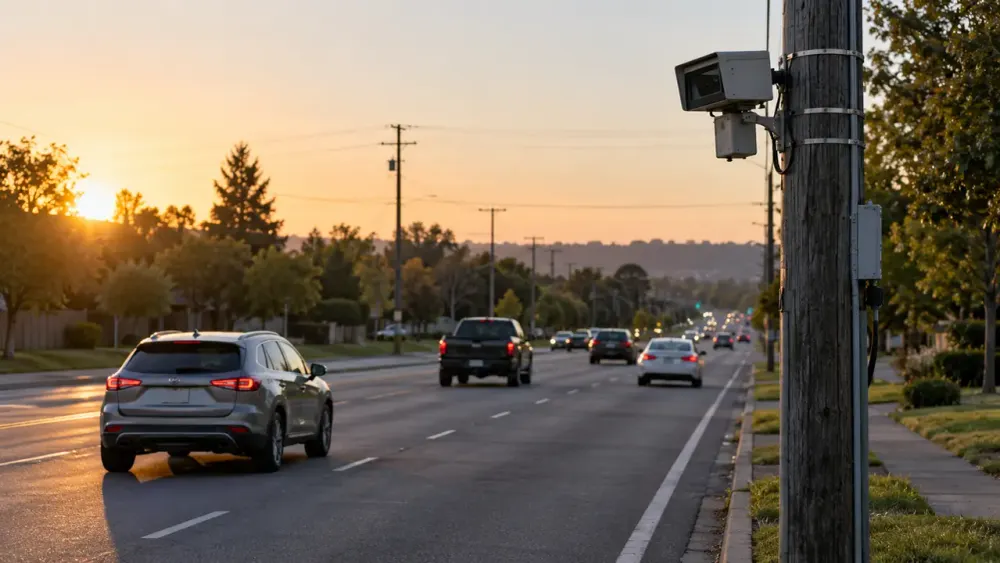
License-plate-reader systems photograph vehicles moving through public roads and turn those observations into searchable records. In a September response to the Senate Judiciary Committee, Flock said its stationary readers capture still images, plate characters, vehicle attributes, timestamps and camera locations. The company said its license-plate readers do not collect audio, wireless signals or biometric templates, and that customer agencies determine whether to share their records with other agencies.
The scale makes those technical choices a national policy question. Flock told senators that customers can opt into statewide or nationwide law-enforcement search networks, while the new bill's sponsors said the company operates more than 120,000 cameras. That camera count is also reported by Reuters and The Associated Press, which have documented the spreading political backlash around the systems.
The proposed federal ban therefore goes beyond requiring warrants, shorter retention periods or stronger audit logs. It would remove federal agencies from the technology and use federal funding to encourage states and municipalities to do the same. That structure could have broad practical reach because many police technology purchases and public-safety programs rely in part on federal grants.
Abuse allegations drive the debate
The sponsors tied their proposal to reports that officers have used plate-reader databases for unauthorized personal searches and to concerns that networked cameras can reconstruct ordinary travel. The Post reported that at least 50 law-enforcement officers had been charged with or accused of unauthorized use, including searches involving wives, girlfriends and other women. In a separate case, five Indianapolis officers were charged after an investigation into alleged misuse of the system. The charges are allegations, and each defendant is entitled to the presumption of innocence.
Flock has acknowledged the need for enforceable standards while arguing that the technology has legitimate public-safety value. In its Senate letter, the company said laws—not a vendor's discretion—should set privacy rules. It also said it is moving all law-enforcement customers toward mandatory audit-assistance tools, case codes and automated lockouts for abnormal activity. Those are company representations, not an independent audit, but they show that even the leading vendor accepts the case for stronger external rules.
Supporters of the cameras point to their use in locating missing people, identifying stolen vehicles and generating leads in serious investigations. AP and Reuters both found that law-enforcement officials and some communities continue to defend the systems on those grounds even as other jurisdictions pause or remove them. The policy dispute is therefore not simply surveillance versus no surveillance; it is whether safeguards can reliably contain a network that records people who are not suspected of crimes.
A wider, partly bipartisan reckoning
The Ban Flock Act comes from three progressive lawmakers, but scrutiny of the technology crosses party lines. The Post reported that Republican Sen. Josh Hawley of Missouri, who chairs the Judiciary subcommittee on crime and counterterrorism, plans a separate regulatory proposal. Flock's response to Hawley endorses a federal framework but favors rules that preserve access for legitimate investigations. The competing approaches define the emerging congressional choice: prohibition and financial pressure, or continued use under statutory guardrails.
States and local governments are already making that choice unevenly. Reuters reported in September that Florida barred local police from placing the cameras on state highways, while Texas paused grant funding for new deployments. AP found a broader patchwork of bans, restrictions and continued use across the country. That variation is exactly what the federal proposal seeks to replace with a national baseline.
The bill's immediate path is uncertain, and introduction is only the first stage of the legislative process. Still, its significance does not depend on near-term passage. Congress now has before it a proposal that treats location data gathered in public as a civil-liberties issue serious enough to justify withholding federal money. With a rival regulatory approach also promised, lawmakers may soon have to decide not whether license-plate-reader networks need rules, but how restrictive those rules should be.