
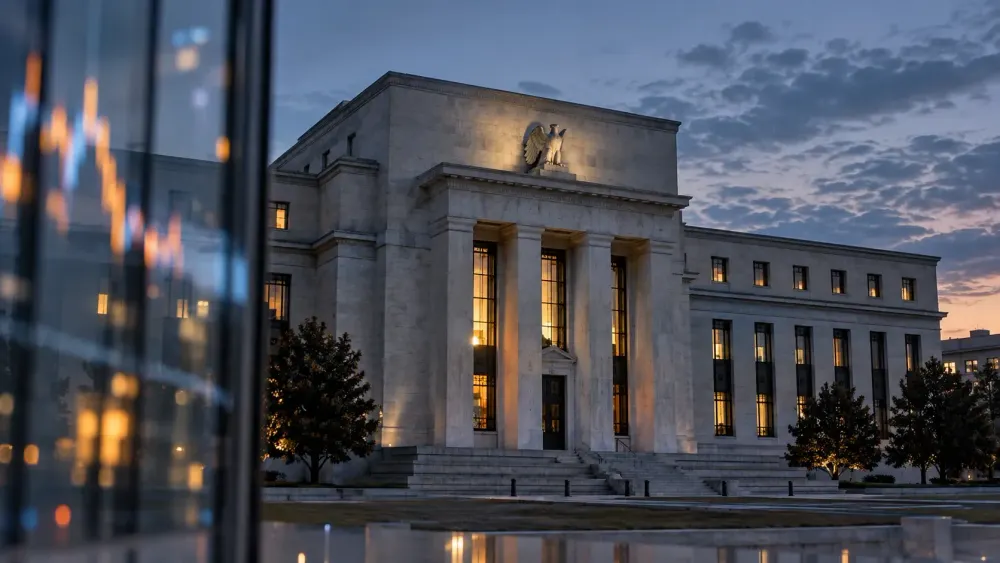
The Federal Reserve raised its benchmark interest-rate range by a quarter percentage point to 3.75%–4.00% on Wednesday, its first increase since 2023, and most policymakers projected at least one more increase before year-end as inflation remained well above the central bank’s target.
The Federal Open Market Committee approved the move on a unanimous 12–0 vote, according to its statement. The decision reverses the direction of monetary policy after an extended pause and puts immediate upward pressure on many variable borrowing costs, even as the Fed said economic activity remained solid and unemployment had changed little.
The increase was broadly expected after the bond-market selloff that pushed the 10-year Treasury yield above 5% in earlier trading. But the unanimity of the decision and policymakers’ projected rate path gave the announcement greater weight: the Fed is signaling that Wednesday’s move may be the start of a new tightening phase, not an isolated adjustment.
Why the Fed moved
In its statement, the committee said inflation “remains elevated” and that the rate increase would support a timelier return to its 2% objective. Officials also pointed to resilient domestic spending, strong productivity and robust capital investment. Those conditions give the Fed room to raise borrowing costs without responding to an obvious recession or labor-market collapse.
The inflation backdrop has moved in the wrong direction for policymakers. The Fed’s preferred personal-consumption-expenditures measure rose 3.7% in July from a year earlier, compared with 2.3% in April 2025, while the core measure excluding food and energy was 3.3%, the Associated Press reported. August retail sales rose 1.2%, another sign that demand remained firm despite higher prices and financing costs.
The Fed’s new projections show officials expect inflation to average 3.7% in 2026, up from the 3.6% estimate issued in June. They do not expect inflation to return to 2% until 2029, according to a Reuters analysis of the projections. Those are forecasts, not promises, and they could change as new price, labor and growth data arrive.
Most officials see another increase
Sixteen of the 18 policymakers who submitted rate projections indicated at least one more increase would be appropriate this year. The median projection puts the benchmark range at 4.00%–4.25% at the end of 2026 and keeps it there through the end of 2027. Officials also projected 2.3% economic growth this year and an unemployment rate of 4.1%, Reuters reported.
The projections sharpen the stakes for the Fed’s next meeting. A second quarter-point move is not guaranteed, and the central bank emphasized that future decisions will depend on incoming data, the evolving outlook and the balance of risks. Markets put the probability of another increase at the next meeting at about 56.5% shortly after the announcement, up from roughly 54% beforehand, according to market data cited by Reuters.
The initial reaction was mixed rather than disorderly. The dollar strengthened, the 10-year Treasury yield stood near 4.96%, and major stock indexes were modestly higher in afternoon trading. Those readings were preliminary snapshots and could shift as investors absorb Chair Kevin Warsh’s explanation of the decision and the rate projections.
What it means for households
The federal-funds rate does not directly set mortgage rates, but it affects the broader cost of money throughout the economy. Credit-card rates, home-equity lines and some other variable-rate products usually respond quickly because many are tied to banks’ prime rate. The average 30-year mortgage rate was 6.76% last week, while mortgage rates had already been climbing with Treasury yields, the AP reported.
For borrowers, the rate increase compounds an affordability squeeze. U.S. credit-card balances reached $1.26 trillion in the second quarter. The average new-vehicle price was $50,089, with average loan rates near 7% for new cars and 10.6% for used vehicles. A quarter-point move does not transform those payments by itself, but repeated increases would raise the burden on households refinancing debt or taking out new loans.
Savers could see a partial benefit if banks raise yields on savings accounts and certificates of deposit, although institutions do not pass through Fed changes uniformly. The broader consequence is tighter financial conditions: borrowing becomes more expensive, cash earns more and rate-sensitive sectors such as housing face additional restraint.
Wednesday’s confirmed action is therefore consequential beyond Wall Street. It marks the Fed’s judgment that persistent inflation now requires renewed restraint even while growth remains solid. The next test will be whether upcoming inflation and employment reports validate another increase—or show that one move was enough.