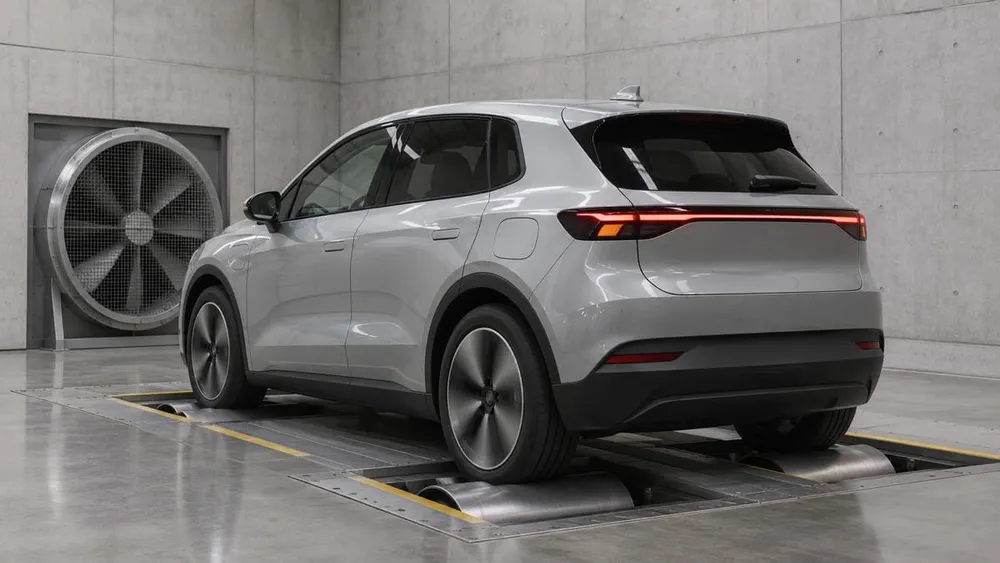
Tesla has begun inviting some customers to buy its Cybercab for personal use, offering private ownership of a two-seat electric vehicle designed to run without a steering wheel or pedals. Order terms reported Saturday by The Verge put the price at $29,990 and require a $299 monthly subscription for autonomous operation. The offer is limited to invited customers in supported service areas.
The company disclosed the offer through its Robotaxi account, which showed an invitation and an order screen. The Wall Street Journal also reported that Tesla had begun taking orders for personally owned versions. The invitation did not disclose how buyers were selected or how many orders Tesla planned to accept, according to The Verge. Engadget reported that Tesla’s estimated delivery date was December 2026, a timetable that still depends on the company getting cars to buyers.
What private ownership includes
The subscription is central to the offer because a Cybercab has no manual controls for a driver to take over. A customer who stops paying would have no manual way to operate the vehicle on public roads, according to The Verge. Ordinary Tesla cars with driver assistance can still be driven manually. In this case, access to the driving software is part of what makes the vehicle usable, even after the customer has bought the hardware.
The reported terms also bar commercial use of a car acquired through the personal invitation. That restriction would keep a buyer from offering rides for hire or using the car to make deliveries under those terms, the Journal and The Verge reported. Tesla’s support page separately directs businesses interested in a commercial Cybercab purchase to submit an inquiry. That is a distinct path from the personal orders Tesla is now taking.
At the quoted rate, twelve months of the subscription would cost $3,588 before accounting for any introductory period, taxes or future price changes. A customer comparing this offer with a conventional electric car would need to account for the ongoing software charge and where the vehicle can travel. The invitation terms reported by The Verge tie availability to supported areas, so the address where a customer plans to use the vehicle can matter as much as whether that customer received an invitation.
How the offer builds on the Austin service
Tesla has been carrying paying passengers in Cybercabs in limited areas of Austin, Texas. The company’s rider information distinguishes those rides from its broader Robotaxi operations, where it also uses Model Y vehicles. Tesla’s latest quarterly update describes the Austin rollout as a launch of the dedicated Cybercab. Passenger access to that fleet and delivery of privately owned vehicles are separate steps, and the rollout of one does not establish the availability of the other in a particular city.
The company’s Austin deployment also prompted a federal safety review. In September, the National Highway Traffic Safety Administration opened an audit of Tesla’s certification that the Cybercab meets applicable federal motor vehicle safety standards. In the United States, automakers certify compliance with those standards themselves and the agency oversees that process. The audit is intended to examine the basis for Tesla’s certification. Its opening did not establish a safety violation, and the personal purchase invitation does not resolve the questions under review.
There are also differences between the information a rider needs and what a buyer needs. Tesla’s rider guide describes how passengers request trips and use the vehicle during a ride. Someone considering a purchase needs to know whether routine destinations fall within the usable area, and how that access would change if the company adjusts its service boundaries. The reported invitation described the release as limited. It did not give a city-by-city delivery schedule or set a date when the public could order freely.
That dependence on the software makes territory limits a different issue for Cybercab owners than for customers who use autonomous ride services occasionally. A passenger can book another kind of ride when the service does not reach a destination. An owner has paid for a specific car that cannot be driven manually if that trip is outside the area the system supports. Tesla’s support page describes the current Cybercab ride area as limited to Austin. The company’s personal offer, as reported Saturday, gives prospective customers a reason to look closely at the service area attached to their order.
The next evidence of wider availability will be delivery of cars to invited customers and the terms that accompany those deliveries. The price and subscription cited by Engadget describe the initial offer. They do not establish how later versions might be sold or where owners will be able to travel. For the first buyers, the arrangement brings together three separate commitments: the purchase of the vehicle, the monthly service that drives it and access in a location Tesla supports.