The United States has recorded 4,410 confirmed measles cases in 2026 through October 15, an increase of 330 in one week, according to the Centers for Disease Control and Prevention. The rise shows that outbreaks are continuing to expand deep into the year, with Pennsylvania reporting 1,260 cases across 43 counties and other states maintaining emergency measures, vaccination clinics and heightened surveillance.
The latest national count was reported Friday by Reuters and reflected the CDC’s weekly update. A week earlier, the federal surveillance page listed 4,080 cases, 42 new outbreaks in 2026 and 96 percent of cases associated with outbreaks. The updated total represents an 8 percent rise from that earlier count.
Measles is not simply a rash illness. It is an airborne viral infection that can cause pneumonia, encephalitis, pregnancy complications and death. It also can produce “immune amnesia,” weakening immune memory against infections a person had previously encountered. These risks are greatest for infants, pregnant people and people with compromised immune systems, but severe disease can occur in otherwise healthy people.
Pennsylvania remains a center of transmission
Pennsylvania’s Department of Health said October 16 that it had confirmed 1,260 cases in 43 counties. That was 38 more cases than the state reported two days earlier. The state count alone represents more than one-quarter of the national total, although dates and reporting practices can produce small differences between state and federal dashboards.
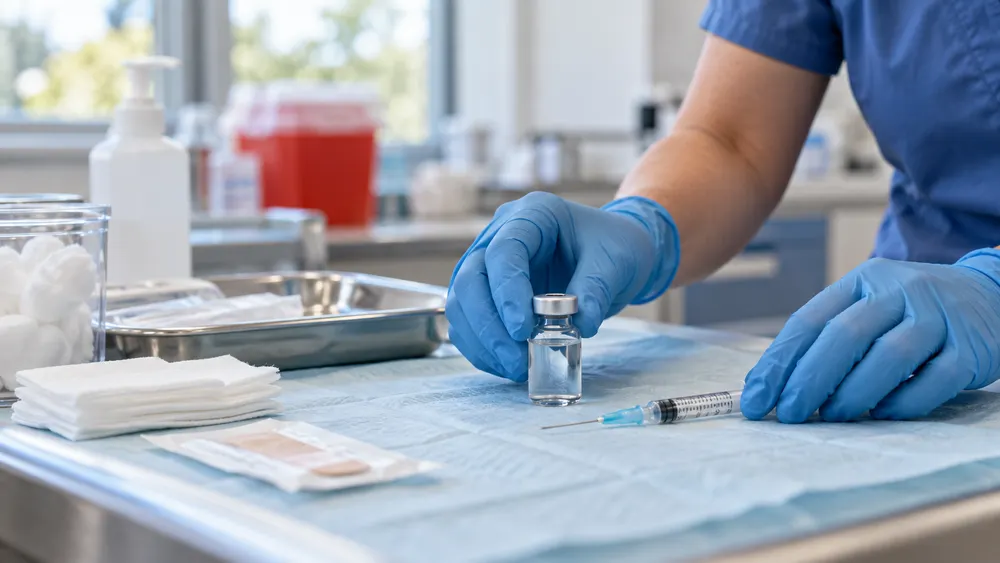
The department said state health centers have administered more than 6,100 measles, mumps and rubella vaccine doses at 210 pop-up clinics in affected communities since the outbreak began in late April. Those clinics are part of a broader response that includes contact tracing, case investigation, public notifications about exposure locations and coordination with hospitals and local health departments.
Federal help has also expanded. The CDC agreed to provide additional staff through its Epi-Aid program after Pennsylvania requested assistance. Reuters reported that federal personnel would work with state and local officials to investigate transmission, strengthen control measures and prevent further spread. Epi-Aid deployments typically provide field epidemiologists and other specialists for urgent public health problems at the request of a jurisdiction.
The Pennsylvania response has unfolded alongside disagreement over how deaths associated with measles should be classified. State officials use a detailed epidemiological definition that considers timing, laboratory evidence, clinical findings and other records. Federal statistics may rely on a narrower determination of the underlying cause of death. Those methods can yield different totals without necessarily meaning that either side has ignored a death. The distinction is important when comparing dashboards, and preliminary numbers can be revised as records are reviewed.
The outbreak has also driven a sharp increase in demand for vaccination. An October 16 report in JAMA described rising demand as cases spread. Separately, the Philadelphia Inquirer reported that Pennsylvania providers administered more than 56,000 measles-containing vaccine doses in September and more than 23,000 during the first two weeks of October, well above the state’s typical pace. Those totals include vaccinations delivered outside the state’s pop-up clinics.
Why measles spreads so quickly
Measles is among the most contagious human infections. The virus can remain infectious in the air for up to two hours after an infected person leaves a room, making exposure possible without direct contact. Symptoms usually begin seven to 14 days after infection and include fever, cough, runny nose and red or watery eyes, followed by a rash. A person can transmit the virus before the rash becomes obvious.
The CDC’s clinical guidance notes that complications include ear infections, diarrhea, pneumonia and brain swelling. A rare but fatal degenerative neurological condition known as subacute sclerosing panencephalitis can emerge years after apparent recovery. Because early symptoms resemble other respiratory illnesses, the CDC advises people who suspect measles to call a healthcare provider before arriving at a clinic or emergency room so staff can prevent exposure to other patients.
Vaccination remains the central prevention tool. According to the CDC’s measles overview, two doses of MMR vaccine are about 97 percent effective at preventing the disease, while one dose is about 93 percent effective. No vaccine prevents every case, but infections among vaccinated people are generally less common and can be milder. People who cannot receive a live vaccine because of age, pregnancy or certain immune conditions depend in part on high community coverage to reduce exposure.
For people without evidence of immunity who have recently been exposed, timing matters. CDC post-exposure guidance says an MMR dose given within 72 hours can provide some protection, while immune globulin may help certain high-risk people when administered within six days. Decisions depend on age, health status, prior vaccination and the timing of exposure and should be made with a clinician or public health department.
A regional problem, not a single-state event
Pennsylvania is the clearest current concentration, but it is part of a much larger resurgence across the Americas. The Pan American Health Organization reported 55,792 confirmed cases in 17 countries and territories through the week ending October 3, nearly five times the number recorded over the same period in 2025. In an October 9 risk assessment, PAHO classified the regional threat as very high and urged governments to reinforce vaccination, surveillance and rapid response ahead of mass gatherings and increased travel.
PAHO estimated that 1.6 million children in the Americas received no measles-containing vaccine dose in 2025. Coverage gaps allow an imported case to ignite sustained transmission, especially in communities where many people are unvaccinated or healthcare access is limited. International travel can then move the virus between communities that otherwise appear disconnected.
New York declared a state disaster emergency on October 5 in response to rising case rates. The state Health Department’s measles page directs residents to a current dashboard, vaccination information and instructions for people who may have been exposed. The emergency declaration allows the state to coordinate resources and adjust response operations as conditions change.
National elimination status does not mean the virus can no longer enter the country. The United States declared measles eliminated in 2000, meaning continuous domestic transmission had been interrupted for at least 12 months. The CDC’s global outbreak guidance explains that cases still arrive through international travel and can spread when they reach groups with low immunity. Sustained transmission over a long enough period could put elimination status at risk.
The next phase of the response
Public health agencies now face several simultaneous tasks: stopping transmission within known outbreak networks, finding cases quickly, protecting healthcare settings and raising vaccination coverage before winter gatherings and holiday travel. Schools, faith communities and employers may need to assist with exposure notifications while protecting patient privacy. Laboratories must process a growing volume of specimens, and local departments need staff for interviews and contact follow-up.
Clear communication will be critical. Case counts are provisional, and differences between state and federal totals can reflect reporting cutoffs, jurisdictional definitions or ongoing review. Officials can maintain trust by stating which definition they use, when their data were updated and why a number changed. The same standard should apply to hospitalization and death statistics.
The week’s 330-case increase is a warning that the outbreak is not slowing uniformly. Vaccination campaigns in Pennsylvania show that demand can rise when risk becomes visible, but the virus can move faster than appointments, records checks and contact tracing. The immediate goal is to close immunity gaps while giving exposed people rapid access to testing, clinical guidance and appropriate post-exposure care.