Four people were killed Sunday when the U.S. military struck a small vessel in the Caribbean Sea, raising the reported death toll from the yearlong campaign against alleged maritime drug traffickers to at least 235.
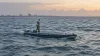
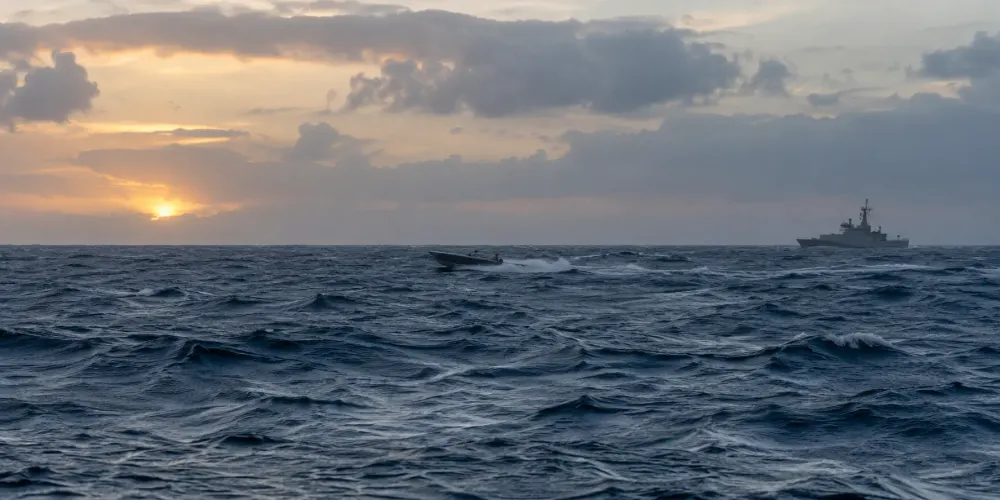
U.S. Southern Command said Joint Task Force Western Hemisphere carried out what it called a lethal kinetic strike on a go-fast boat traveling along established narcotics routes. The command said confirmed intelligence showed the vessel was involved in trafficking and described the four people killed as narco-terrorists. It released video of a moving boat being destroyed but did not identify those aboard, specify their nationality, name an alleged cartel or publicly show evidence of drugs.
The strike is the newest operation in a campaign that began in September 2025 and has replaced the traditional pattern of surveillance, interception, seizure and arrest with direct military attack in many cases. An AP tally placed the campaign at at least 235 deaths across 70 strikes. Public counts differ slightly because announcements and follow-up actions are not always described consistently, but independent reporting agrees that the latest operation extended an established pattern rather than opening a new mission.
A military campaign built on intelligence not made public
The government’s central factual claim is that the targeted boat was actively engaged in drug trafficking. Southern Command said that conclusion rested on confirmed intelligence, but it supplied no cargo imagery, route data, identification of the alleged organization or explanation of why capture was not attempted. Reuters independently confirmed the military’s statement and reported that officials offered no additional details supporting the allegation.
That distinction matters because being on a known smuggling route is not, by itself, proof that a vessel is carrying narcotics or that every person aboard is a member of an armed group. Intelligence may be too sensitive to release in full, but the absence of public evidence prevents outside review of the target identification, the necessity of lethal force and the possibility of error. The video establishes that a vessel was destroyed; it does not establish what it carried or who was on board.
The dispute over congressional authority remains unresolved
The administration has treated designated criminal organizations as military targets and has argued that the campaign protects the United States from narcotics trafficking. Critics counter that criminal violence and drug smuggling do not automatically create an armed conflict in which suspected traffickers may be targeted like enemy combatants.
Congress has not enacted a specific authorization for hostilities against vessels in the Caribbean or eastern Pacific. In December 2025, Sen. Ruben Gallego introduced S.J.Res. 100, which would direct the removal of U.S. forces from unauthorized hostilities against such vessels. The measure was referred to the Senate Foreign Relations Committee and has not advanced, leaving both the campaign and the constitutional disagreement in place.
That procedural history cuts in two directions. Congress has not affirmatively authorized this particular use of force, but it also has not enacted the resolution that would order it stopped. The continuing operations therefore rest primarily on the executive branch’s interpretation of presidential power and the legal status of the targeted organizations, not on a new, campaign-specific statute debated and approved by both chambers.
International-law concerns focus on the right to life
United Nations special-procedure mandate holders have argued that anti-drug operations at sea ordinarily fall under a law-enforcement framework, where lethal force is restricted to situations necessary to protect life. In a formal U.N. letter concerning the campaign’s first strike, the experts said criminal groups do not become lawful military targets merely because the United States designates them as terrorists. They also questioned whether the first attacked vessel posed an imminent threat and called for investigation and accountability.
Those findings are not a court judgment, and the letter carefully stated that its concerns depended on the accuracy of reported facts. Still, it identifies the unresolved legal test: whether the United States can lawfully apply an armed-conflict targeting model to suspected smugglers on the high seas when interception may be possible and no immediate attack on the United States has been shown.
Lethal strikes depart from the established interdiction model
For decades, U.S. maritime counterdrug work has relied on Defense Department detection and monitoring paired with Coast Guard law-enforcement authority to stop vessels, seize cargo and detain suspects. That model can be resource-intensive and does not capture every shipment. A January GAO report found that the Coast Guard generally failed to meet its primary drug-interdiction performance target from fiscal 2015 through 2024 and said the service’s own officials considered existing measures inadequate.
The performance gap helps explain why an administration might seek a more forceful deterrent. It does not demonstrate that destroying vessels reduces the supply of drugs reaching the United States more effectively than interdiction, nor does it resolve the legal threshold for killing suspected smugglers. Strikes also eliminate potential evidence, cargo records and witnesses who could help identify higher-level trafficking networks.
What the latest strike establishes and what it does not
The October 4 operation confirms that the campaign remains active after more than a year and that lethal force continues to be used on the basis of intelligence the public cannot evaluate. It also shows that the executive branch is prepared to sustain the mission despite unresolved congressional and international-law objections.
What the public record does not establish is whether the latest boat carried drugs, whether the four people killed presented an imminent threat, why interception was not chosen or how the campaign has changed drug availability in the United States. Those questions require evidence beyond a targeting video and an official assertion. Until the government supplies more verifiable information or Congress establishes a clearer legal framework, each additional strike will add to the campaign’s death toll without settling the central dispute over its effectiveness and lawful scope.