European forces are rehearsing the movement and support of a potential postwar mission to Ukraine during a multinational exercise in Poland, as leaders discuss possible security arrangements for a future peace. The British announcement describes Exercise Koalicja as the first major exercise of the Multinational Force-Ukraine, jointly led by Britain and France. Around 2,800 personnel from 11 countries are participating across its different components.
The drills are preparation for a conditional mission, rather than confirmation that a force will enter Ukraine. Britain says deployment would occur only after fighting has ceased and at Ukraine’s request. That distinction remains central as military planning advances alongside diplomacy without a completed peace agreement.
Logistics is a principal test
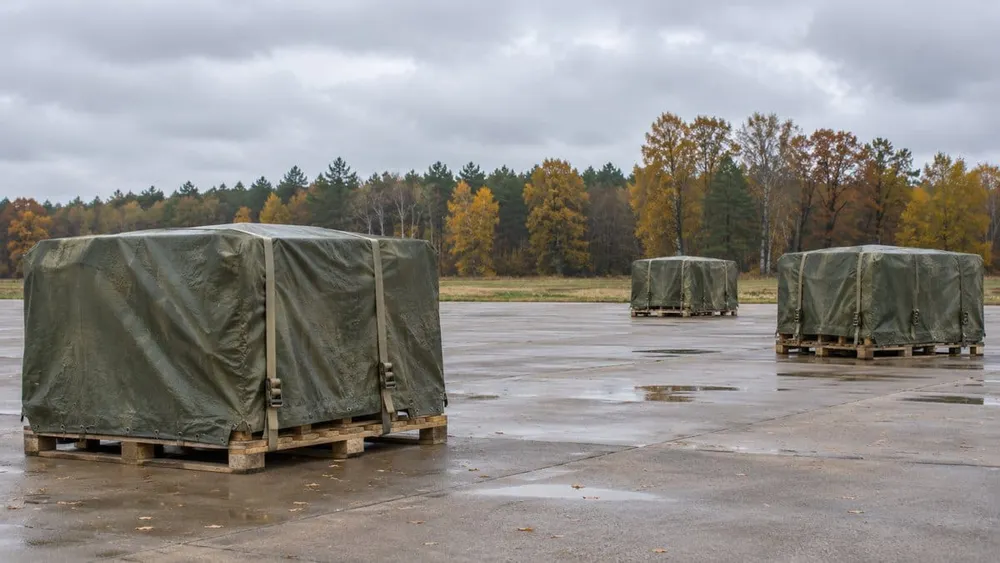
The exercise runs from Nov. 9 to Nov. 22, with a distinguished-visitors program scheduled Friday at Nowa Dęba in southeastern Poland. Poland’s defense ministry describes the core task as receiving forces, assembling them and moving them onward. Troops arrive by sea, air and land before traveling by road and rail to train together.
Poland is providing host-nation support, including accommodation, fuel, medical assistance, maintenance and access to infrastructure. Those functions are essential to sustaining a multinational force even when they are less visible than combat training. The exercise tests whether contingents arriving through different routes can become a coordinated formation with the supplies and services they need.
The ministry’s program includes demonstrations of transport, integration, repairs and training relevant to rebuilding Ukraine’s armed forces. A demonstration can show planned procedures and capabilities, but it does not establish that every challenge of operating in Ukraine has been resolved. Geography, security conditions and the eventual mission’s terms would affect a real deployment.
Air and maritime roles extend the plan
Britain’s contribution includes 300 personnel, Typhoon jets and a Voyager refueling aircraft. Its announcement says the air activity simulates support for reopening Ukrainian skies to commercial aviation. A maritime component in Istanbul is testing arrangements for mine clearance that could help restore safer commercial shipping to Ukrainian ports.
The Associated Press reported that the drills follow roughly a year of planning and include work on deployment and integration. British Brig. Campbell Close described the force as defensive. The training therefore addresses both how personnel reach a theater and how different national contingents can operate after arrival.
The planned mission is not described as peacekeeping or ceasefire monitoring. Britain instead identifies support for regenerating Ukrainian forces and enabling safer skies and seas. Those functions would have different operational requirements from observing a ceasefire line, and the distinction affects how the exercise should be understood.
Military preparation accompanies political talks
The exercise coincided with Thursday’s Coalition of the Willing meeting in Berlin. NATO’s account confirmed Secretary General Mark Rutte’s participation alongside Ukrainian President Volodymyr Zelenskyy and U.S. envoys Steve Witkoff and Jared Kushner. Rutte emphasized continued support for Ukraine and cooperation toward a lasting peace.
The multinational force remains an initiative of the coalition rather than a NATO mission, even though participating countries include NATO allies. The presence of the alliance’s secretary general at diplomatic talks does not change that institutional distinction. Political coordination, treaty commitments and the command arrangements for a specific force are separate matters.
In his Berlin speech, British Prime Minister Andy Burnham said Europe was ready for serious discussions on security, with a peace agreement between Ukraine and Russia as a prerequisite. He also announced a commitment of 1,000 British-built long-range drones and work with Norway on fast attack boats. Those announcements concern continuing support for Ukraine during the war, distinct from the possible postwar force.
The speech presented the coalition as united and determined to sustain its backing. That is the British leader’s assessment of the gathering, not proof that every operational or political question has been settled. The exercise gives planners a way to test preparations while those negotiations remain unfinished.
Readiness does not settle deployment
AP reported that the form of possible security guarantees and their acceptance by the parties remained unclear. It described the wider coalition as a political group supporting Ukraine, with the multinational force serving as a military component of its planning. Participation in an exercise demonstrates preparation, rather than a final decision about when or under what precise conditions troops would be sent.
The practical value of the drills lies in finding problems before such a decision: whether units can move on schedule, receive support, communicate and integrate across national systems. The results can inform planning without determining the outcome of diplomacy. A force able to assemble in Poland would still need political authorization and workable conditions for any subsequent mission.
The next tests are therefore both military and political. The exercise can improve readiness to implement an agreed arrangement, while governments must still establish the arrangement itself. Until then, Koalicja is evidence of a prepared option for supporting Ukraine after the fighting, not evidence that the war has ended or deployment is assured.