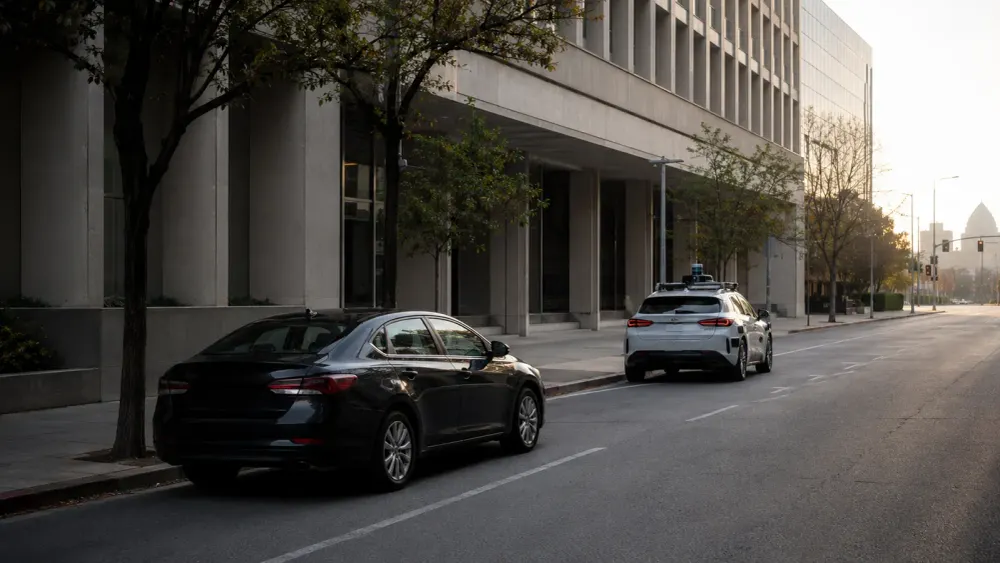
Uber is eliminating about 3,300 corporate jobs, roughly 10% of its workforce, in its largest layoffs since the pandemic. The global restructuring announced Wednesday is designed to flatten management, consolidate small teams and redirect spending toward growth businesses, including autonomous vehicles, according to Reuters. It removes close to one job for every ten employees counted at the end of last year, even as Uber’s trips, bookings and cash generation expand.
Uber said it reduced by 20% the number of employees sitting seven or more reporting layers below Chief Executive Dara Khosrowshahi, cut nearly half of its one- and two-person “micro-teams,” and limited fully remote roles to about 1% of staff. It is also combining parts of engineering and science while putting restaurant, retail and direct-delivery operations under one leader. The Financial Times reported that the company wants clearer accountability and faster decisions after years of expansion.
Uber’s latest quarter showed record scale and rising operating profit, while its biggest strategic questions concern where to deploy abundant cash. The layoffs therefore amount to a portfolio decision inside the organization: fewer layers and narrower teams today, more capital for robotaxis, delivery consolidation and product development tomorrow. Whether that trade works will depend on execution, not simply the payroll reduction.
A Flatter Organization, Not a Smaller Marketplace
Uber reported approximately 34,000 employees in more than 70 countries and 15,000 cities at the end of 2025, according to its annual report. That headcount excludes the drivers and couriers who use its platform as independent contractors, so the cuts apply to the corporate workforce rather than the network that transports passengers and delivers orders. Service availability depends on marketplace supply, while product quality and oversight depend on the employees being reorganized.
The focus on reporting depth suggests that management design, rather than only expense reduction, is the target. Long approval chains can slow product releases and blur responsibility, but layers also carry local knowledge, regulatory expertise and safety controls. Removing them creates value only if decisions move closer to people who understand a market without weakening review. Reducing tiny teams can concentrate specialists around larger priorities, yet also end experimental work before its value becomes visible.
The office policy reinforces that strategy. Uber will maintain a three-day hybrid schedule while preserving fully remote work for only a small fraction of employees, and it plans to gather more staff in major hubs. The Chronicle reported that the cuts are global and drivers and couriers are not affected. Centralizing employees may improve coordination, but it can narrow the company’s talent pool and prompt departures beyond the roles selected for elimination.
Profits Give Uber Room to Reallocate
Uber’s second-quarter results make the timing revealing. Trips rose 18% from a year earlier to 3.9 billion, gross bookings increased 24% to $58 billion, and revenue climbed 12% to $14.2 billion. Operating income rose 30% to $1.9 billion, while adjusted earnings before interest, taxes, depreciation and amortization reached $2.8 billion. Those figures, disclosed in quarterly results, describe a platform gaining volume rather than retreating.
Cash generation separates this restructuring from the emergency measures of 2020. Free cash flow was $2.8 billion in the quarter and exceeded $10 billion over the preceding 12 months for the first time. During the pandemic, a collapse in ride demand led Uber to shed about 6,700 positions, nearly a quarter of its staff. The new cuts are half that total and arrive when management says it is investing from strength, making them a choice about prospective returns rather than survival.
The savings matter because Uber is buying back shares, expanding newer products and pursuing a $14.8 billion offer for Delivery Hero. Uber’s deal announcement says the transaction would greatly expand its delivery footprint, though closing is not expected until the second half of 2027 and remains subject to shareholder and regulatory conditions. Simplifying delivery teams before a large integration may reduce duplication, but it raises the cost of losing institutional knowledge.
Robotaxis Change the Platform’s Economics
Autonomous vehicles create the clearest long-term challenge. Uber built its mobility economics around matching independent drivers with riders, taking a fee without owning most vehicles. Robotaxi fleets change that relationship: owners can distribute rides through Uber, their own apps or competing platforms. Uber’s filing warns that Waymo, Tesla and Zoox could deploy autonomous services earlier, offer lower prices or remove vehicles from its marketplace.
Uber’s response is to become the demand and operations layer for many autonomous-vehicle developers rather than bet on one driving system. In first-quarter prepared remarks, it said autonomous trips on its platform had increased more than tenfold from a year earlier, with service live in eight cities and plans for as many as 15 by year-end. It also described partnerships spanning Rivian, Zoox, Motional, Nvidia, WeRide, Lucid and Nuro.
That approach reduces technology concentration but not capital risk. Uber has outlined plans to invest more than $10 billion in the autonomous-vehicle ecosystem over several years, according to separate Reuters reporting. Partners may favor their own channels, deployments can be delayed by regulation or safety performance, and vehicle economics remain uncertain. The restructuring’s credibility rests partly on whether payroll savings create a durable marketplace advantage instead of subsidizing fragmented experiments.
Delivery Adds a Second Competitive Front
Merging restaurant, grocery, retail and direct-delivery leadership reflects another pressure point. Uber’s delivery segment now includes local commerce, advertising and white-label fulfillment for merchants. Delivery revenue rose 25% and adjusted segment earnings increased 45% in 2025, but Uber identified DoorDash, Instacart, Amazon and regional services as competitors. Consolidation could help one team allocate couriers, promotions and technology across categories rather than reproduce the same functions.
Scale is the industry’s answer to narrow margins and high acquisition costs. Delivery Hero’s boards have backed Uber’s offer, while a separate buyer would acquire operations in 14 overlapping markets to address competition concerns, according to the companies’ transaction outline. Greater network density can lower unit costs, but the same concentration invites antitrust review and complicates integration across countries, brands and labor models.
Khosrowshahi resisted describing the layoffs as an artificial-intelligence substitution event. The disclosed actions primarily redesign reporting relationships, locations and business-unit boundaries. AI tools may influence future productivity assumptions, but attributing this round directly to automation would exceed the company’s explanation. The immediate logic is organizational compression: spend less time coordinating, put fewer managers between executives and builders, and direct capacity toward products where Uber expects growth.
What the Restructuring Must Prove
The first outcome to watch is not quarterly payroll expense but operating speed. If the plan works, Uber should be able to launch products, resolve safety issues and adapt pricing with fewer handoffs, while employee surveys and voluntary attrition should not show a lasting loss of trust. The reduction in micro-teams also needs a clear product consequence: fewer abandoned projects and duplicated systems, rather than simply fewer experiments. Headcount is an input; decision quality, reliability and customer retention are the results that matter.
The second test is whether Uber can preserve local judgment inside a more centralized company. Transportation and delivery rules differ by city, as do airport agreements, worker classifications and merchant economics. Concentrating teams in large hubs may improve collaboration among engineers and commercial leaders, but global scale still requires people who understand local regulators, customers and competitors. A flatter chart can become a faster organization, or it can move bottlenecks upward if too many decisions accumulate around a smaller group of executives.
For investors, the restructuring sharpens Uber’s central proposition. The company is using the cash generated by a growing human-driver and courier network to prepare for a future in which more vehicles may operate without them, while simultaneously seeking greater delivery scale. Cutting 3,300 jobs can create financial capacity and clearer ownership, but it does not resolve the strategic contradiction. Success will mean turning today’s profitable marketplace into tomorrow’s preferred distribution system without sacrificing the people, controls and local expertise required to run it.