President Donald Trump renewed his call Friday for Congress to provide roughly $50 billion for aviation improvements, a week after a nationwide ground stop intensified scrutiny of the country’s air-traffic infrastructure. The proposal remains a funding request, not an enacted appropriation or a completed technological overhaul.
WBAY reported that Trump pressed the case during his White House briefing and described aging equipment as a central problem. The immediate question for travelers is how a large spending proposal would translate into a more reliable system, over what period and with what evidence of progress.
The request reaches beyond digital equipment
The administration’s funding letter seeks $50.1 billion across five categories. Of that amount, $10.1 billion is designated for air-traffic-control modernization, including automation, controller workstations, cloud computing, telecommunications and traffic-flow technology. The rest addresses physical infrastructure and facilities.
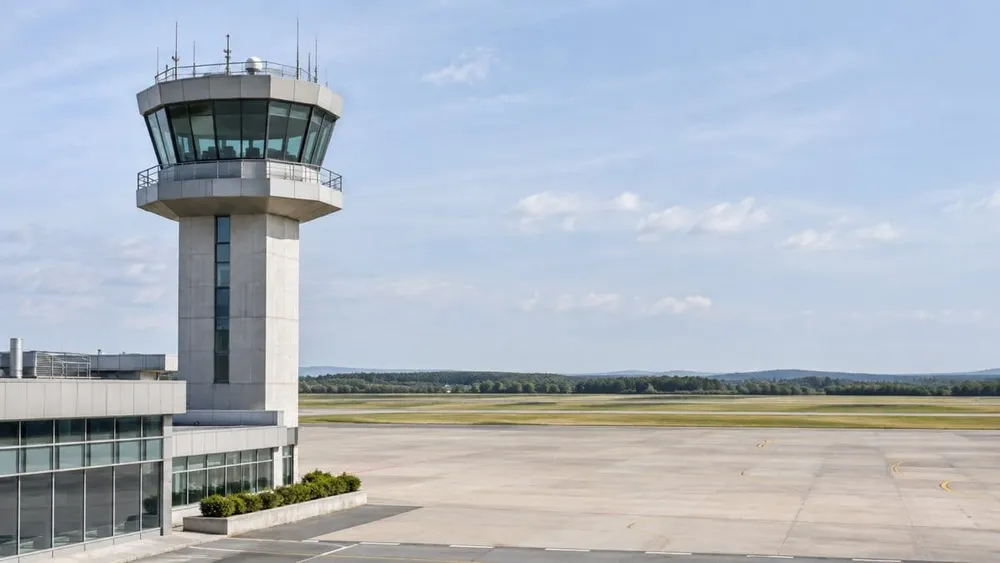
The letter assigns $10 billion each to airport infrastructure, a terminal pilot program, air-route traffic-control centers and control towers. It proposes up to five new consolidated en-route centers and work on up to 140 FAA-owned towers. Those categories show why describing the entire request as a single computer-system replacement would be incomplete.
The distinction is important when comparing funding figures. Replacing communications equipment, constructing facilities and improving terminals involve different scopes and delivery schedules. A larger total does not reveal whether a particular failure would be prevented, and approval of money would not itself demonstrate that the relevant infrastructure had entered service.
Earlier funding and new requests differ
ABC News documented how the administration’s requests have changed as officials described different modernization needs. Congress previously appropriated $12.5 billion in 2025, while later requests sought additional money. Those amounts should not be added or compared without identifying whether each figure refers to existing appropriations, a new request or a particular phase of work.
In its September report, the Government Accountability Office described two modernization phases. The first targets communications, surveillance, weather and training systems, with completion planned for December 2028. The second concerns new automation to track aircraft and optimize traffic, and at that time lacked an estimated start or completion date.
That sequence limits claims about near-term results. A plan to accelerate modernization does not mean the entire system will be replaced at once. Travelers can experience disruptions while upgrades are underway, and infrastructure announced for a future phase cannot be counted as already operational protection.
Planning weaknesses predate the latest outage
GAO found that the Federal Aviation Administration had not developed a comprehensive, well-documented lifecycle cost estimate for the modernization effort. It also found no integrated master schedule for the first phase. The agency instead had thousands of individual project schedules that were not integrated, creating risks for coordinated work at the same sites.
The watchdog warned that those gaps increased the risk of cost overruns, delays and unmet performance targets. Its findings concern planning as well as equipment age. Funding and sound execution are therefore separate tests: money can support replacement work, but a reliable estimate and integrated schedule help establish what will be delivered and when.
An earlier GAO review reported that the FAA’s assessment classified 51 of 138 air-traffic systems as unsustainable and another 54 as potentially unsustainable. Those historical categories describe maintenance and capability concerns. They should not be treated as a prediction that every listed system will fail at a particular time. The review called for reporting and oversight improvements, underscoring that identifying a vulnerable system is only the first step toward managing its risk and completing a replacement.
Congress faces choices about scope and accountability
Reuters reported earlier this week that some Republican senators opposed the full request while expressing willingness to support a narrower safety-focused package. Some also wanted aviation-system users to contribute. That debate concerns both the size of the appropriation and who should bear its costs.
The administration argues that a broader investment is needed to deliver modern and resilient infrastructure. Congressional skepticism does not establish that modernization is unnecessary, just as the existence of old equipment does not settle the price of every proposed project. Detailed scope, estimates and milestones provide a basis for evaluating the request beyond the headline total.
For passengers, the relevant results will be operational: completed installations, tested reliability and changes in disruptions associated with the systems being replaced. The Friday remarks renewed political pressure, but did not supply those outcomes. Any claim that a new appropriation has already improved travel would require evidence from the work actually performed.
The next concrete steps are a congressional funding decision and clearer delivery plans for the projects it supports. Until then, the proposal identifies a substantial set of aviation needs while GAO’s findings explain why cost and schedule discipline remain part of the problem. The challenge is to connect approved resources to verifiable improvements in the network travelers depend on.