
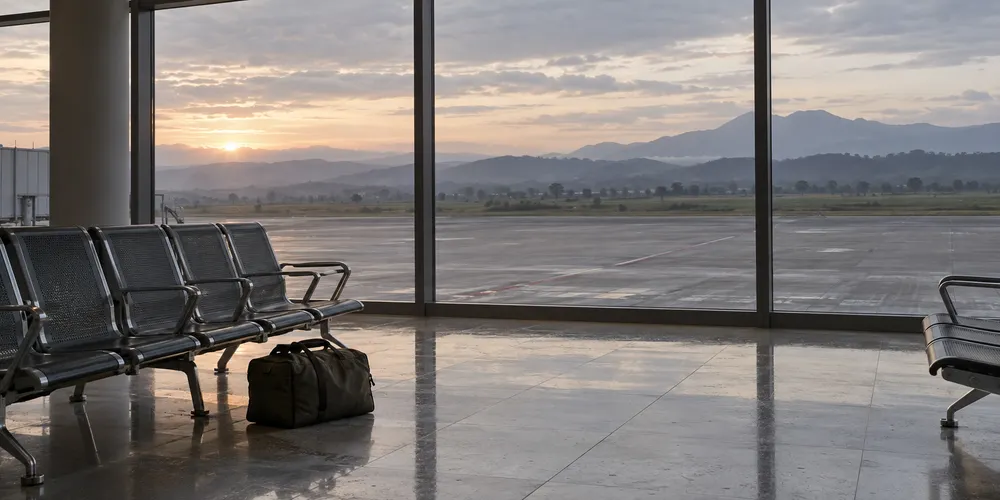
Tigrayan forces seized three civilian airports and expanded fighting into two neighboring regions this week, the sharpest breakdown of Ethiopia’s 2022 peace settlement since it halted a war that killed hundreds of thousands of people.
The takeovers in Mekelle, Axum and Shire disrupted commercial air service while clashes spread into Afar and Amhara. The African Union, which brokered the truce, said Tigray People’s Liberation Front forces had occupied the airports, detained federal personnel and endangered the agreement’s gains. Reuters reported Thursday that residents were withdrawing cash and buying food and medicine as they prepared for the possibility of siege conditions.
Both sides say the other initiated the escalation. Ethiopia’s federal government describes a planned TPLF offensive against government positions and civilian infrastructure. Tigray’s regional authorities say federal aircraft, drones, artillery and ground troops forced them into a defensive war. Those competing accounts remain difficult to independently resolve, but the airport seizures, suspended flights and fighting beyond Tigray are corroborated by official statements, witnesses and multiple news organizations.
Airports become leverage
Control of the three airports matters beyond symbolism. Ethiopian Airlines suspended service to Mekelle, Axum and Shire “due to the current situation,” according to reporting by Euronews drawing on the carrier and AFP. Regular flights are among the few fast connections between Tigray and the rest of Ethiopia, and their loss narrows options for civilians seeking to leave while complicating the movement of officials, medical supplies and humanitarian personnel.
The African Union said occupying the civilian facilities conflicts with the Pretoria agreement. It asked former Nigerian President Olusegun Obasanjo, its high representative for the Horn of Africa, to engage the parties urgently. The move signals that the organization no longer views the confrontation as another isolated border incident, but as a direct threat to the framework it has spent nearly four years trying to preserve.
Fighting spreads beyond Tigray
The military picture is broader than the airport takeovers. Conflict-monitoring group ACLED reported that Tigrayan forces were clashing with federal troops along several corridors near the Afar and Amhara borders after months of lower-intensity violence. Its field alert said fighting followed deployments of heavy weapons and repeated drone strikes, while Reuters reported power disruptions and cash withdrawals in Lalibela, an Amhara town south of Tigray.
That expansion raises the cost of miscalculation. Afar provides a key overland route toward Djibouti, the outlet used for most Ethiopian trade, while Amhara remains embroiled in its own insurgency. Even without a return to nationwide war, simultaneous fronts could stretch federal forces, interrupt commerce and expose civilians to new displacement.
A new alliance changes the risk
The escalation came days after seven armed Ethiopian groups formed the Ethiopian Peoples’ Forces Alliance for Survival, a coalition that says it wants to remove Prime Minister Abiy Ahmed’s government. The Associated Press reported that the bloc includes the TPLF, the Oromo Liberation Army and the Amhara Fano National Movement, groups rooted in different regions and, in some cases, formerly on opposing sides.
The coalition’s unity and operational capacity remain uncertain. Its members have different territorial interests, command structures and political aims. Yet even limited coordination could connect conflicts that Addis Ababa had previously confronted separately. The presence of Fano elements alongside Tigrayan forces would be especially significant because Amhara militias fought with the federal government against the TPLF in the 2020–2022 war.
Civilians face familiar dangers
The immediate civilian response reflects memories of the last conflict, when communications, banking and transport were cut and humanitarian access collapsed. Residents told Reuters that basic goods were becoming scarce and expensive, with drones audible overhead. Those accounts describe fear and disruption, not proof that the region has already returned to the scale of the previous war, but they show how quickly expectations of normal life are breaking down.
Mobilization creates another risk. A July investigation by Human Rights Watch documented coercive recruitment in Tigray, including the detention of people who resisted and pressure on families to provide recruits. Tigray authorities disputed elements of that reporting. The allegations matter now because renewed fighting increases the incentive for all armed actors to expand their ranks while weakening outside scrutiny.
Pretoria’s unfinished bargain
The Pretoria settlement stopped large-scale combat but left central obligations incomplete. Disarmament was partial, displaced people had not all returned, contested territory remained unresolved and trust between Addis Ababa and Tigray’s leadership deteriorated. The airport seizures are therefore both a military act and evidence that the political bargain behind the ceasefire has eroded.
The African Union, European Union and United Nations have all urged restraint and renewed talks. Diplomacy still has a framework to work through, and federal officials have said dialogue remains possible for groups that lay down their arms. But the next indicators will be operational: whether airport access is restored, whether forces withdraw from Afar and Amhara, whether drone strikes stop and whether Obasanjo can bring the parties into direct contact. Until those steps occur, the truce remains formally alive but increasingly detached from conditions on the ground.