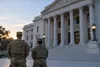
The Supreme Court has confirmed that an unprecedented leaked draft opinion in Dobbs v. Jackson Women’s Health Organization is authentic, exposing internal deliberations that show a potential five-justice majority prepared to overturn Roe v. Wade and Planned Parenthood v. Casey. Chief Justice John Roberts stressed that the February draft is not a final decision and does not necessarily represent any justice’s ultimate position, but the disclosure has transformed a pending abortion case into an immediate national political and institutional crisis.
In a rare May 3 statement, the Court said justices routinely circulate draft opinions as part of confidential deliberations and confirmed that the document published the night before was genuine. Roberts called the leak an “egregious breach” of trust and directed the Marshal of the Court to investigate its source. He also emphasized that the Court’s work would continue and that the draft did not constitute a ruling.
The draft points toward a fundamental change in abortion law
The leaked document, described in contemporaneous Washington Post reporting, was written by Justice Samuel Alito and states that Roe and Casey should be overruled, returning abortion regulation to elected officials. Politico reported that Justices Clarence Thomas, Neil Gorsuch, Brett Kavanaugh and Amy Coney Barrett had joined Alito in the initial conference vote after oral argument, which would give the position five votes if they remain together through the final decision.
That outcome is not yet certain. Draft opinions can change substantially as justices circulate revisions, negotiate language, write concurrences or dissents and, in some cases, change positions. The Court’s own Dobbs docket shows that the case remains pending; no judgment has been issued. Abortion rights protected under existing Supreme Court precedent therefore remain in force while the Court completes its work.
The case concerns Mississippi’s law prohibiting most abortions after 15 weeks of pregnancy, a direct challenge to the viability line established under existing precedent. During the December 1 oral argument, several conservative justices questioned whether the Court could sustain Mississippi’s law without reconsidering the constitutional framework of Roe and Casey. Mississippi urged the Court to overrule those cases outright; the clinic and the United States argued that doing so would discard nearly five decades of precedent.
An extraordinary breach of Supreme Court confidentiality
The substance of the draft is historic, but so is the fact that the public is reading it before judgment. The Supreme Court depends on an unusually strict culture of confidentiality that allows justices and clerks to exchange tentative views without external pressure. The publication of a full draft majority opinion while the case is pending appears to have no modern parallel.
Associated Press reporting on the Court’s response describes Roberts’s decision to order an internal investigation and the widespread concern that the breach could damage trust among chambers. The immediate institutional question is who had access to the draft and how it left the building; the larger question is whether public pressure generated by the leak changes the Court’s deliberative environment before the decision becomes final.
Leaks involving Supreme Court deliberations have occurred before, but rarely at this scale. NPR documented that details surrounding the original 1973 Roe decision reached the press before formal release, while emphasizing that a fully formed draft in a still-pending modern case is qualitatively different. The current disclosure places the Court itself at the center of a public controversy before it has spoken through a final opinion.
The legal stakes extend directly to the states
If a majority ultimately adopts the draft’s central conclusion, the Constitution would no longer be interpreted to protect a right to abortion under Roe and Casey. That would not create a single national abortion policy. Instead, authority would shift rapidly toward Congress and the states, where laws vary from broad protection to near-total prohibition.
Axios reported that at least 13 states have laws designed to ban most abortions if Roe is overturned, while other states have enacted statutory or constitutional protections. The result could be an immediate geographic divergence in access, with the practical effect depending heavily on where a patient lives and whether travel to another state is possible.
The legal debate also centers on stare decisis—the principle that courts generally respect prior decisions. During oral argument, the justices explored how to weigh reliance interests, the quality of earlier reasoning and changes in law or facts. The Court’s official argument audio records a proceeding in which both sides explicitly confronted the institutional costs of either retaining or overturning a precedent that has structured abortion law for nearly half a century.
Political branches prepare for a ruling that has not yet arrived
Reaction has moved immediately to Congress, statehouses and the midterm campaign. Democratic leaders are calling for federal legislation to codify abortion protections, while Republican officials and anti-abortion organizations are preparing for greater state control. Yet the Senate’s existing divisions make federal legislation difficult under current rules, and the Court has not announced when it will issue the final decision.
The leak therefore creates an unusual interval in which the country has a detailed window into a possible outcome without a legally operative judgment. The draft’s reasoning is public, the reported initial vote is public, and the political response is underway, but the Court retains full authority to revise its analysis before release.
The central facts at week’s end are narrower than some of the rhetoric surrounding them: the leaked draft is authentic; it is not final; and it indicates that five justices at one stage of the process supported overturning Roe and Casey. The Court’s final opinion will determine whether that preliminary alignment becomes law. Until then, the leak has already altered the institutional landscape even though it has not changed the legal one.