American Electric Power plans to invest approximately $4 billion in a 702-megawatt fuel-cell power project near Cheyenne to supply Google under a 20-year agreement. The October 14 announcement adds a large proposed generation investment to Wyoming’s data-center development, according to AEP’s release and Reuters.
Google would purchase electricity from Cheyenne Fuel Cell LLC, which AEP says it owns and controls approximately 92 percent. Funds advised by Basalt Infrastructure Partners hold nearly 8 percent. That structure is reported by both AEP and Data Center Dynamics. AEP and its partners plan to begin construction in 2026 and reach full operation by the end of 2028; those remain development targets, not evidence that the plant is already supplying power.
Contracted demand, with development conditions
The investment builds on earlier commitments rather than starting from a blank slate. AEP’s second-quarter financial report disclosed a January agreement by an unregulated subsidiary to acquire approximately $2.65 billion in solid oxide fuel cells and sell the facility’s entire output to an investment-grade customer for 20 years. POWER’s October reporting connects those disclosures with the newly announced project.
The two dollar amounts describe different commitments: the filing’s $2.65 billion equipment purchase and the October announcement’s approximately $4 billion project investment. They are not presented as separate projects and should not be combined into a $6.65 billion Wyoming investment total.
The second-quarter filing also said the offtake arrangement remained subject to specified conditions and that a June amendment extended their deadline. If revised conditions were not satisfied in December 2026, AEP would be entitled to additional consideration for the extended timeline. That company disclosure, also examined by POWER, is an important qualification to the construction schedule. It should not be mistaken for a new finding that the project has failed.
Power supply and emissions are separate questions
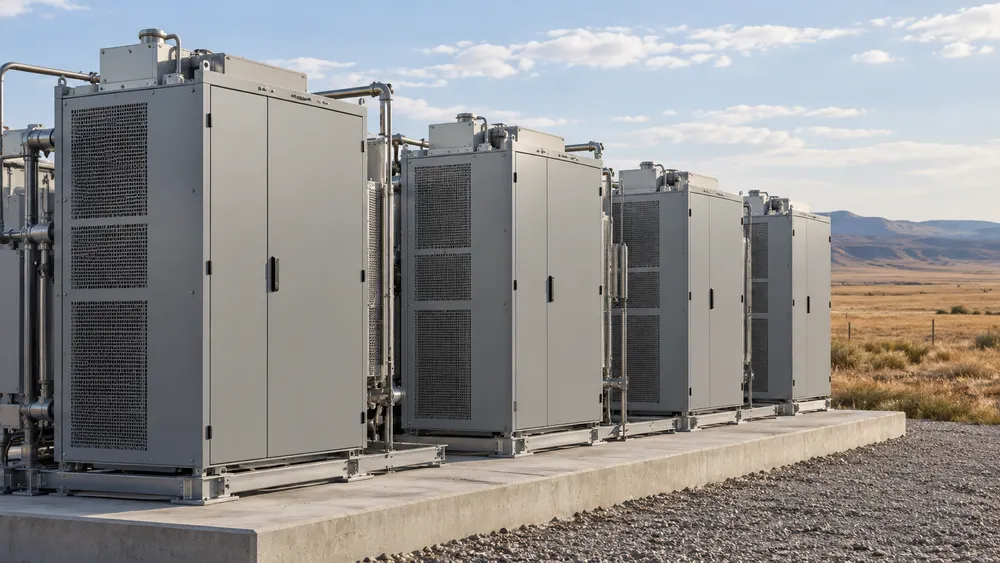
AEP plans to use Bloom Energy technology and integrate carbon capture, describing a goal of near-zero-emissions power. The announcement and POWER describe that as a plan. Bloom’s own technical explanation says its natural-gas fuel cells produce carbon dioxide through an electrochemical process. Avoiding combustion therefore does not, by itself, mean eliminating carbon emissions.
The broader Cheyenne power buildout also involves Black Hills Corp. Its October 6 announcement describes separate agreements to serve Google, with up to 590 megawatts of grid-connected service and management of approximately 2.1 gigawatts of third-party resources. The company says its arrangements require Google to bear the costs of serving the data center; POWER reports the same claimed customer protection.
Those figures should not simply be added to AEP’s 702 megawatts as independently confirmed new capacity. POWER reports that neither company has confirmed whether AEP’s project is included in the third-party portfolio. For Wyoming, the next tests are identifiable construction progress, resolution of development conditions and demonstrated operation—not treating announced spending or an emissions objective as an accomplished result.