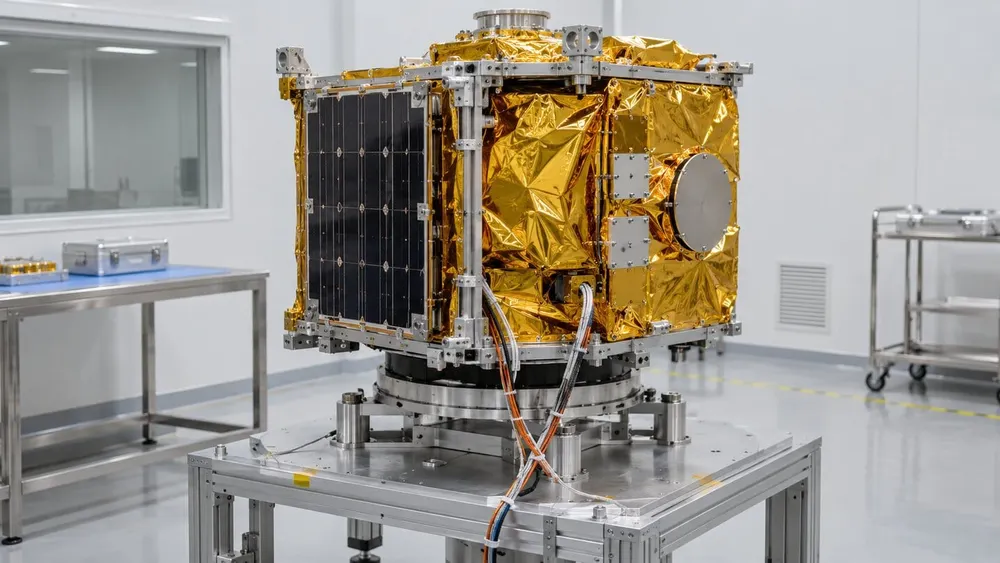
MDA Space completed its acquisition of Colorado spacecraft manufacturer Blue Canyon Technologies on November 27, closing a deal announced at US$620 million that expands the Canadian company’s presence in the American defense market. In its closing announcement, MDA said the business brings 400 employees in the Denver area and will operate as MDA Space USA.
The acquisition transfers a spacecraft and satellite-component supplier from RTX to a buyer seeking a larger role in U.S. government space missions. Blue Canyon also provides mission services. MDA said its operating history includes more than 95 spacecraft launched and 4,300 products in orbit, figures supplied by the company rather than independently audited performance measures.
Friday’s announcement turns a previously conditional purchase into a completed transaction. The commercial question now shifts from whether the acquisition will close to whether MDA can convert its new manufacturing presence and customer relationships into additional business. Chief executive Mike Greenley described Blue Canyon as profitable and cash-generating, while the company cautioned that expected benefits remain subject to risks.
A substantial purchase from RTX
The original agreement, announced June 19, set the all-cash purchase price and enterprise value at US$620 million, approximately C$874 million at the time, subject to adjustments. It covered all membership interests in Blue Canyon. That announced value should not be confused with a newly disclosed final settlement figure: Friday’s release did not provide an updated price.
RTX’s third-quarter filing independently documented the seller’s side of the transaction, identifying Blue Canyon as part of its Raytheon segment and anticipated proceeds of approximately US$0.6 billion. At that reporting stage, closing remained subject to regulatory approvals and customary conditions. MDA had originally targeted completion by the end of 2026.
The purchase therefore represents an ownership change in an existing manufacturing business, rather than the creation of a factory from scratch. When the agreement was announced, MDA described two facilities and more than 400 employees in Colorado. The closing release’s workforce figure is 400; it does not announce an additional hiring commitment or explain the difference in wording.
Components and customer access drive the strategy
The appeal extends beyond manufacturing capacity. SpaceQ’s reporting on the June transaction presentation described Blue Canyon’s guidance, navigation and control systems, precision pointing and stabilization capabilities. It reported that MDA already bought such components and saw opportunities to bring portions of its supply chain into the combined business.
SpaceQ reported that 75% of Blue Canyon’s revenue and pipeline opportunities were tied to defense, underscoring the concentration behind the strategy. That exposure makes government procurement central to the acquisition thesis, even though a large potential market does not determine which supplier wins an individual award. Those capabilities help explain the buyer’s interest in an established supplier. In its November investor presentation, MDA highlighted Blue Canyon’s flight heritage, relationships with U.S. defense prime contractors and facility security clearance. Management presented those attributes as a route to greater participation in U.S. defense programs, including a pathway to pursue classified work.
SpaceQ also reported that the Canadian buyer planned a structure to mitigate foreign ownership, control or influence, with an independent operational board protecting U.S. national-security requirements. That reporting explains the proposed governance approach; it does not establish the precise final terms approved for the completed transaction. Friday’s brief announcement did not detail those arrangements.
Financing preceded the closing
MDA arranged part of the purchase funding months before completion. An August 5 securities disclosure recorded the closing of C$600 million in senior unsecured notes carrying a 6.50% coupon and maturing in 2033. MDA said the proceeds were intended to cover a portion of the Blue Canyon purchase and related fees and expenses.
The financing documents also required redemption of those notes if the acquisition failed to close. Friday’s completion removes that particular uncertainty, although the announcement does not provide a full post-closing funding reconciliation. The Canadian-dollar note issuance and U.S.-dollar purchase price are different amounts in different currencies, so they should not be compared as if they were interchangeable.
Potential contracts remain prospective
MDA’s November presentation assigned Blue Canyon an approximately US$3.5 billion opportunity pipeline. That is management’s description of business it could pursue, not a declaration of awarded contracts or revenue already earned. The presentation separately cautions that market estimates and forward-looking expectations involve assumptions and uncertainty.
The June announcement similarly projected that the acquisition would add to adjusted earnings before interest, taxes, depreciation and amortization and adjusted earnings per share in 2027. Those are management-defined financial measures and prospective expectations, not results demonstrated by the act of closing. Future financial reports will provide evidence of the acquired business’s contribution.
For Colorado’s space industry and U.S. government customers, the immediate change is a new owner for an established supplier. For MDA, the next test is integrating that business while delivering on existing relationships and winning additional orders. Completion establishes control of the asset; the scale and profitability of the expansion remain to be demonstrated.