West Virginia has opened statewide access to $88 million in federally funded home-energy rebates, with officials projecting that the two programs could reach about 10,000 households.
The launch follows a pilot that drew more than 300 applications. Gov. Patrick Morrisey’s Sept. 28 announcement says the programs are expected to produce $3 million to $4.5 million in annual household savings and create demand for roughly 350 trained contractors.
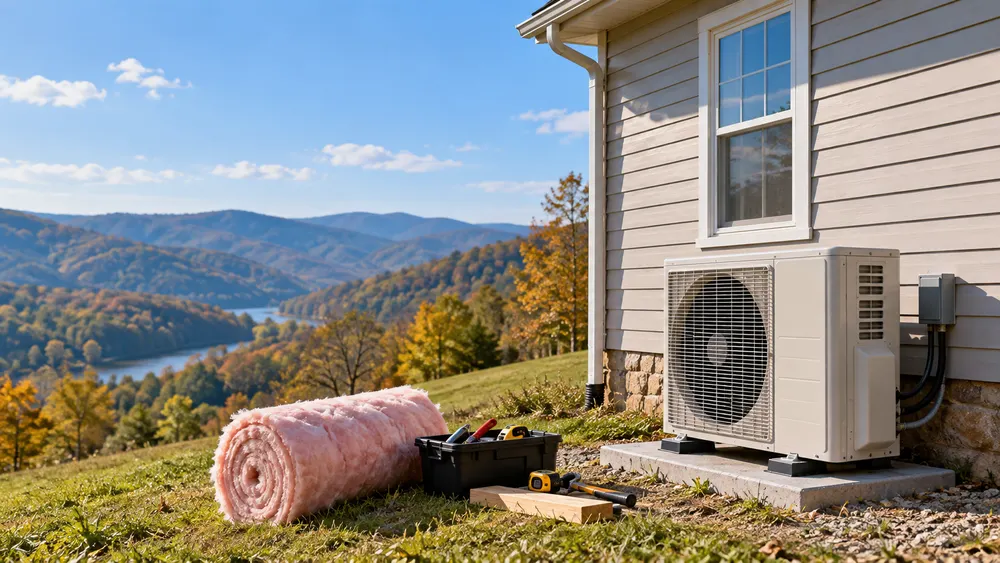
Funding is divided between two programs administered by the West Virginia Office of Energy. The HOMES program supports whole-home improvements such as insulation, air sealing and heating or cooling upgrades, with rebate values tied partly to projected energy savings. The HEAR program covers specific high-efficiency appliances and related electrical or ventilation work.
Under the state’s HEAR schedule, eligible upgrades can include up to $8,000 for a heat pump used for space heating or cooling, $1,750 for a heat-pump water heater, $4,000 for an electric load service center, $2,500 for wiring and $1,600 for insulation, air sealing and ventilation. The combined household limit is $14,000.
Income determines how much of an approved project the rebate may cover. Households below 80% of their county’s area median income may qualify for up to 100% of eligible costs. HEAR households between 80% and 150% of area median income may receive up to 50%. The eligibility rules require proof of identity, residency and income, along with ownership documents or landlord authorization.
Renters may apply, but participating landlords must approve the work. State program terms say landlords must not raise rent for two years because of the rebate-funded upgrades, must retain responsibility for the property and equipment and must allow contractor access.
The Office of Energy says rebates are applied to project costs through certified contractors rather than issued as unrestricted cash. That makes the order of operations important: residents should complete the qualification process and work through the program before purchasing equipment or beginning construction. A heat pump for space conditioning also requires a limited home assessment by a certified energy auditor.
Some state webpages still contain pilot-phase or waitlist language even though the governor has announced the statewide launch. The current application page directs households to register through the Neighborly portal, while regional implementation partners review documents and guide approved projects. Applicants should rely on the live portal and assigned partner for timing rather than assume an upgrade is automatically reimbursable.
The first completed pilot project reduced one participant’s electric bill by 33.5%, or $102 for the first month after improvements, according to the governor. That is an individual result, not a guarantee of savings for every home. Actual outcomes will depend on the building, selected measures, energy prices and occupant use. West Virginia Public Broadcasting reported that the programs are now available to both homeowners and renters who meet the rules.