
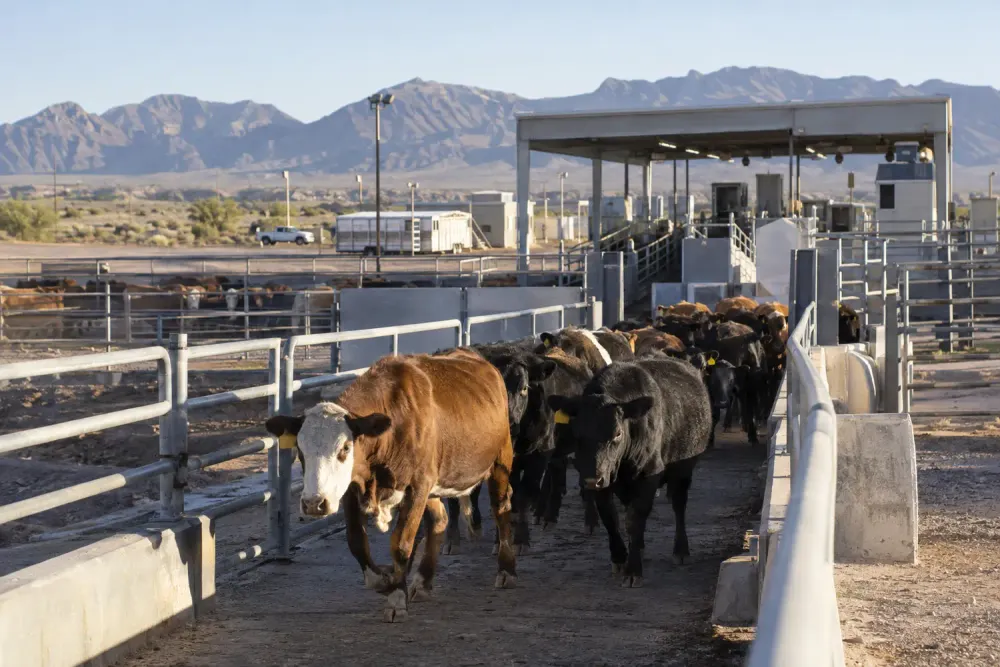
The U.S. Department of Agriculture is preparing to reopen a New Mexico port to livestock trade with Mexico next week, Agriculture Secretary Brooke Rollins said Wednesday, a significant step in restoring cross-border cattle movement while federal and state officials continue monitoring New World screwworm.
Rollins did not identify the crossing or give a specific reopening date in her remarks, according to Reuters’ September 16 report. That distinction matters for ranchers, haulers and brokers: USDA’s current import-status page still lists both Santa Teresa and Columbus as “to be determined”, while other southern-border ports remain closed except for the phased restart already underway at Douglas, Arizona.
The planned New Mexico reopening follows a federal sequence announced in July. USDA said it would begin with Douglas on August 24 and simultaneously take operational steps toward later openings at Santa Teresa and Columbus. The agency tied each stage to Mexico’s compliance with a joint animal-health action plan and reserved the option to pause trade if disease conditions changed.
New Mexico’s own outbreak status improved before Wednesday’s announcement. On August 30, USDA’s Animal and Plant Health Inspection Service released the state’s only screwworm-infested zone after no additional cases were detected following a June 7 infection in a dog. That decision removed special screwworm-related requirements for domestic livestock and pet movements from the affected area, although surveillance and fly trapping continued.
New World screwworm is a parasitic fly whose larvae infest wounds in warm-blooded animals. The concern is not merely procedural: an infestation can injure or kill livestock and trigger quarantines or movement controls. APHIS maintains a detailed response playbook and movement guidance covering surveillance, diagnostics, quarantine and continuity of business.
For New Mexico’s cattle economy, reopening even one port would restore a direct channel for inspected animals from Mexico and reduce reliance on the Arizona crossing. It would not amount to unrestricted trade. Imported animals remain subject to federal health certificates, inspections and disease-specific protocols, and Rollins said USDA would close trade again if officials detected a renewed threat.
The timing also carries regional significance because federal restrictions have disrupted a supply chain that normally moves Mexican feeder cattle through border inspection facilities toward U.S. ranches and feedlots. USDA’s phased plan deliberately uses one crossing at a time so animal-health officials can evaluate screening and surveillance before expanding capacity. Wednesday’s statement indicates New Mexico is next in that sequence, but it does not settle which of the state’s two eligible ports will open first or how many animals it will initially process.
The immediate practical signal is therefore positive but incomplete. Businesses should wait for APHIS to post the named crossing, effective date and operating requirements before scheduling shipments. Until that notice appears, the federal status page—not the preliminary public statement—remains the controlling source for whether Santa Teresa or Columbus is accepting livestock.