Maryland has started a roughly $30 million reconstruction of Somers Cove Marina, pairing major boating upgrades with a new drainage system intended to reduce recurring tidal flooding in Crisfield.
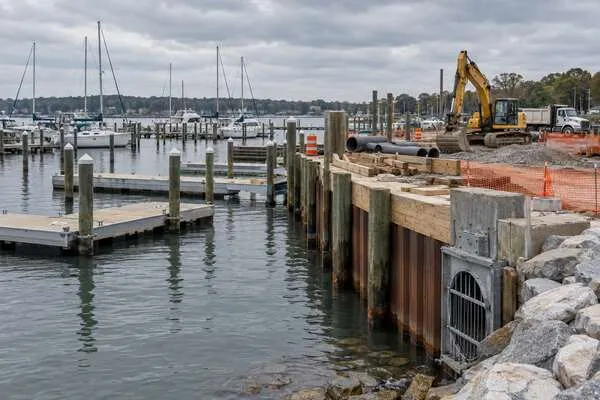
The Department of Natural Resources announced Wednesday that work began in early September at the state-owned facility. The project includes a new boat ramp, replacement of eight of 15 piers with floating systems, 2,000 feet of new bulkhead and five tide gates connected to a new storm-drain network.
That combination makes the work more than a marina renovation. Two tide gates are designed to support Crisfield’s future flood-control development, while the other work includes stormwater management, upgraded water, sewer and electrical systems, a backup generator, resurfaced parking and improved access for people with disabilities.
The City of Crisfield’s resilience plan describes the marina project as interdependent with the broader Southern Crisfield Flood Mitigation Project. It also says the existing wooden bulkhead is significantly deteriorated, underscoring why flood protection and routine maintenance are being addressed together.
Somers Cove is Maryland’s largest state-owned marina and covers about 31.5 acres. The marina’s official profile lists 515 slips, including transient berths, along with launching ramps, fuel service and event space. DNR says more than 5,000 boaters used the facility last year and that it serves ferries and tour boats connecting Crisfield with Smith and Tangier islands.
The state is financing the work through three sources. Waterway Improvement Fund grants provide $15.82 million; general-obligation bonds provide $8.73 million; and the Maryland Department of Transportation contributes $5.95 million. The waterway fund is supported by the excise tax collected on boat sales, meaning boat transactions account for just over half of the project’s stated funding.
The project also reaches beyond recreational boating. Somers Cove is the home port of DNR’s icebreaker and buoy tender, which can support island access during freezing weather. The state places the marina within a $4.2 billion recreational-boating sector and a $600 million commercial-fishing industry, while nearby seafood processors, restaurants and lodging businesses depend on waterfront activity.
The facility has operated since 1958 and was transferred from Crisfield to the state in 1980, according to the state archives. That history explains the scale of deferred replacement now underway: core assets such as piers, bulkheads, utilities and drainage systems are being rebuilt rather than patched individually.
Dvorak LLC of Baltimore is the general contractor. DNR projects an 18-to-24-month construction period, placing completion between early 2028 and late 2028 if the schedule holds. The state has not said that the entire marina will close during construction, so boaters should consult the facility directly for current ramp, slip and access conditions.
For Crisfield residents, the central test will be whether the five tide gates and related drainage work shorten and reduce flooding beyond marina property. For boaters, the immediate effects will be construction disruptions followed by newer docks, utilities and launch infrastructure at the Chesapeake Bay gateway.