
Maine regulators have clarified that a pending request for a PFAS exemption does not allow a prohibited product to remain on sale, a consequential limit as the state reviews another round of “currently unavoidable use” proposals.
The Department of Environmental Protection’s updated guidance, dated Sept. 17, says only the Board of Environmental Protection can approve or deny those proposals. A product covered by Maine’s sales ban remains prohibited unless and until an exemption becomes effective through formal rulemaking.
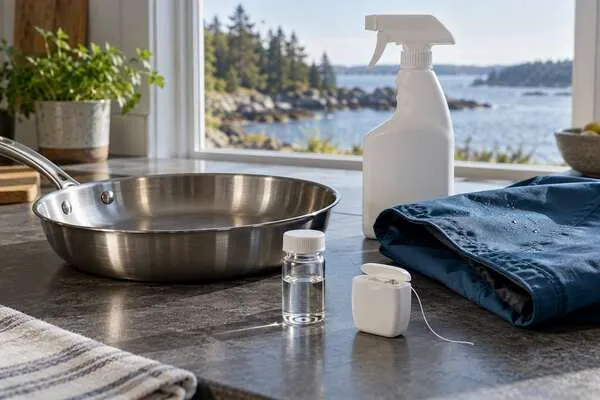
The clarification matters to manufacturers and retailers because Maine’s first major set of product restrictions took effect Jan. 1. The underlying state law bars products with intentionally added per- and polyfluoroalkyl substances in nine categories: cleaning products, cookware, cosmetics, dental floss, juvenile products, menstruation products, most textile articles, ski wax and upholstered furniture. Used goods and several product classes governed by separate federal or state rules are exempt.
PFAS are a large family of long-lasting chemicals used for functions such as resisting heat, water, grease and stains. The U.S. Environmental Protection Agency says the chemicals break down slowly, occur in air, water, soil, fish and food, and that exposure to some PFAS may be linked to harmful health effects. The agency also cautions that thousands of PFAS exist and the health and environmental risks are not equally understood across the entire class.
Maine’s exemption test is intentionally narrow. A PFAS use must be essential to health, safety or the functioning of society, and reasonable alternatives must not be available. The department says proposals received before May 1 may be included in the 2026 rulemaking; later submissions may be held for a process expected in 2027.
The state’s January implementation report shows how selective that process has been. DEP received 11 proposals tied to the 2026 ban and recommended two. The board approved both through 2031: an internal cartridge valve and a vented cap liner used in specified industrial cleaning-product containers. The report says reviewers rejected broad assertions and now want more detailed alternatives analyses and original documentation.
For businesses, the practical distinction is between a statutory exemption, an approved time-limited use and an unresolved application. Medical devices, regulated drugs, watercraft, motor vehicles, semiconductors and several other categories have exemptions written into law. The two approved industrial-container components have temporary rule-based protection. A new or revised proposal has no legal effect until the board completes public rulemaking.
Retailers are not automatically responsible for investigating every product on their shelves. DEP says a retailer violates the prohibition by continuing to offer an item after receiving notice from its manufacturer that the item is prohibited. Manufacturers, importers and in some cases first domestic distributors carry the primary compliance burden.
The next decisions will determine whether more narrow industrial uses receive temporary protection while Maine advances toward its broader 2032 prohibition. Until those decisions are final, the updated guidance leaves the current ban—and only the exemptions already in force—as the controlling rule.