President Donald Trump has withdrawn his threat to bar Bombardier aircraft from the U.S. market, easing a risk that had become a major concern for Kansas officials and roughly 1,500 company employees in Wichita.
Trump said he would “take care” of Bombardier and its Kansas jobs after learning more about the Canadian manufacturer’s U.S. footprint, Reuters reported Tuesday. The White House did not announce a formal policy order and referred questions to the president’s Kansas television interview, so the development is best understood as a reversal of the threatened restriction rather than publication of a new regulatory framework.
The September threat had drawn calls from Kansas Republican Sens. Roger Marshall and Jerry Moran, who urged the administration to protect the Wichita workforce. At the time, aviation lawyers told Reuters it was unclear how the government could block deliveries of aircraft already approved by the Federal Aviation Administration. No ban ultimately took effect.
The dispute unfolded alongside wider U.S.-Canada trade friction. Reuters reported that Canadian countertariffs followed new U.S. duties on about $20 billion in goods, although the administration did not extend its September import restrictions to Bombardier aircraft. That distinction matters: the company faced a public threat and customer uncertainty, but not an executed aircraft prohibition.
Investment was moving ahead amid uncertainty
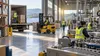
The policy reversal follows Bombardier’s announcement of approximately $50 million in Wichita investments. In its company release, Bombardier said the package includes a new North American Learning Center for newly hired technicians and mechanics, an expanded wheel-and-tire shop and additional future capabilities. The company described the center as its first dedicated in-house skills facility of that kind.
Bombardier said its Wichita operations include the group’s U.S. headquarters and Bombardier Defense, while Gov. Laura Kelly said the site employs 1,500 Kansans. Reuters reported that Wichita accounts for more than 40% of Bombardier’s approximately 3,500 U.S. jobs. Company shares rose 4% after Trump’s reversal, though a one-day market move does not measure the long-term employment effect.
Why the dispute mattered statewide
Aviation is one of Kansas’ largest export and manufacturing clusters. The state Department of Commerce’s industry profile estimates a $7 billion contribution to state gross domestic product, about $2.3 billion in annual aerospace exports and a network of roughly 450 suppliers. It identifies Bombardier and Textron Aviation as the state’s two major general-aviation manufacturers.
That concentration meant the threatened restriction carried consequences beyond one employer. Wichita’s maintenance, training, defense-modification and supplier network depends on stable access to customers and predictable certification rules. The withdrawal reduces the immediate political risk to deliveries, while Bombardier’s training investment may expand the local talent pipeline.
Important uncertainties remain. Bombardier’s investment release includes standard warnings that future projects depend on assumptions and could change, and Trump’s remarks were not accompanied by a detailed trade or aviation policy document. For Kansas workers, however, the central shift is clear: an announced threat to U.S. market access has been set aside while the company continues building its Wichita operations.