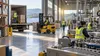
Illinois agriculture officials say two international buyer tours generated $205.2 million in projected grain sales this year, extending a state trade program aimed at turning farm visits and transportation demonstrations into export contracts.
The total combines $120 million attributed to a September tour for buyers from the Middle East and Asia with $85.2 million projected from an October Latin American tour, according to the state announcement Tuesday. The later tour also produced 148 new business contacts, the Illinois Department of Agriculture said.
The numbers are projections, not completed sales. The department said final figures will not be available for some time, so the $205.2 million should be read as buyer and seller expectations developed during the tours rather than verified invoices or shipped grain. The 2025 tours were credited with $236 million in projected sales, meaning this year’s announced total is about $30.8 million lower.
The distinction does not make the tours meaningless. Early purchase intentions can identify promising markets and give exporters leads to pursue after buyers return home. But projected value can change with commodity prices, contract terms, currency movements, freight costs and customers’ final volume decisions. A public follow-up comparing projections with completed sales would show the program’s conversion rate.
Each four-day program brought prospective buyers to farms, agribusinesses and transportation sites. That structure matters because grain customers are evaluating more than crop quality: delivery reliability, river and rail access, storage, grading and relationships with exporters all influence whether a preliminary discussion becomes a purchase.
Illinois has substantial exposure to those decisions. The U.S. Trade Representative lists Illinois as the nation’s third-largest agricultural exporting state, with $11.1 billion in agricultural exports in 2024. Soybeans accounted for an estimated $4 billion, corn $2.1 billion, feeds and other feed grains $1.4 billion, and soybean meal $1 billion.
USDA’s state trade data similarly place Illinois among the leading agricultural export earners and identify Illinois and Iowa as top exporters of soybeans, corn and feed products. Those estimates use farm cash receipts to allocate exports by state; they are broader economic estimates and are not directly comparable to the tour’s deal projections.
The Agriculture Department describes its industry tours as a market-development tool that recruits qualified foreign buyers and highlights Illinois production. The program can create introductions, but its public reporting would be stronger if later updates separated signed contracts, completed shipments and repeat business from initial projections.
For farmers facing volatile commodity prices and production costs, the practical value is whether those contacts diversify demand beyond existing customers. The current figures show meaningful interest across multiple regions. The next measure of success will be how much of the projected $205.2 million converts into delivered orders—and whether those buyers return without a state-organized tour.