
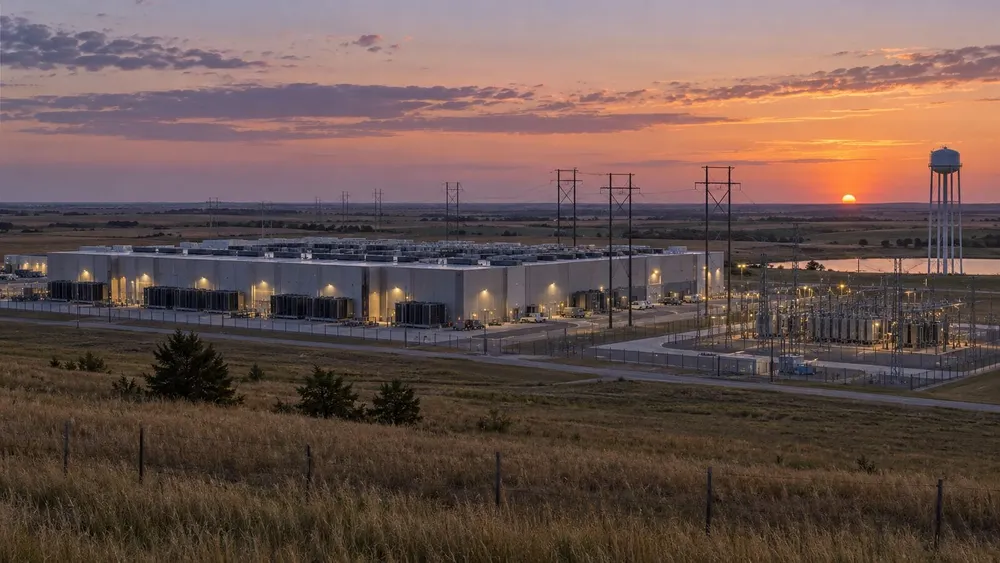
Kansas’s 20-year sales-tax exemption for large data centers is facing a new push for a statewide pause, moving a policy adopted with broad legislative support into the center of the state’s debate over water, electricity and local control. The immediate dispute is not over an enacted moratorium—none exists—but over whether Kansas should stop approving additional projects while lawmakers write more requirements.
The issue sharpened after gubernatorial candidates Cindy Holscher and Ty Masterson debated data centers at the Kansas State Fair. Axios reported Tuesday that Holscher, a Democrat, now favors a moratorium until additional protections are adopted, while Masterson, a Republican, supports state guardrails but generally favors leaving siting decisions to local governments. Both state senators voted for the 2025 incentive law.
The underlying program is substantial. Kansas Commerce says qualifying projects receive a 20-year state and local sales-and-use tax exemption. Applicants must invest at least $250 million within five years of beginning operations, create 20 full-time jobs for Kansas residents within two years and sign a 10-year electricity-purchase agreement with the serving utility. They must also adopt a water plan and pass a state critical-infrastructure and cybersecurity review.
Senate Bill 98 was signed by the governor in April 2025 after passing both chambers. Its structure reflects the economic-development case for data centers: unusually large capital investments, a long-term utility customer and a smaller but high-wage permanent workforce. Critics focus on the opposite side of that equation—the scale of energy and water consumption relative to the limited number of required jobs, plus the consequences for nearby landowners and local infrastructure.
A September briefing from the Kansas Legislative Research Department gives lawmakers a common factual baseline. It says Kansas data centers currently use an estimated 0.4 terawatt-hours of electricity annually, while national demand is expected to rise sharply. The report also notes that cooling approaches differ widely, making project-specific water plans more useful than a single assumption about consumption.
Kansas has already adjusted parts of its large-load framework. The Legislature enacted Senate Bill 92 in 2026 to extend special provisions governing certain large electricity customers. Other proposals—including a bill that would have limited the tax exemption to land already zoned for industrial or manufacturing use—did not become law.
The policy question now is who should set the next layer of rules. A statewide moratorium would give legislators time to consider uniform standards for reporting, water planning, decommissioning and community benefits. Continuing the current system would leave Kansas Commerce to enforce the incentive requirements while cities and counties make land-use decisions.
For residents, the most consequential information will come from specific project filings: expected electric load, water source and cooling design, requested local incentives, projected permanent employment and responsibility for infrastructure costs. The election-season argument may set direction, but those measurable terms will determine the cost and benefit of each development.