
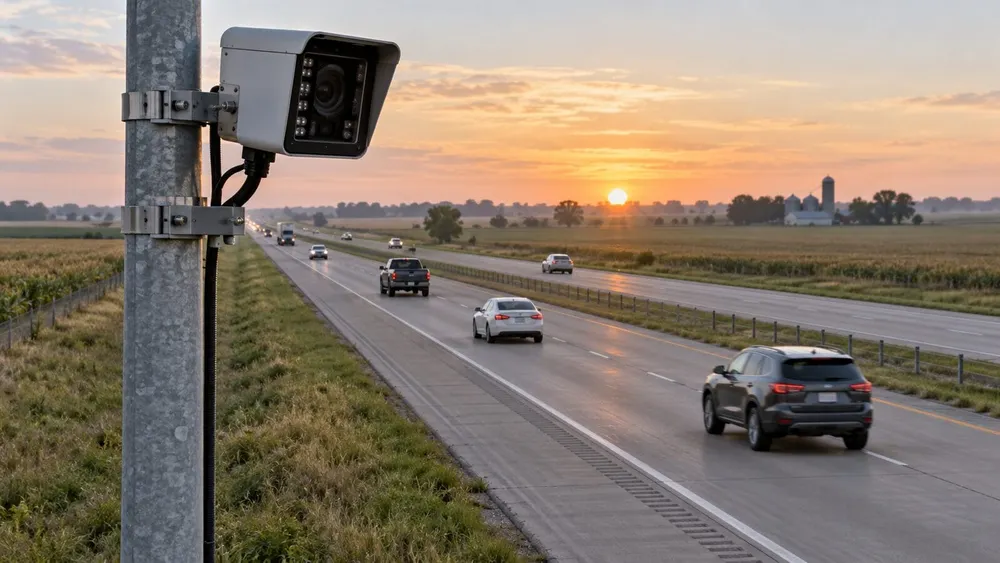
Iowa now has at least 861 automated license-plate readers documented across more than 60 communities, a statewide footprint that is growing even as several local governments step back from the technology. The latest statewide count, published Tuesday, puts the debate squarely before lawmakers who are expected to revisit safeguards in 2027.
The systems photograph plates and record where and when vehicles pass. Police can compare those records with lists of stolen vehicles or vehicles linked to missing-person alerts and investigations. Des Moines uses 130 Motorola readers, mostly mounted in patrol vehicles, while many other Iowa agencies use networked cameras supplied by Flock Safety, according to records and the statewide survey summarized by Axios.
The immediate change for residents is not a single statewide shutdown but a widening patchwork of local decisions. Waukee and Indianola have discontinued their camera programs, Dallas County paused a planned deployment while it waits for state guidance, and Osceola, Clarke County and Coralville have also ended or canceled systems. Ankeny, by contrast, continues operating 16 Flock cameras and is expected to consider their future before its contract expires in 2027.
Iowa law already imposes one statewide limit. Iowa Code Chapter 321P requires operators to permanently delete plate images and accompanying data within 30 days. A law-enforcement agency may preserve a copy when it is relevant to an ongoing criminal case or investigation, subject to that agency’s evidence-retention policy. The law defines the technology broadly enough to cover cameras or optical devices programmed to detect or store registration-plate images and related data.
Lawmakers considered stronger controls this year. House File 2161 would have required local ordinances authorizing readers, access logs, limits on sharing data outside government and bans on facial recognition and cameras aimed at houses of worship. An earlier version also proposed a warrant or subpoena for most searches more than 24 hours after collection. The House later advanced a revised approach that retained the 30-day storage ceiling and called for approved vendors and greater local disclosure, Radio Iowa reported in April, but it did not become law before adjournment.
The policy divide remains practical as well as constitutional. Law-enforcement supporters say readers can quickly locate stolen cars, endangered people and investigative leads. The ACLU of Iowa’s updated statewide campaign argues that interconnected databases can reconstruct people’s movements with too little oversight and that transparency varies sharply among agencies.
For Iowans, the key questions now depend on where they drive: which agency operates the cameras, which vendor stores the records, who can search them and whether the locality publishes usage information. Until legislators act again, the 30-day deletion rule is the common statewide floor, while access, auditing and disclosure practices continue to differ by community.