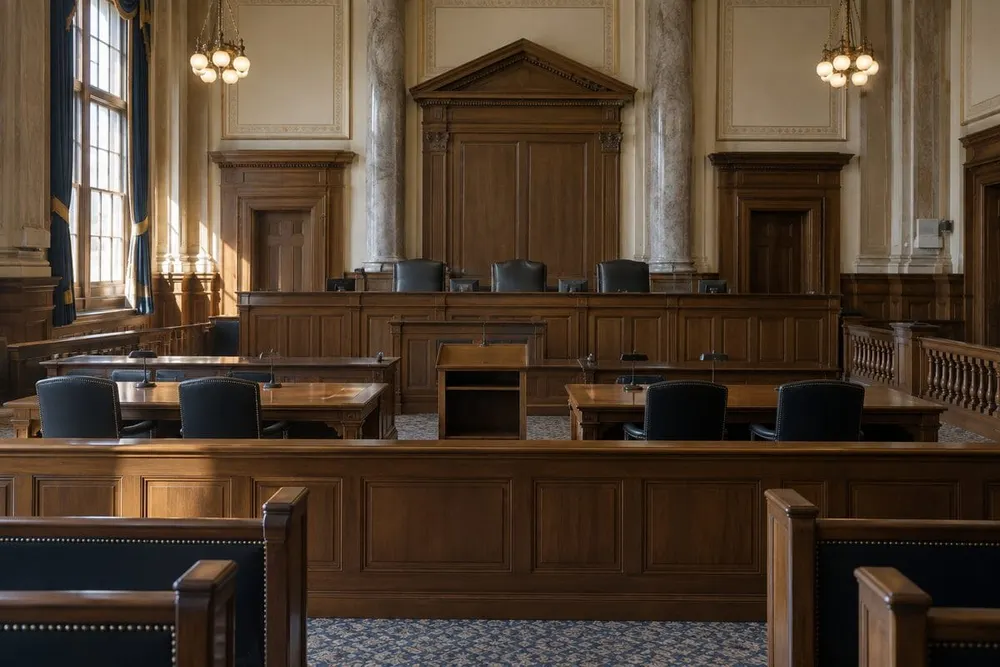
A three-judge Indiana Court of Appeals panel is considering whether Richard Allen should receive a new trial for the 2017 killings of Abigail Williams and Liberty German, after hearing arguments that focused on excluded defense evidence, disputed confessions and the search of Allen’s home.
Allen was convicted in 2024 and sentenced to 130 years in prison. Monday’s hearing did not decide his guilt or innocence. Instead, Judges Nancy Vaidik, Elaine Brown and Robert Altice examined whether rulings by the trial court deprived him of a fair proceeding and, if errors occurred, whether they were serious enough to require reversal.
The judiciary’s case notice identifies the appeal as Allen v. State, 25A-CR-591. It says Allen challenges the constitutionality of the search of his home, the admission of evidence obtained in that search, the handling of his statements and limits placed on his defense. The panel will issue a written decision later; no timetable was announced.
During arguments, Allen’s lawyer said his repeated confessions followed a psychological breakdown while he was held in restrictive conditions before trial. The state responded that the statements aligned with evidence and that Allen’s acknowledgment that he had been on the Delphi trail on the day the girls disappeared was highly significant. An AP report said the judges pressed both sides on whether any disputed ruling changed the verdict.
The panel also questioned the exclusion of defense testimony about an alternative ritual-killing theory, expert criticism of firearm-mark evidence and audio that accompanied videos of Allen’s behavior in prison. Prosecutors argued that the alternative theory lacked an adequate evidentiary foundation and that the challenged rulings were harmless in light of the full record.
A separate hearing account described the proceeding as a review of trial fairness rather than a retrial. That distinction matters: appellate judges generally review the existing record for legal error and do not hear witnesses or independently decide disputed facts.
Williams, 13, and German, 14, disappeared near Delphi’s Monon High Bridge in February 2017. Their deaths remained unsolved for more than five years before Allen’s arrest. The long investigation, extensive pretrial litigation and national attention made the case one of Indiana’s most closely watched criminal proceedings.
The Court of Appeals can affirm the convictions, order a new trial or grant narrower relief. Its decision may itself be reviewed by the Indiana Supreme Court if that court accepts a transfer petition. Until an appellate court rules otherwise, Allen’s convictions and sentence remain in effect.
For Indiana, the appeal tests how trial courts must balance a defendant’s right to present a complete defense against evidentiary rules designed to keep speculative or unreliable material from jurors. The panel’s eventual opinion could therefore affect not only this case but also how lower courts handle expert testimony, alternative-suspect evidence and contested confessions in future prosecutions.