
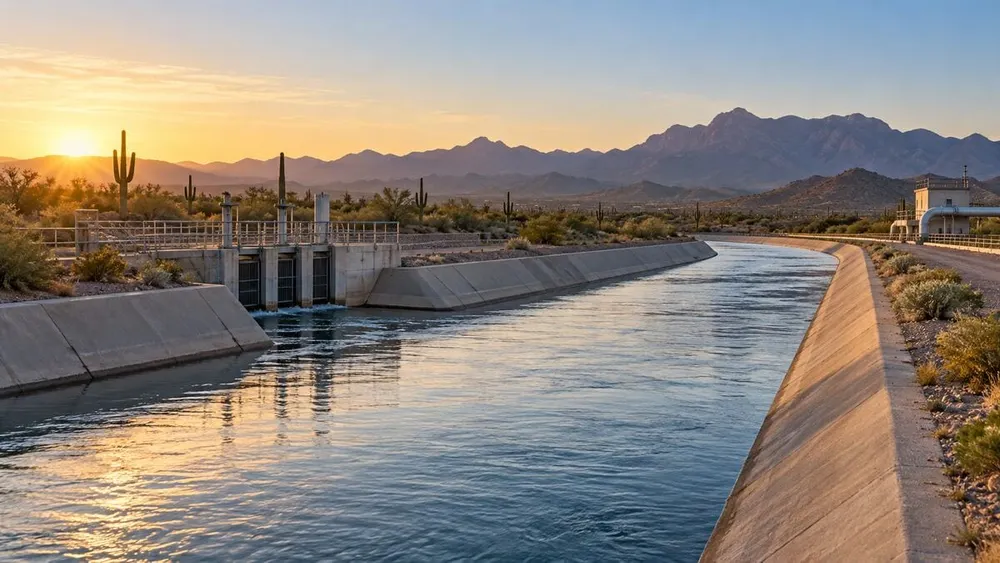
Arizona is preparing for a 760,000 acre-foot reduction in Colorado River deliveries in 2027, the largest state-level cut under new federal operating rules for Lake Powell and Lake Mead.
The Interior Department finalized the two-year rules on Aug. 21, after a multi-year environmental review. The Bureau of Reclamation’s basin page says the plan governs operating years 2027 and 2028 while a broader decision framework runs through 2036. It also says combined storage in Lake Powell and Lake Mead has fallen to levels not seen since before Lake Powell began filling in 1963.
Arizona’s reduction is about one-quarter of its normal Colorado River allocation. The exact effect will not be uniform because cities, tribes, irrigation districts and other users hold different priorities and contracts. Phoenix officials said the city expected clarity on its own share in early October, underscoring that the statewide headline number is not a city-by-city rationing order.
The federal plan requires California, Arizona and Nevada to reduce their combined use by 1.25 million acre-feet annually during the two-year period. An Associated Press report says Arizona bears the largest portion, while Mexico will conserve an additional 250,000 acre-feet under treaty arrangements. The Upper Basin states are not assigned mandatory cuts in the interim rules.
The action follows a 26-year drought, poor snowpack and long-term water use that exceeded the river’s declining supply. Reclamation’s final review evaluated operational choices for the two major reservoirs and established an adaptive framework rather than a single fixed rule for the full decade. Federal managers can revisit conditions as reservoir levels, weather and conservation commitments change.
For Phoenix, the immediate response centers on moving other supplies across its system and tightening drought operations. The city’s drought dashboard describes four escalating stages: alert, warning, emergency and crisis. Axios reported that officials expect the city to enter Stage 2, or “Water Warning,” when the new cuts take effect.
Phoenix also completed a $300 million pipeline in 2023 to move Salt and Verde river water to roughly 400,000 residents in northern Phoenix who historically relied more heavily on Colorado River supplies. That infrastructure gives the city flexibility, but it does not eliminate the broader statewide pressure on agriculture, growth planning and groundwater.
A Reuters account said the Lower Basin reductions total roughly 21% across the three states and could deepen after 2028 if the reservoirs do not recover. Arizona officials have objected to rules that place mandatory reductions only on the Lower Basin and have left open the possibility of litigation.
The near-term plan provides operating certainty for two years, not a durable settlement of the river’s imbalance. For Arizona households, no single statewide household restriction begins immediately. The practical effects will emerge through local drought stages, agricultural deliveries, conservation agreements, water rates and future decisions about development and alternative supplies.