
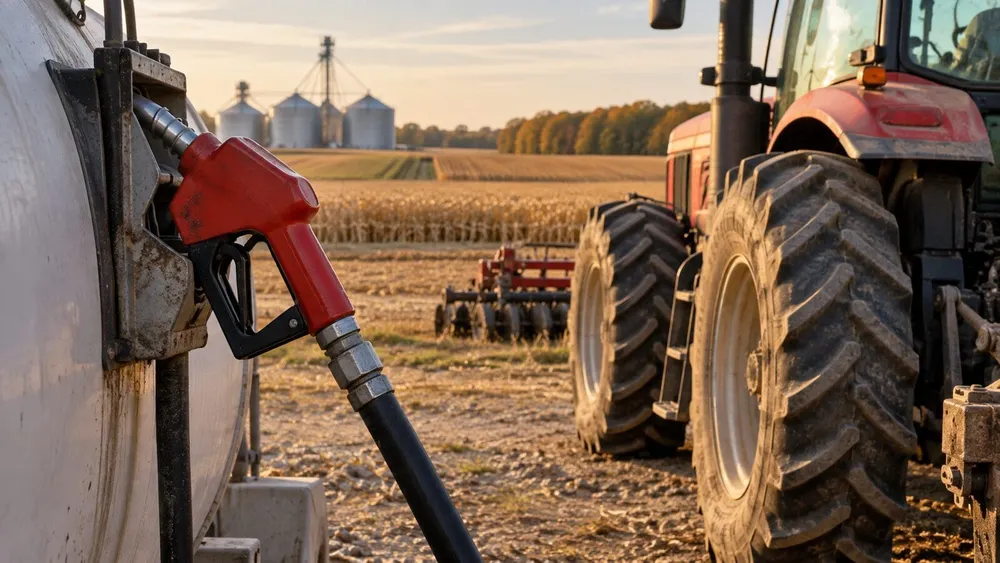
Alabama is pausing state enforcement against the use of dyed diesel fuel for 120 days, an emergency step aimed at farmers and timber operators confronting a sharp increase in fuel costs during harvest season.
Gov. Kay Ivey issued the directive Thursday to the Alabama Law Enforcement Agency and asked other enforcement agencies to adjust their priorities immediately. Her announcement says the relief will run for four months and is intended for agricultural and timber communities, where diesel is a major operating expense.
Dyed diesel is chemically marked to show that it was sold without the highway-fuel excise tax. It is ordinarily reserved for off-road machinery such as tractors, logging equipment and other qualifying uses. Alabama’s tax guidance lists sales of dyed diesel as exempt from the state terminal excise tax, while the state’s current rate table shows a reduced inspection fee for fuel used in agricultural tractors and wood-preservation work.
The practical effect is that state officers will not prioritize the normal dyed-fuel restriction during the temporary window. That could give eligible rural businesses access to less expensive fuel for vehicles and equipment needed to move crops, timber and supplies. The governor’s action does not permanently rewrite Alabama tax law, and the state has not described it as a general repeal.
The distinction between state and federal enforcement matters. The Internal Revenue Service’s excise guide says dyed fuel generally cannot be used to propel a registered highway vehicle unless the use qualifies as nontaxable. Federal law can impose tax and penalties when someone knowingly uses dyed fuel for a taxable purpose. Alabama’s directive addresses state enforcement priorities; it does not by itself announce a federal waiver.
That means operators should not assume every use of dyed diesel is now consequence-free. Businesses still need to track where and how fuel is used, preserve purchase records and confirm whether any federal restrictions apply to a particular vehicle. Alabama Revenue guidance already requires documentation for claimed exemptions, and mixed operations can present different tax treatment depending on whether equipment is used on public highways.
The governor tied the pause to unusually high diesel prices. Alabama Public Radio reported that statewide diesel prices had risen by nearly $1 per gallon in a month and by almost $3 from a year earlier. Those increases arrive when farms and forestry companies are running equipment intensively and have limited ability to reduce fuel use without delaying work.
The 120-day period gives producers short-term breathing room rather than long-term certainty. Unless the state extends or replaces the directive, ordinary enforcement priorities would return after the pause. For now, the policy’s value will depend on whether suppliers can meet additional demand and whether federal authorities separately clarify how they will treat highway use during Alabama’s relief period.