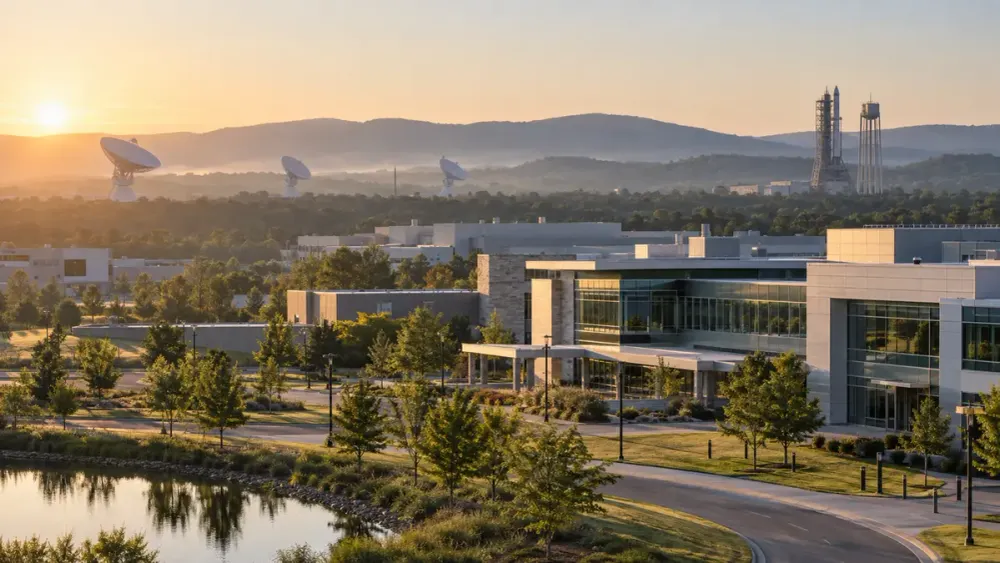
U.S. Space Command expects roughly 200 military and civilian personnel to be working at Redstone Arsenal by the end of 2026, a concrete early milestone in the multiyear transfer of the combatant command’s headquarters to Huntsville.
More than 140 personnel are already based at Redstone, according to the state update published by the Alabama Department of Commerce. That represents about one-tenth of the workforce ultimately expected in Huntsville. Gen. Stephen Whiting, the command’s leader, has said the move is on pace to reach 200 people this year and half of the staff in 2028.
The transition is not simply an office relocation. Space Command coordinates military operations in orbit and the protection of satellites that support navigation, communications and surveillance. A federal update marking the first year after the headquarters decision described the relocation as a phased effort that must preserve round-the-clock mission continuity while new facilities are built.
Redstone’s first dedicated operational component opened in April, when the Joint Intelligence Support Element began moving into a renovated secure facility. The command said in its opening notice that personnel entered the new space April 15. That unit integrates intelligence used to support commanders and military planning, giving Alabama a direct role in current operations before the permanent headquarters is finished.
The long-term scale is larger. Huntsville officials say about 1,400 jobs will transfer to Redstone over five years and approximately 60 acres have been identified for the future headquarters, according to the city’s project page. The post already hosts Army Materiel Command, the Missile Defense Agency and NASA’s Marshall Space Flight Center, concentrating military space, missile and engineering expertise in one region.
The state is treating that concentration as an economic-development strategy as well as a defense commitment. Alabama Commerce says aerospace, aviation and defense companies have announced $4.3 billion in investment and more than 15,000 jobs since 2015. Those figures cover the broader sector, not jobs created solely by Space Command, but they help explain why state officials view the headquarters as an anchor for contractors and technical training.
The move remains operationally and fiscally significant because most of the command still works in Colorado Springs and a permanent Alabama complex is not expected immediately. Independent defense reporting has placed the broader goal at about 1,800 personnel by 2031, with interim buildings carrying the mission during construction, according to Air & Space Forces.
For Alabama, the near-term test is whether the state and Huntsville can absorb successive waves of workers without disrupting the mission. Housing, schools, transportation and security infrastructure will matter alongside the headquarters construction. The 200-person target is therefore a progress marker, not the endpoint: it shows the transfer has moved from a contested basing decision into day-to-day staffing and operations at Redstone.