The National Highway Traffic Safety Administration has opened a preliminary investigation into Comma.ai, the maker of an aftermarket driver-assistance device, after receiving reports of five crashes in which equipped vehicles struck stopped or slow-moving traffic in the same lane. The incidents include two fatal crashes that killed three people, according to Reuters.
The inquiry places a fast-growing form of vehicle technology under federal scrutiny: software and hardware sold directly to drivers to expand the lane-centering, speed-control and braking functions already built into many cars. Unlike systems installed and validated by an automaker, Comma.ai’s product can be added after purchase to supported vehicles from numerous manufacturers.
NHTSA’s investigation is preliminary. It does not establish that Comma.ai’s hardware or software caused any crash, nor does it amount to a recall. The agency will examine which versions of the system were running, whether they were active at the time of each collision, how they responded to roadway hazards and whether safeguards were adequate, Reuters reported.
Five crashes, two of them fatal
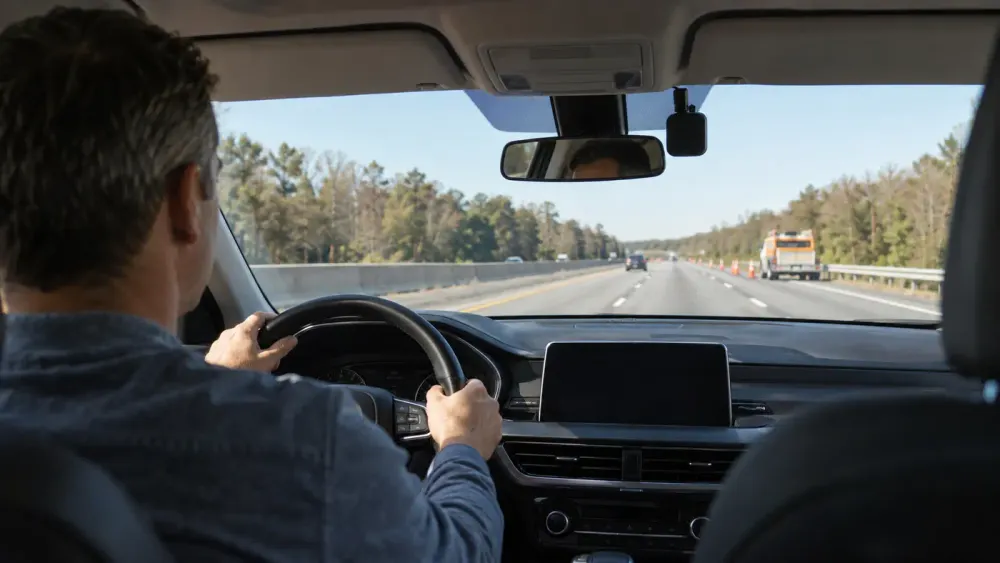
The five reported crashes share a basic pattern: vehicles using the technology hit traffic that was stopped or moving slowly ahead. Across the cases, three people died and 11 others were injured, some seriously. TechCrunch independently reported the same totals and said some vehicles were running modified versions, or “forks,” of Comma.ai’s open-source software.
That distinction could become central to the investigation. Open-source software allows outside developers to inspect and alter code, but it also complicates the task of determining which entity controlled a safety-critical feature at a particular moment. Investigators will need to separate the performance of Comma.ai’s official release from changes made by third parties and from the original vehicle’s braking and sensor systems.
One fatal case cited by TechCrunch occurred in February in Ascension Parish, Louisiana. A 2022 Toyota RAV4 running a fork called FrogPilot struck a stopped first-responder vehicle, killing two rear-seat passengers. That account remains part of an active federal review; assigning responsibility will require vehicle data, software records and a reconstruction of driver behavior and road conditions.
An aftermarket route to partial automation
Comma.ai markets openpilot as open-source driver-assistance software that can steer, accelerate and brake while the driver remains responsible and attentive. The company says on its website that its technology is used in more than 30,000 vehicles and has accumulated more than 402 million miles. Its current device, sold for $999, connects through a vehicle-specific harness and the diagnostic port, according to the company’s installation guide.
The company’s broad compatibility is part of its appeal and part of the oversight challenge. Ars Technica reported that the platform supports 325 models across 27 brands. Those vehicles differ in sensors, braking capability, control interfaces and factory safety features. A software layer intended to work across that range must account for variations that an automaker normally handles within a smaller, tightly controlled fleet.
The technology is classified as driver assistance, not autonomous driving. Federal guidance stresses that today’s consumer systems still require a fully engaged driver. That boundary matters because marketing language, hands-off operation and smooth lane control can create an impression of greater capability than the system actually has, especially when confronted with an unusual or stationary object.
Stationary hazards remain a hard test
Crashes involving stopped vehicles are not unique to Comma.ai. They have repeatedly exposed limits in partial-automation systems that combine camera, radar or other sensors with adaptive cruise control. A system may track moving traffic well yet struggle to identify a stationary object as a hazard at highway speed, particularly when lane geometry, lighting or sensor confidence is ambiguous.
The National Transportation Safety Board raised similar concerns this year after examining two fatal crashes involving Ford’s BlueCruise system. Its findings, summarized by Reuters, criticized weaknesses in driver monitoring and the absence of stronger federal standards for Level 2 driver-assistance systems. The comparison does not imply that the systems share the same design or fault, but it shows why investigators are focusing on both hazard detection and driver engagement.
For Comma.ai, the immediate questions are narrower: which software was installed, what the driver saw and did, whether warnings occurred, and whether the vehicle could have avoided or reduced the impact. The agency may close the probe without action, expand it into a deeper engineering analysis or seek a recall if it identifies a safety defect.
What owners should take from the probe
The investigation does not mean every Comma.ai-equipped vehicle is unsafe. It does reinforce the operating limits the company itself states: the driver must watch the road and be ready to intervene. Owners also face an added risk when installing unofficial forks, because changes to alert timing, hands-off behavior or system limits may not have been reviewed by the original developer or the vehicle manufacturer.
NHTSA’s review will test whether those warnings and safeguards are sufficient for a product that has moved beyond an enthusiast experiment into tens of thousands of cars. The outcome could shape not only Comma.ai’s future, but also how federal regulators treat aftermarket software that sits between a human driver and a vehicle’s core controls.