LAIKA’s sixth stop-motion feature, Wildwood, opened nationwide Friday, Oct. 23, bringing a painstakingly constructed Oregon fantasy to theaters through a new distribution partnership. The release gives the studio behind Coraline a fresh test of whether its distinctive physical craftsmanship can attract audiences beyond its established following.
The film arrives through Fathom Entertainment in the United States, with FilmNation Entertainment handling international sales. Those arrangements place an ambitious new feature within an independent distribution strategy, rather than treating its theatrical life as a short promotional step toward home viewing. Commercial results remain to be established; the national opening itself is the development, not evidence that the strategy has succeeded.
A physical world built for the screen
Directed by Travis Knight and written by Chris Butler, the film follows teenager Prue McKeel into an enchanted forest after crows abduct her baby brother. Peyton Elizabeth Lee voices Prue, with Jacob Tremblay as her companion Curtis and Carey Mulligan as Alexandra. According to Reuters, the story grew from author Colin Meloy’s imagining of Portland’s Forest Park as a hidden magical kingdom. Carson Ellis illustrated the 2011 novel on which the film is based.
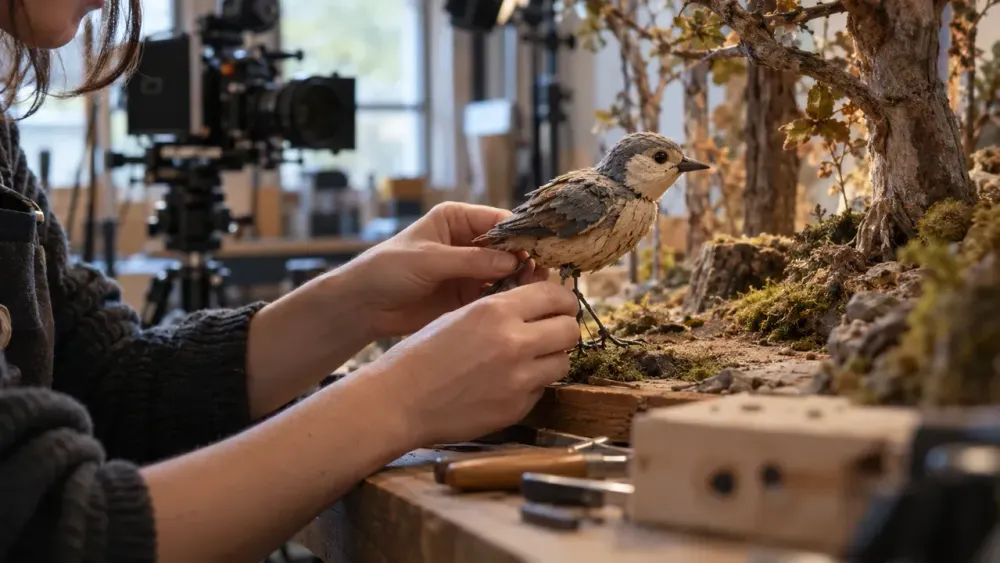
LAIKA combines traditional stop-motion with tools including 3D printing and digital effects. Its approach therefore depends on technology as well as handwork. Animation supervisor Brad Schiff described to Reuters the internal mechanisms used to make puppets appear to breathe and move with muscles. The aim is expressive performance, not simply assembling elaborate miniature scenery. Small changes in posture and movement must persuade viewers that an object has intention and emotion.
Oregon supplies more than a backdrop
The production also draws on the place where it was made. In interviews published by The Credits, costume designer Deborah Cook described researching Portland’s vintage shops and handmade clothing. Screenwriter Butler cited Forest Park and Pittock Mansion as sources of inspiration. The film incorporates recognizable local details, including Powell’s Books and the city’s Benson Bubbler drinking fountains.
The Credits, a publication of the Motion Picture Association, reported that more than 1,000 artists, craftspeople, technicians and filmmakers contributed, including 49 animators. These are production figures, not an independently measured estimate of net economic benefit. Oregon Film executive Tim Williams described LAIKA’s long production cycles as a source of sustained specialist employment. The distinction matters: a studio can maintain a substantial craft workforce even though individual films reach theaters years apart.
A theatrical strategy beyond a single event
Fathom and LAIKA built an advance-screening campaign ahead of Friday’s opening. Their October announcement scheduled special presentations at more than 100 locations for Oct. 19, with a prerecorded welcome from Knight. The national release also includes selected 4DX, DBOX and Dolby Cinema presentations where available. Those formats expand the ways exhibitors can present the film, although availability varies by theater.
The partnership builds on earlier theatrical returns of LAIKA titles, including Coraline and ParaNorman. A rerelease can draw on an audience that already knows a film; a new feature must establish its characters and story while selling the experience of seeing them in a theater. That makes the new opening a different commercial proposition. Existing affection for the studio provides a foundation, but cannot determine ticket sales for this film.
In announcing the distribution agreement, LAIKA described matching different partners to the project while preserving its independence. Fathom’s responsibility is the domestic theatrical release; FilmNation’s international-sales role connects the film with distributors in other territories. Those are different functions, and the arrangement does not mean a single company is directly releasing the film in every market. It also separates the film’s international sales campaign from its U.S. exhibition rollout.
Festival recognition and critical reservations
The American Film Institute, or AFI, selected Wildwood to open its 40th AFI FEST with a U.S. premiere on Oct. 21. Its announcement identified cinematographer Caleb Deschanel among the principal filmmakers and carried Knight’s account of having lived with the story for 16 years. That period describes the project’s long creative journey; it should not be confused with 16 years of uninterrupted filming.
Festival selection and technical ambition do not eliminate questions about storytelling. In her Oct. 23 Vulture review, critic Alison Willmore praised the craft while finding the fantasy world and its conflicts insufficiently developed. That is one critic’s assessment, not an audience verdict. It nevertheless illustrates why admiration for production methods and satisfaction with the finished narrative are separate judgments.
The opening begins the commercial test
The filmmakers and distributors are explicitly selling a shared theatrical experience built around a distinctive visual process. The relevant next evidence will be how audiences respond and whether demand continues beyond the earliest enthusiasts. Opening-weekend receipts alone would still provide only a partial picture of a film’s longer commercial life.
For now, Wildwood has moved from a prolonged production effort into national exhibition. It demonstrates that LAIKA and its partners have brought another large, physically crafted animated world to market. Whether that achievement produces a durable theatrical audience is the question the release has opened.