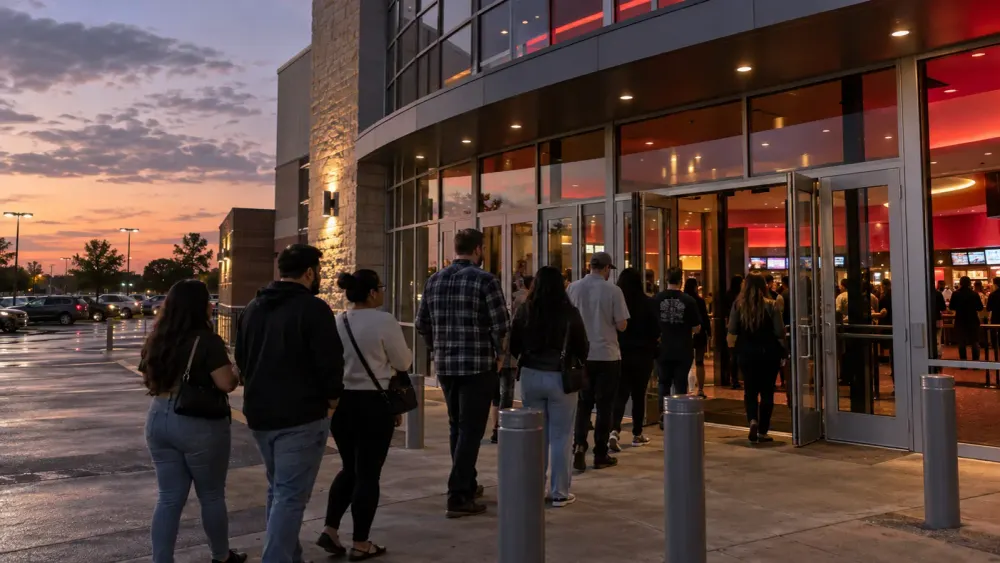
“Resident Evil” opened to an estimated $60 million from 3,684 theaters in the United States and Canada this weekend, more than doubling the franchise’s previous opening record. The Sony Pictures release added $48.3 million overseas for a $108.3 million global start, according to studio estimates issued Sunday. Final domestic figures are expected Monday and could move modestly from the estimate.
The result gives director Zach Cregger the largest opening of his career and turns a long-running video-game property into one of the strongest theatrical launches of the fall. It also arrives after a soft debut for “Practical Magic 2” and reinforces horror’s unusual ability to draw younger audiences into theaters without the production spending normally associated with superhero or animated tentpoles.
A franchise record by a wide margin
The previous “Resident Evil” opening record belonged to 2010’s “Resident Evil: Afterlife,” which debuted with $26.7 million and finished with $60.1 million domestically. Cregger’s reboot nearly matched that entire run in three days, while its $16,287 per-theater average led the national chart, according to weekend data from The Numbers. The same data service ranked the opening as the eighth-largest September weekend on record.
The movie also beat expectations. Boxoffice Pro had forecast a $40 million to $50 million opening and estimated that the film held 24% of available showtimes going into the weekend. Its forecast already anticipated a franchise record, but the eventual estimate cleared the high end by roughly $10 million.
Cregger became part of the brand
Sony sold the film as both recognizable intellectual property and the next project from the filmmaker behind “Barbarian” and “Weapons.” The studio’s official film page calls it an all-new story about Bryan, a medical courier played by Austin Abrams who becomes trapped in an outbreak near Raccoon City. That approach gave the marketing a familiar title without requiring audiences to follow seven previous movies.
Cregger’s recent record helped make the director a draw in his own right. “Barbarian” earned more than $46 million worldwide on a budget below $5 million, while “Weapons” grossed about $270 million against a reported $38 million production cost. The new film cost a reported $75 million before marketing, meaning its global opening does not by itself establish profitability but provides a stronger base than the franchise’s previous entries had.
A game adaptation built for newcomers
Cregger told The Guardian that he had never watched the earlier “Resident Evil” films, even though he had spent thousands of hours with the games. He structured the reboot around one inexperienced courier moving through changing environments and searching for resources, a progression intended to echo gameplay while remaining legible to viewers unfamiliar with the series.
That creative separation appears to have broadened the opening without discarding the core fan base. The audience was 66% male and 75% younger than 35, PostTrak exit polls cited by the Associated Press showed. Audiences assigned the film a B+ CinemaScore, while critics were far more favorable than they had been toward earlier installments, giving the film a 95% score on Rotten Tomatoes as of Sunday.
Horror lifts a quiet September frame
The top 10 movies generated an estimated $101.7 million for the weekend, 56% more than the comparable frame a year earlier, according to The Numbers. “Resident Evil” supplied nearly three-fifths of that total by itself. Second-place “Practical Magic 2” earned about $12.2 million, while “Spider-Man: Brand New Day” added $6.5 million in its eighth weekend.
The debut extends a strong year for horror, which has produced more than $1.1 billion in domestic ticket sales, according to the AP’s reporting from Rentrak. The genre’s economics can be attractive because a distinctive premise or filmmaker can drive attention without the cost of a broad family campaign. “Resident Evil” is more expensive than many horror releases, but its opening suggests that a recognizable game title paired with a director audiences trust can function like a larger franchise event.
The opening still carries risk
The weekend pattern also counsels restraint. “Resident Evil” took an estimated $26.6 million on Friday, including $8.8 million from Thursday previews. Preview sales represented 33.5% of Friday’s total, well above the 23% median among wide releases tracked by The Numbers, a sign that committed fans concentrated their purchases early.
Daily estimates published by Box Office Mojo show the film falling from $26.6 million Friday to $20.3 million Saturday and a projected $13.2 million Sunday. That is not unusual for horror, but it makes the second weekend an important test of whether strong reviews and word of mouth can reach beyond the initial audience. International performance will also matter because earlier “Resident Evil” films often earned far more abroad than in North America.
For now, the evidence establishes a successful relaunch, not a guaranteed long-running series. The film has already set a franchise opening record and exceeded tracking, while the estimated global start is larger than its reported production budget. Monday’s final figures and the next two weekends will show whether Cregger’s version is primarily a front-loaded fan event or the start of a durable theatrical run.